
Most remodelers running Google or Facebook ads point the click at their homepage. That’s the leak. Remodeling landing pages are single pages built for one ad, one service, and one action, and they decide whether your ad budget buys traffic or buys booked jobs.
The math is unforgiving. Home improvement ads convert at about 8% on Google search, per WordStream’s 2026 benchmarks. Send that click to a crowded homepage and most of what you paid for it converts nothing. The pages that clear 15% aren’t lucky. They follow a pattern, the same 6 blocks in the same order, with a real number behind each one and a spot where remodelers lose the lead.
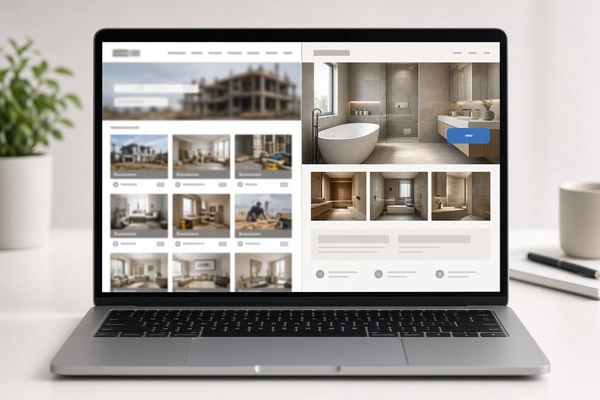
A remodeling landing page is a standalone web page built for a single ad campaign and a single service, like a kitchen remodel or a bathroom remodel. It removes site navigation and competing offers so a homeowner has one clear thing to do: request a quote or book a consultation.
Your Homepage Is the Wrong Place to Send an Ad Click
Your homepage has to serve everyone, which is exactly why it converts poorly for one specific ad. Past clients, job applicants, people comparing 6 services, someone hunting for your phone number, the homepage answers all of them at once and none of them well. A landing page answers one question: the one your ad just raised.
When a homeowner clicks an ad for a bathroom remodel, they expect a page about bathroom remodels. Not a rotating slider of kitchens, decks, and additions. Not a top navigation bar inviting them to wander off to your About page. Message match, the alignment between the ad’s promise and the page’s headline, is the biggest reason one page converts at 12% and another at 3%.
If you’re paying for Google Ads for remodelers, the page is where the money is won or lost. A page that converts at 4% instead of 12% triples your real cost per lead, even though the ad looks identical inside the account.

What’s a Good Conversion Rate for Remodeling Landing Pages in 2026?
Above 10% is good, and 15% or higher is strong. Here’s the context most articles skip. Across every industry, the median landing page converts at 6.6%, a rate above 10% counts as good, and top pages reach about 27%, per Unbounce’s Conversion Benchmark Report of 41,000 pages. In home improvement specifically, paid search ads convert at about 8%, per WordStream’s 2026 benchmark data. So a remodeling landing page that clears 15% runs at nearly double the home improvement average and well past the 10% line.
| Benchmark | Conversion rate | Source |
|---|---|---|
| Home improvement paid search, average | 8.05% | WordStream 2026 |
| All-industry landing page median | 6.6% | Unbounce |
| A “good” landing page | 10% or higher | Unbounce |
| The target in this guide | 15% or higher | – |
| Top-performing pages | About 27% | Unbounce |
Treat 15% as the target, not the ceiling. The gap between 8% and 15% is rarely a design problem. It’s the 6 things below, done in order.
The 6 Blocks of a 15% Remodeling Landing Page
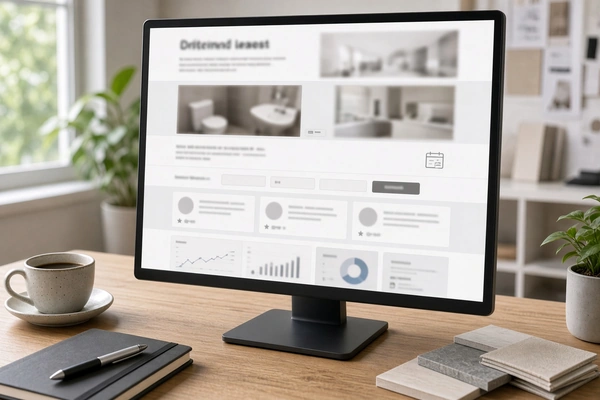
A page that clears 15% almost always has the same 6 parts in the same order: a matched headline, before-and-after proof, one repeated offer, a short form, Google reviews, and tracking. Miss one and the rate drops.
Block 1: A headline that names the job, the city, and one true thing
The headline confirms the homeowner is in the right place within 2 seconds. Name the service and the city, then add one claim you can prove. Something like “Kitchen remodeling in Denver, most projects done in 4 to 6 weeks” (use your real timeline) beats “Transform your home today,” which tells a homeowner nothing and matches no ad. If your ad promised “no design fees,” the headline repeats that exact phrase. The subheadline adds one detail: who it’s for, how long it takes, or the one thing you do that the other guys don’t.
Block 2: Before-and-after proof of the exact service
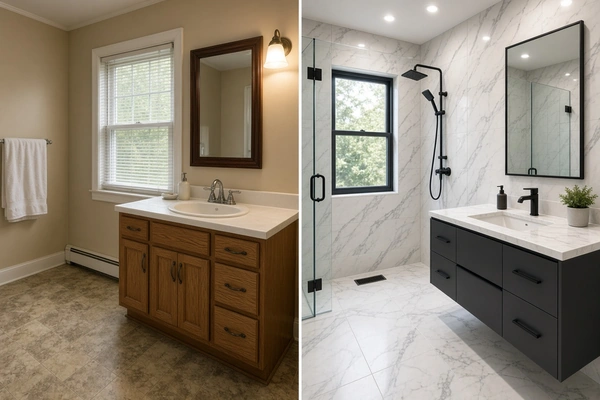
Show the same service the ad promised, not a gallery of everything. A bathroom ad gets bathroom photos. Two to 6 real project photos beat any amount of copy, and they have to be yours, not stock. Caption each with the neighborhood and a real detail, for example the counter material and how many weeks the job took. Stock photos and generic renders read as fake and cost you the trust each click just paid for.
Block 3: One offer, repeated three times
One page, one offer. A free in-home consultation, a fixed design quote, whatever it is, pick one and repeat the button at the top, the middle, and the bottom. Stacking offers (“book a call OR download our guide OR call now”) splits attention and pulls the rate down. The homeowner should never have to scroll back up to find the button.
Block 4: A form that qualifies without scaring people off
Ask for enough to qualify the lead, not enough to make someone quit. Three to 5 fields works: name, phone, ZIP code, project type, and one short “tell us about your project” line. The ZIP and project type do quiet work here. They let you screen out jobs outside your service area or under your minimum before your team spends an hour on the phone. Add one line of microcopy under the button, like “We respond within one business day,” so the homeowner knows what happens next.

Block 5: Google reviews sitting right next to the button
Put your proof where the decision happens. 84% of consumers use Google to read reviews about a local business, per BrightLocal’s 2025 survey, so a homeowner about to fill out your form is already wired to look for them. Pull 3 or 4 real Google reviews that mention the specific service on the page, first name and neighborhood attached, and place them beside the form. A running review system matters more than a one-time push here. For clients who turn on an automated review request after each finished job, we typically see 4 to 6 new Google reviews a month, which keeps the proof current instead of stale from 2 years ago.
Block 6: Tracking wired in before you spend a dollar
If you can’t tell which click became a booked job, you’re guessing, and guessing is expensive. Every page needs a dedicated call tracking number, form submission tracking, a thank-you page counted as a conversion, and UTM tags on the ad URLs so you can see the campaign, keyword, and audience behind each lead. One bathroom remodeler came to us with no idea which Google Ads keywords converted, because the previous agency sent reports with no lead attribution. We installed call and form tracking, then paused the 60% of keywords that had produced zero conversions in 6 months. Same lead volume, ad spend cut by more than half. None of that is possible without tracking wired in from day one.
A 15% Page Can Still Lose to an 8% Page
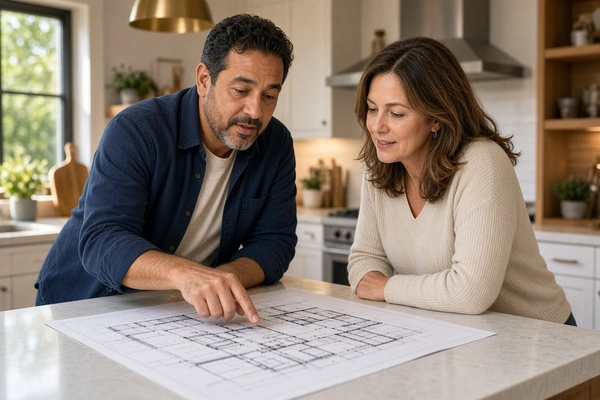
Conversion rate is a means, not the goal. Booked, profitable jobs are the goal. A page that converts at 15% by promising “free quotes, any budget” will bury your sales team in tire-kickers, while a page that converts at 8% on homeowners who match your price point can be worth far more. We rebuilt one high-end kitchen remodeler’s page around the buyer they actually wanted, with project galleries that showed real material specs and costs. Raw lead volume dropped from 15 a month to 11. But the share of qualified leads went from 30% to 72%, and the close rate went from 12% to 34%. Fewer leads, more signed contracts. When each job is worth tens of thousands, chase the right 8%, not a vanity 15%.

Should Every Service Get Its Own Landing Page?
Yes, if you run ads for more than one service. One page per service is how you keep message match tight. A homeowner searching “garage conversion” should not land on a general remodeling page. We took one garage conversion specialist whose previous agency had targeted broad terms like “home remodeler,” which pulled the wrong leads, and built dedicated pages for each type: garage to bedroom, garage to office, garage to ADU. The close rate hit 45%, because every lead was looking for exactly that. The rule is simple: one ad, one service, one page. If you advertise kitchens, baths, and additions, that’s 3 pages, not one page trying to be all 3. Social media for remodelers tends to fall down in the same spot, when the ad targets a specific project but the click lands somewhere generic.
How Does a Better Landing Page Lower Your Cost Per Click?
A relevant page directly lowers what you pay per click. Landing page experience is one of the 3 parts of Google’s Quality Score, alongside expected click-through rate and ad relevance. A page that matches the ad, loads fast, and works on a phone raises that score, and a higher Quality Score lowers your cost per click for the same ad position. So the page does two jobs at once: it converts better and it makes every click cheaper. That’s why a slow, generic homepage costs you twice, with worse conversion and a higher cost per click. Google’s own documentation on Quality Score spells out the landing page experience factor directly. There’s a real difference between where ad clicks should land and general website traffic, and paid clicks are the ones you least want to waste.
Test One Change at a Time
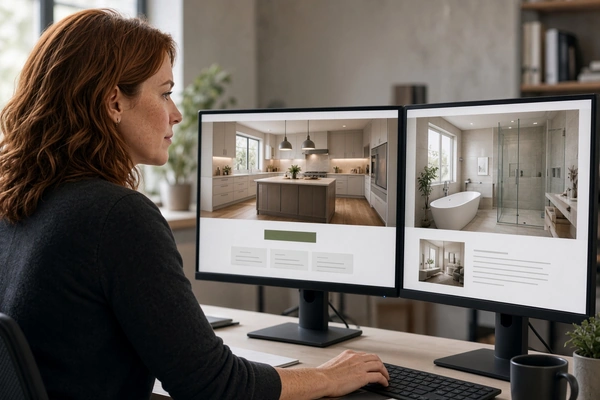
Once a page is live, improve it with one change per test. Test the headline, or the hero image, or the button text, or the form length, one at a time, so you know what moved the number. Give each version a few hundred conversions before you call it, not a few hundred clicks, and judge it on booked, qualified jobs, not raw form fills. Keep a simple log of what you changed and what happened. Over a year, that log becomes the most useful marketing document you own, and it’s the backbone of running PPC without wasted ad spend.
Where Landing Pages Fit If You’d Rather Own Your Market
Paid ads and a sharp landing page bring in leads this week. They don’t build anything you keep. The month you stop paying, the leads stop. That’s the honest trade-off, and it’s why we treat ads as the bridge, not the destination. Running your own ad to your own page and your own CRM already beats renting shared leads from Angi that get sent to 5 other remodelers at once. At least you control the click and the follow-up. But the asset you actually own is your ranking. While the ads run, SEO for remodelers builds the organic positions and Google Business Profile that keep the phone ringing after the ad budget is gone. The remodelers who win long-term use the landing page to make today’s ad spend pay, then use that time to stop depending on paid clicks at all. If you want more of the organic side, our breakdown of getting remodeling leads from Google covers it.
Remodeling landing pages are the cheapest fix in a paid campaign, because the ad cost is fixed and the page is the part you can change any time. Point your next ad at a page built to these 6 blocks, wire in the tracking, and watch the cost per booked job fall. If you’d rather have a team build it, that’s the work we do every day for remodelers, one company per city.
Frequently Asked Questions
What is a remodeling landing page?
A remodeling landing page is a standalone page built for one ad and one service, with no site navigation and a single action: request a quote. It exists to turn paid ad clicks into booked consultations, not to serve every visitor at once the way a homepage does.
What is a good conversion rate for a remodeling landing page?
Home improvement ads convert at about 8% on Google search, per WordStream’s 2026 data. A landing page above 10% is considered good, per Unbounce, and 15% or higher is strong, roughly double the home improvement average.
How many form fields should a remodeling landing page have?
Keep it to 3 to 5: name, phone, ZIP code, project type, and one short description field. Fewer fields raise completion rates, and asking for project type and ZIP up front helps you screen out jobs outside your service area or under your minimum.
Should I send Google Ads to my homepage or a landing page?
Send them to a dedicated landing page. Your homepage serves many audiences, so it dilutes the message from your ad. A page matched to the exact ad and service converts better and improves your Google Ads Quality Score, which lowers your cost per click.
Does a landing page lower my Google Ads costs?
Yes. Landing page experience is one of the 3 factors in Google’s Quality Score. A relevant, fast page raises that score, and a higher Quality Score lowers your cost per click for the same ad position.
How do I track leads from a remodeling landing page?
Use a dedicated call tracking number, form submission tracking, and a thank-you page counted as a conversion, all tied to your ad platform with UTM tags. Without this, you can’t tell which campaign or keyword produced a booked job.
Do I need a new website to run landing pages?
Not always. A landing page can live on your existing site if the platform allows fast, custom pages. Some builders with locked templates make this hard, in which case a WordPress page is usually the fix.