If you’re weighing Local Services Ads vs Google Ads for your remodeling business, here’s the short answer: most remodelers run both, and neither one builds anything you keep. Local Services Ads (LSAs) charge you per lead and rank you on reviews and response speed. Google Ads charges you per click and hands you control of keywords, messaging, and landing pages. LSAs fill the calendar for smaller, urgent jobs. Google Ads pulls in the bigger kitchen and whole-home projects that take months to close. Both work. Both also stop the day you stop paying, which is the part most guides skip.
What is a Local Services Ad? It’s a pay-per-lead listing at the very top of Google Search for categories like kitchen remodeling, bathroom remodeling, and general contracting. You pay when a homeowner calls or messages you, not per click, and businesses that pass Google’s screening show a Google Verified badge.
One quick correction before we go further, because it trips up a lot of contractors. The badge used to be called “Google Guaranteed.” Google replaced it with the Google Verified badge in 2025, and the change went further than a new name, as explained below.
Local Services Ads vs Google Ads: the core difference
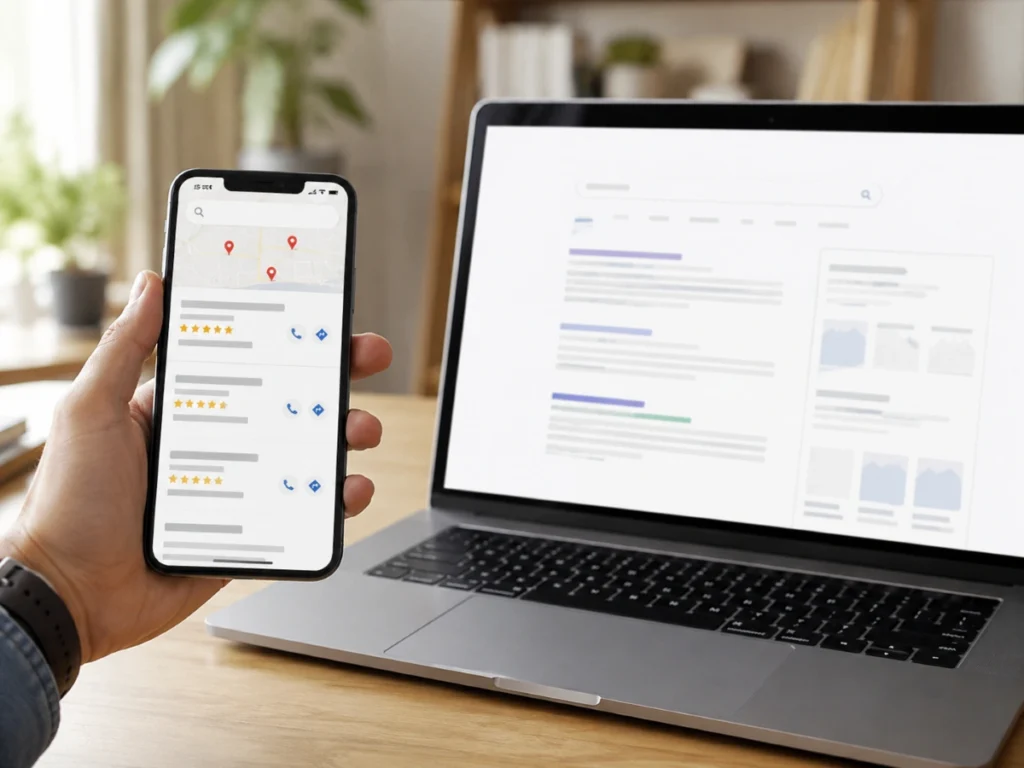
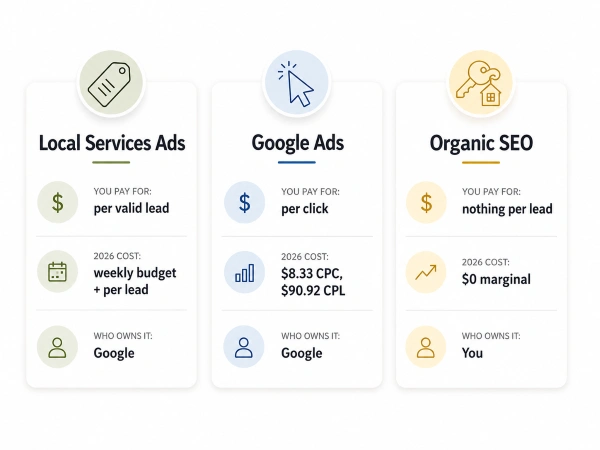
The core difference is what you pay for and how much you control. LSAs charge per lead and run on your reviews, ratings, and response speed. Google Ads charges per click and lets you pick the keywords, write the ad, and choose the page a homeowner lands on.
With an LSA, Google places your profile above the regular ads and organic results, and the homeowner picks you from a short list. You can’t choose keywords or write the copy. Your spot depends on review score, how close you are, and whether you answer the phone. Google is direct about this: if you regularly miss calls or ignore messages, your ad ranking can drop.
Google Ads works the other way. You bid on exact searches like “kitchen remodel cost,” control the headline, and send the click to a page you design. That control is the whole point. You can reach a homeowner who’s three months from hiring, not only the one ready to call this afternoon. We build and manage Google Ads for remodelers for that reason, and we send those clicks to a purpose-built landing page you design rather than a generic homepage.
Here’s how both paid options compare with the channel most remodelers ignore, organic search:
| Factor | Local Services Ads | Google Ads (Search) | Organic / local SEO |
|---|---|---|---|
| You pay for | Each valid lead | Each click | Nothing per lead once you rank |
| Typical 2026 cost (home improvement) | Per valid lead; you set a weekly budget | About $8.33 per click, $90.92 per lead | $0 marginal after you rank |
| Keyword and copy control | Little | Full | Full, on your pages |
| Ranking depends on | Reviews, proximity, response speed | Bid, relevance, quality score | Content, reviews, links, profile |
| Lead stage | Ready to call now | Now plus researching | Now plus researching |
| Who owns it | You | ||
| Best for | Smaller, urgent jobs | Higher-ticket, longer cycles | Lead flow you keep |
Cost sources: Google for the LSA model; WordStream’s 2026 Google Ads benchmarks for home and home improvement; Eclipse client data for organic.
What changed in 2025: Google Verified replaced Google Guaranteed
The green Google Guaranteed badge no longer exists. In August 2025 Google announced a single Google Verified badge, and it rolled out in October 2025.
Google combined Google Guaranteed, Google Screened, and License Verified by Google into one Google Verified badge. It also ended the Money Back Guarantee that used to sit behind the old badge. Homeowners could request a reimbursement only for services booked through Local Services Ads before December 7, 2025, and only within 30 days of the job.
What this means for a remodeler: the old sales pitch leaned on Google’s money-back promise as a trust signal. That promise is gone. Your reviews, your verified license and insurance, and your response speed now carry the trust. Google has said the badge change does not affect how Local Services Ads rank, so your review count and responsiveness still decide your placement. If a guide tells you to “get Google Guaranteed,” it is out of date.
What Local Services Ads and Google Ads cost remodelers in 2026
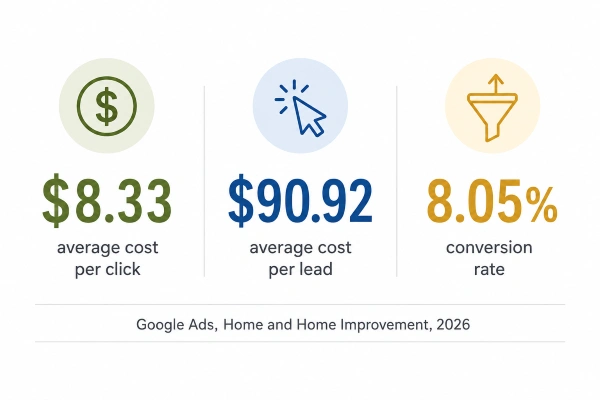
LSAs cost you per valid lead on a weekly budget you set, while Google Ads for home improvement runs about $8.33 per click and $90.92 per lead on average in 2026.
With LSAs, you tell Google how many leads you want each week and pay only for leads tied to the services you offer. If a lead is spam or clearly outside your work, you can ask Google for a credit. The trade-off is that you don’t control the tap. Google decides how many calls your market produces, so lead volume hits a ceiling no budget can raise. For most remodelers that lands somewhere around 10 to 30 leads a month, and for full remodels that can be too thin to feed a crew.
Google Ads has no ceiling like that, but the clicks add up fast. WordStream’s 2026 benchmarks put home and home improvement at an average $8.33 per click, an 8.05% conversion rate, and $90.92 per lead. Those costs rose faster for home services than nearly any other category last year. Run the account loosely and you’ll pay $8 a click for “bathroom cleaning” traffic when you sell bathroom remodels.
I’ll give you a real example. We took over a bathroom remodeler’s account set to broad match with no negative keywords, so “bathroom remodel” was firing ads for cleaning services and bath accessories. We cut about 60% of the keywords that hadn’t converted in six months. Their spend dropped from $4,200 to $1,800 a month at the same lead volume. Control is the difference between a $90 lead and a $250 one.
Do reviews really decide who wins on Local Services Ads?
Yes. Reviews, ratings, and response speed are the biggest levers on LSA rank, which is why a remodeler with 80 reviews usually sits above one with 8, budget aside.
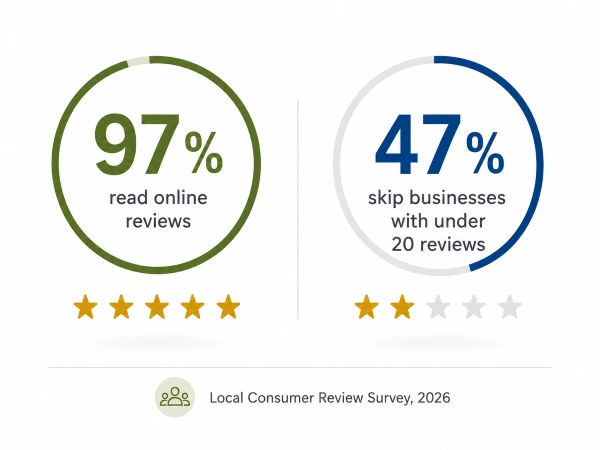
This isn’t only about the algorithm, it’s about the homeowner staring at the results. BrightLocal’s 2026 Local Consumer Review Survey found that 97% of consumers read reviews for local businesses, and 47% won’t use a company with fewer than 20 reviews. On LSAs that behavior gets sharper, because the homeowner is choosing from a row of profiles with star ratings sitting side by side.
LSAs disappoint newer remodelers for one reason. If you have 8 reviews and the profiles above you have 90, the platform barely moves for months. We front-load a review system for clients, and most go from 0 or 1 new reviews a month to 4 to 6 once it’s running, but that gap still takes time to close. If your review count is thin, treat LSAs as a slow build, not a fast switch.
How do you get the Google Verified badge?
You earn the badge by completing Google’s Local Services screening and verification. New advertisers must finish it before ads go live; advertisers who were already verified kept their status automatically when the badge changed.
Expect to provide your business license, proof of general liability insurance, and background checks for owners and client-facing staff. Set your service categories and service area, add your hours, and connect the profile to your Google Business Profile so your reviews feed into the ad. Until verification is complete, your ads will not run.
Which platform fits your projects, LSAs or Google Ads?
Match the platform to your job size. LSAs fit smaller, urgent work. Google Ads fits higher-ticket remodels with long research cycles.
A homeowner with a burst pipe or a quick vanity swap wants someone now, and LSAs put you in front of that person at the moment of need. Plumbers and HVAC techs can keep a calendar full on LSAs alone. A $60,000 kitchen or a whole-home remodel is a different animal. That homeowner spends weeks comparing designs, reading reviews, and collecting bids before anyone picks up the phone.
For those projects, Google Ads earns its place. You can target “kitchen remodel cost” in your city and send that homeowner to a page with real project photos and honest pricing, long before they’re ready to buy. LSAs can’t do that. They only fire when someone’s already ready to call, which is exactly the wrong moment for a job that took three months to decide.
The catch with both paid channels
Both LSAs and Google Ads share one flaw: the leads stop the day you stop paying. You’re renting attention, not building an asset.
Look at what an LSA lead and a shared Angi lead have in common. You pay per contact, and so do the contractors ranked next to you. Across our clients’ books, shared leads from Angi and HomeAdvisor have run $87 to $142 each, and they close at 22% to 31%, because four other remodelers bought the same lead. Leads from a remodeler’s own organic ranking close at about 73%, because the homeowner found you directly instead of picking from a list.
One Dallas kitchen and bath client was spending $6,200 a month on Angi and $3,800 on Google Ads, closing roughly 1 in 10. We rebuilt the site, ran a review system, and got them to #2 in the map results for their main search. Organic leads went from 3 or 4 a month to 22 to 27. They cancelled Angi and paused Google Ads. The leads that used to cost $127 now cost nothing beyond the work to hold the rankings.

Where organic search beats renting leads
Organic search is the one channel where your cost per lead falls over time instead of climbing. Once your pages rank, the marginal cost of the next lead is close to zero.
That’s not an argument to shut off paid ads tomorrow. SEO takes months to compound, so LSAs and Google Ads are the right bridge while your organic rankings and reviews build. The question is where the durable money goes. Every dollar into an ad buys one burst of clicks. A dollar into your own organic rankings buys a page that keeps producing after the budget’s spent, built on content that ranks, quality backlinks, and the on-page issues most remodeling sites never fix. That’s the difference between spending on marketing and owning it.
So which should remodelers choose?
Run LSAs and Google Ads for the leads you need this quarter, and invest in organic search for the leads you want next year. The trap is treating paid ads as the entire plan.
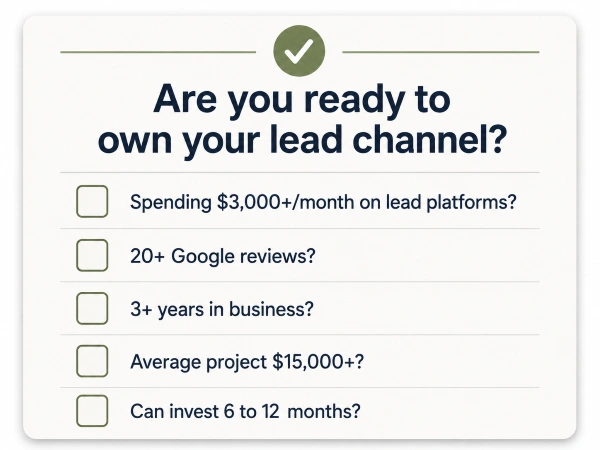
Here’s a fast gut check we use with remodelers. Are you spending $3,000 or more a month on lead platforms? Do you have 20 or more Google reviews? Have you been in business three years or longer? Is your average project $15,000 or higher? Can you invest for 6 to 12 months before judging results? Four yeses means you’re ready to build a channel you own, not just rent more leads.
A working growth budget sits around 10% to 15% of the revenue you’re targeting. Split it so LSAs and Google Ads cover today’s pipeline while a real share funds the rankings that keep paying later. If you want help building a plan to own your market instead of renting it, that’s the work we do.
The Local Services Ads vs Google Ads decision matters, but it’s the smaller question. Pick the paid channel that fits your jobs now. Then build the one nobody can switch off.
Frequently asked questions
Are Local Services Ads worth it for remodelers?
For smaller, urgent jobs and remodelers with 20-plus strong reviews, yes. LSAs deliver ready-to-hire leads at the top of Google, usually 10 to 30 a month. For full remodels and custom builds, that volume is often too low on its own, so pair LSAs with Google Ads and organic search.
What’s the difference between Local Services Ads and Google Ads?
Local Services Ads charge per lead and rank you on reviews, proximity, and response speed, with no control over keywords or copy. Google Ads charges per click and gives you full control over keywords, messaging, and landing pages. LSAs suit urgent jobs; Google Ads suits higher-ticket projects with longer research cycles.
How much do Local Services Ads cost?
With LSAs you set a weekly budget and pay per valid lead, and you can request a credit for invalid leads. Cost per lead varies by trade and market. For comparison, Google Ads in home improvement averaged $90.92 per lead in 2026, per WordStream, so check your own category before you budget.
How many reviews do you need for Local Services Ads?
Aim for at least 20. BrightLocal’s 2026 survey found 47% of consumers won’t use a business with fewer than 20 reviews, and LSA ranking leans heavily on review score. Newer remodelers with under 10 reviews should expect a slow start while they build up.
Is Google Guaranteed the same as Google Verified?
Not quite. In 2025 Google replaced Google Guaranteed, Google Screened, and License Verified by Google with one Google Verified badge, available for select verticals, and ended the Money Back Guarantee that sat behind the old badge. Remodelers who pass screening now display Google Verified.
Should remodelers use Local Services Ads, Google Ads, or SEO?
Use LSAs and Google Ads for immediate leads, and build SEO for leads you keep. In our client data, organic leads close at about 73% versus 22% to 31% for shared paid platforms, at close to $0 marginal cost once you rank. Paid ads are the bridge; organic is the asset.
Do Local Services Ads still have a money-back guarantee?
No. Google ended the Money Back Guarantee tied to the old Google Guarantee badge. Consumers could request reimbursement only for services booked before December 7, 2025.
Which is better for a kitchen or whole-home remodel?
Usually Google Ads. High-ticket remodels have long research cycles, and Search lets you reach homeowners while they are still comparing, which LSAs are not built for.
How do I rank higher in Local Services Ads?
Reviews, responsiveness, proximity, and a complete verified profile. Answer calls live, reply fast, and keep reviews growing steadily.