
If you’re working out how to get kitchen remodeling leads in 2026, you have 9 channels to pick from. 2 of them you own: your Google Business Profile and service pages that rank.
The other 7 you rent. They send leads while you pay, then stop.
The owned channels win on quality. Our clients report that 73% of their organic leads book an estimate. Leads from paid lead platforms book 22% to 31% of the time.
So judge every channel by booked estimates and signed jobs. Inquiry counts make cheap channels look better than they are.
Kitchens are worth getting this right. The 2026 Houzz Kitchen Trends Study surveyed 1,780 homeowners on Houzz with recent or planned kitchen projects. It put the median major kitchen remodel at $55,000 and a minor one at $20,000.
Demand isn’t growing much, though. Harvard’s Joint Center for Housing Studies expects remodeling spending growth to slow to 0.5% a year in the second quarter of 2027. Flat demand means more remodelers bidding on the same kitchens.
What is a qualified kitchen remodeling lead?
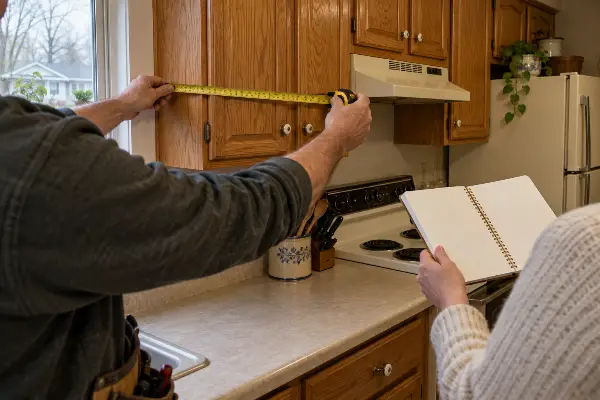
A qualified kitchen remodeling lead is a homeowner in your service area who wants a kitchen project you sell, has a budget that fits your price range and plans to start inside your booking window. Anyone missing 1 of those 4 is an inquiry. Compare channels on qualified leads only, or cheap inquiries will look like cheap leads.
That line matters more for kitchens than for most jobs. A minor remodel and a major one both land in your CRM as a “kitchen lead.” Houzz puts their medians $35,000 apart.
Your first call should check 4 things:
| Check | Ask the homeowner | What it tells you |
|---|---|---|
| Service area | Where is the house? | Whether you’ll take the drive |
| Scope | Which rooms, and what changes? | A refresh or a full remodel |
| Budget | What range have you planned for? | Whether the job fits your price point |
| Timing | When do you want to start? | Whether it fits your booking window |
Design questions can wait for the design meeting.
How to get kitchen remodeling leads in 2026: the 9 channels at a glance
The 9 are your Google Business Profile, service pages that rank, Google Ads, Local Services Ads, Facebook and Instagram ads, Houzz Pro, pay-per-lead marketplaces, Yelp Ads and direct mail.
The table shows each platform’s own 2026 pricing. Where a platform doesn’t publish a price, it shows how the platform charges instead.
| # | Channel | How it charges | 2026 cost data | Sold to other pros? | Keeps working after you stop paying? |
|---|---|---|---|---|---|
| 1 | Google Business Profile | Free | Google says creating and managing a profile is free | No | Yes |
| 2 | Service pages in organic search | No fee to Google | Google says it doesn’t accept payment to rank a site higher | No | Yes, rankings stay |
| 3 | Google Ads | Per click | Daily spend never tops 2 times your average daily budget. A billing period never tops 30.4 times it | No | No |
| 4 | Local Services Ads | Per valid lead | Price varies by location, job type, lead type and bidding mode. Invalid leads aren’t charged | No | No |
| 5 | Facebook and Instagram ads | A budget you set | Runs in an ad auction, so cost moves with your audience and competition | No | No |
| 6 | Houzz Pro | Subscription | Plans listed at $99, $199 and $399+ a month. Advertising package from $499 a month | Not stated | No |
| 7 | Angi, HomeAdvisor and Thumbtack | Per lead | HomeAdvisor says lead price varies by type of work. Thumbtack has no join or membership fee | HomeAdvisor matches up to 4 pros per request | No |
| 8 | Yelp Ads | Per click | From $150 a month, with minimums subject to change | No | No |
| 9 | Direct mail (USPS EDDM) | Postage per piece | $0.260 per piece since July 12, 2026, up from $0.247 | No | No |
Paid channels win on speed. Owned channels win on what you keep.
Which kitchen lead channels do you own?
2 of them: your Google Business Profile and the service pages on your site. Neither charges per lead, and both keep working after you stop paying for help with them.

1. Google Business Profile and the Map Pack
Your Business Profile is what shows up in the Map Pack, the 3 listings under the map for searches like “kitchen remodeler near me.” Google says creating and managing a profile is free.
Reviews decide who gets the call from there.
BrightLocal’s 2026 Local Consumer Review Survey of 1,002 US consumers found that 97% read reviews for local businesses. Also, 74% look for reviews written in the last 3 months. And 68% will only use a business with 4 stars or more, up from 55% in 2025.
Google’s own guidance names 3 local ranking factors: relevance, distance and prominence, which it describes as how well-known a business is. It says more reviews and positive ratings can help your ranking. That’s the short version of how reviews affect rankings.
In our client markets, a remodeler with under 10 reviews rarely cracks the Map Pack when competitors have 80+. Our clients average 4 to 6 new Google reviews a month from month 2 on, up from 0 to 1 before.
A Dallas-area kitchen and bath remodeler went from 47 reviews to 119 in 8 months. By month 7, it was #2 in Google Maps for “kitchen remodeler Dallas.”
Where homeowners ask for recommendations is shifting too. The same BrightLocal survey found use of ChatGPT and other AI tools for local recommendations jumped from 6% to 45% in a year. Google’s share as a review source fell from 83% to 71%.
We track what gets remodelers named in AI answers as that shift plays out.
2. Service pages that rank in organic search
Google’s Search Central guide says Google doesn’t accept payment to rank a site higher. So the cost of this channel is the work: pages, photos, reviews and links, done by your team or through SEO for remodelers.
Build 1 page for each kitchen job you sell: full remodels, layout changes, cabinets and countertops. Put the size, materials and cost range on every gallery project a client lets you publish.
Service pages do the selling. In a 90-day test across 4 of our clients, service pages turned visitors into leads at 6.4%. Blog posts converted at 1.8%.
Yes, you’re reading a blog post.
The same test found blog posts ranked faster, in 47 days on average against 68 for service pages. Blog posts bring in researchers. Service pages turn them into estimates.
Size moves the price too. Houzz found a $75,000 median for a major remodel of a larger kitchen, against $46,000 for a smaller one. Your galleries should make that difference obvious.
Our kitchen lead generation work starts with service pages for that reason, before any blog content.
Which kitchen lead channels do you rent?
The other 7: Google Ads, Local Services Ads, Facebook and Instagram ads, Houzz Pro, pay-per-lead marketplaces, Yelp Ads and direct mail. Each one sends leads while you pay and stops when you stop.

3. Google Ads
You pay per click and set an average daily budget. Google says spend will never exceed 2 times that budget on a given day. A billing period will never cost more than 30.4 times it.
That makes Google Ads the easiest paid channel to cap. It’s also one of the fastest, since ads can ring your phone as soon as they run.
Run ads while SEO builds, then cut spend as organic leads replace it. Our Google Ads for remodelers work runs on that plan.
4. Google Local Services Ads
Google’s US category list for Local Services Ads includes kitchen remodeling, though availability varies by area. You’re charged per valid lead, like a call or message.
Google says lead prices vary by location, job type, lead type and bidding mode. It doesn’t charge for leads it finds invalid, and in the US it can credit low-quality leads automatically.
The setup is changing in 2026. Google is folding Local Services Ads into Google Ads as Performance Max campaigns with pay-per-lead goals. Manual cost-per-lead caps go away.
Google scheduled the first wave for August 2026, with trades like plumbing, HVAC and roofing. Kitchen remodeling isn’t named for that wave. Service-area businesses without a storefront are scheduled for late 2026, and the remaining categories for 2027.
Download your LSA performance reports before your account moves. Google says your lead history transfers, but past performance reports won’t.
LSAs tend to fill the calendar with smaller, faster jobs. A $55,000 kitchen usually gets a longer look, so pair them with pages that rank. Setup steps are in our LSA guide for remodelers.
5. Facebook and Instagram ads
Meta ads run on a budget you set. An ad auction decides the rest, so cost moves with your audience and competition.
Kitchens photograph well, which is why remodelers love these platforms. But every client dataset we’ve reviewed shows the same thing. Google produced 5 to 8 times as many remodeling leads as Instagram, Facebook or TikTok.
Post finished kitchens 2 to 3 times a week when you have them, and answer the comments. Put the rest of that time into reviews.
6. Houzz Pro
Houzz Pro sells a subscription, not leads by the piece. Its pricing page lists plans at $99, $199 and $399+ a month, plus an advertising package from $499 a month. Plans switch to an annual subscription after a 30-day free trial.
Houzz is built around design photos, which suits kitchen work. Judge it like every other channel: booked estimates against an annual commitment.
7. Angi, HomeAdvisor and Thumbtack
These marketplaces charge per lead, and the price moves with the job. HomeAdvisor says what you pay varies by the type of work you do. Angi’s annual report for 2025 says lead revenue varies with the service requested and the location.
HomeAdvisor’s terms say it will try to match each homeowner with up to 4 pros. It also says you’re charged for each lead whether or not you win the job.
Thumbtack charges no fee to join and no membership fee. You pay for leads, and Thumbtack says it limits how many pros compete for each job.
If you need calls this month, these sites deliver them. Track each lead to a booked estimate, and drop the platform when it falls behind your other channels.
8. Yelp Ads
Yelp Ads charge per click against a monthly budget. Yelp’s pricing page lists ads from $150 a month. It notes that minimum budgets are subject to change, and you can cancel anytime.
Yelp says the price per click depends on competition and relevance. Test it for a set window and count booked estimates, not clicks.
9. Direct mail to nearby homes
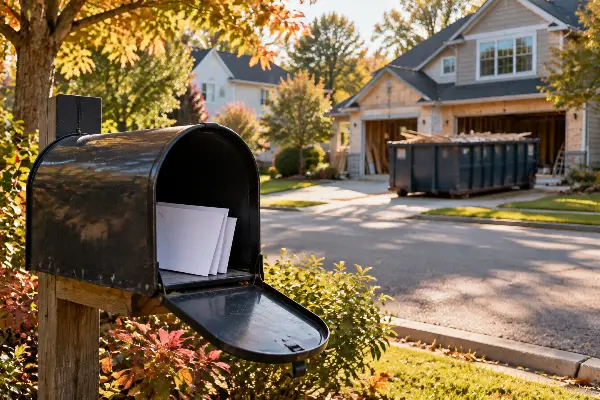
USPS Every Door Direct Mail sends postcards to every address on the routes you pick. EDDM Retail postage has been $0.260 per piece since July 12, 2026, up from $0.247. Printing is a separate cost.
The best use for kitchens is the blocks around a finished job. Neighbors have watched the dumpster and the crew for weeks. A postcard with the finished kitchen closes that loop.
Which channel books the most kitchen estimates?
Owned channels, by a wide margin. Our clients report that 73% of organic leads book an estimate, against 22% to 31% from paid lead platforms.
That gap shows up in close rates too. A remodeler we work with put it this way:
“I went from closing 1 out of 10 Angi leads to 4 out of 10 from Google. And the jobs are double the size.”
Price per lead hides this. A cheap lead that never books an estimate costs more than a pricier one that does.
For clients who came to us leaning on lead sites, organic leads typically replaced that spend by month 5 to 7.

Chasing more kitchen leads is the wrong goal
The standard advice treats kitchen leads as a volume game. Our best kitchen result came from getting fewer of them.
A high-end kitchen remodeler in the Pacific Northwest came to us with 15 leads a month. Only 30% were qualified. The rest were budget shoppers, because the site looked like every budget kitchen company in town.
So we rebuilt it around high-end projects. Project galleries got material specs and costs. We added a page on what to expect from a high-end kitchen remodel, plus 22 service pages written for that buyer.
| Pacific Northwest kitchen remodeler | Before | After |
|---|---|---|
| Leads per month | 15 | 11 |
| Qualified share | 30% | 72% |
| Close rate | 12% | 34% |
| Signed jobs per month (leads x close rate) | 1.8 | 3.7 |
Signed jobs roughly doubled on fewer leads.
The hardest part was the owner’s nerves. For 3 months, every report got the same question: why did leads go down? The close-rate data answered it.
Results vary by market, competition, and client engagement. Past performance does not guarantee identical future results.
How long does each channel take to send kitchen leads?
Paid channels can send leads as soon as they’re live. Owned channels take months, then keep working.
| Channel | When leads typically start |
|---|---|
| Google Ads, Facebook and Instagram ads, Yelp Ads | As soon as ads run |
| Local Services Ads | After Google’s screening |
| Houzz Pro, Angi, HomeAdvisor, Thumbtack | Once your profile or ads are live |
| Direct mail | When postcards land |
| Google Business Profile and service pages | Ranking movement in 30 to 60 days, long-tail page 1 in 60 to 90 days, the Map Pack in 90 to 180 days, a steady 15+ leads a month around months 6 to 9 |
Those SEO ranges are typical across our clients, not promises. Your reviews and your competition set the pace.
Since we started building service pages before blog content, time to first lead dropped from 4.1 months to 2.8 months on average. Our SEO cost and timeline breakdown shows what each phase looks like.

When do homeowners search for kitchen remodels?
Right after the holidays. Our keyword tracking shows “kitchen remodel cost” searches peaking in January.
Total remodeling searches drop 20% to 30% from November through January in most markets. New SEO clients who hit that dip in month 4 or 5 often think SEO stopped working.
It’s the market.
Keep your Google profile, service pages and ads running through December. The homeowner pricing a kitchen in January is choosing a remodeler for spring. We lay out an off-season marketing plan for that stretch.
How do you track which channel signs the kitchen?
Tag every call and form by source. Then follow each one to a booked estimate, a signed contract and a collected payment.
Without that, you can’t tell which part of your budget works.
A Mid-Atlantic bathroom remodeler came to us with no lead tracking on its Google Ads. Once call and form tracking went in, 60% of the keywords showed 0 conversions over 6 months. We paused them, and ad spend fell 57% with the same lead volume.
Kitchen leads need the same tracking and a longer window. A kitchen can take months to sign, so count a lead as lost only when the homeowner says no.
Ask any agency this too: how many other remodelers in your city does it work with? If it works with even 1, it can’t rank you both first for “kitchen remodeler” in your city. It’s the reason we work with one remodeler per city.
We only take on remodelers doing $500K+ a year. Below that, start with Google Ads and your Google profile.
If you’re past that line and working out how to get kitchen remodeling leads for next spring, pull 2 numbers from your CRM first: booked estimates by source and signed jobs by source. Then see how our remodeling lead generation works and whether your city is still open.
FAQs
What’s the fastest way to get kitchen remodeling leads?
Paid channels are fastest. Google Ads can ring your phone as soon as ads run, and marketplaces like Angi send leads once your profile is live. Both stop the day you turn them off, so run them while your Google profile and service pages build. Our clients report that 73% of organic leads book an estimate, against 22% to 31% from paid lead platforms.
How long does it take to get kitchen remodeling leads from SEO?
Across our clients, rankings start moving in 30 to 60 days, and the Map Pack for your main city search takes 90 to 180 days. A steady 15+ leads a month typically arrives in months 6 to 9. Your review count and local competition set the pace.
What counts as a qualified kitchen remodeling lead?
It’s a homeowner in your service area who wants a kitchen project you sell, has a budget that fits the jobs you take on and plans to start inside your booking window. Anyone missing 1 of those 4 is an inquiry. Count only qualified leads when you compare channels.
Are shared leads worth it for kitchen remodelers?
They can fill a slow month, since leads arrive as soon as your profile is live. HomeAdvisor’s own terms say it tries to match each homeowner with up to 4 pros, and our clients book estimates on only 22% to 31% of paid-platform leads. Track each one to a signed job, and drop the platform when it falls behind your other channels.
Can kitchen remodelers use Google Local Services Ads?
Yes. Kitchen remodeling is on Google’s US category list for Local Services Ads, though availability varies by area. Google is moving these ads into Google Ads as Performance Max campaigns, with service-area businesses scheduled for late 2026 and remaining categories for 2027.
How many Google reviews does a kitchen remodeler need?
Google doesn’t publish a number. In our client markets, a remodeler with under 10 reviews rarely makes the Map Pack when competitors have 80+. Recency matters too, since BrightLocal’s 2026 survey found 74% of consumers look for reviews written in the last 3 months.