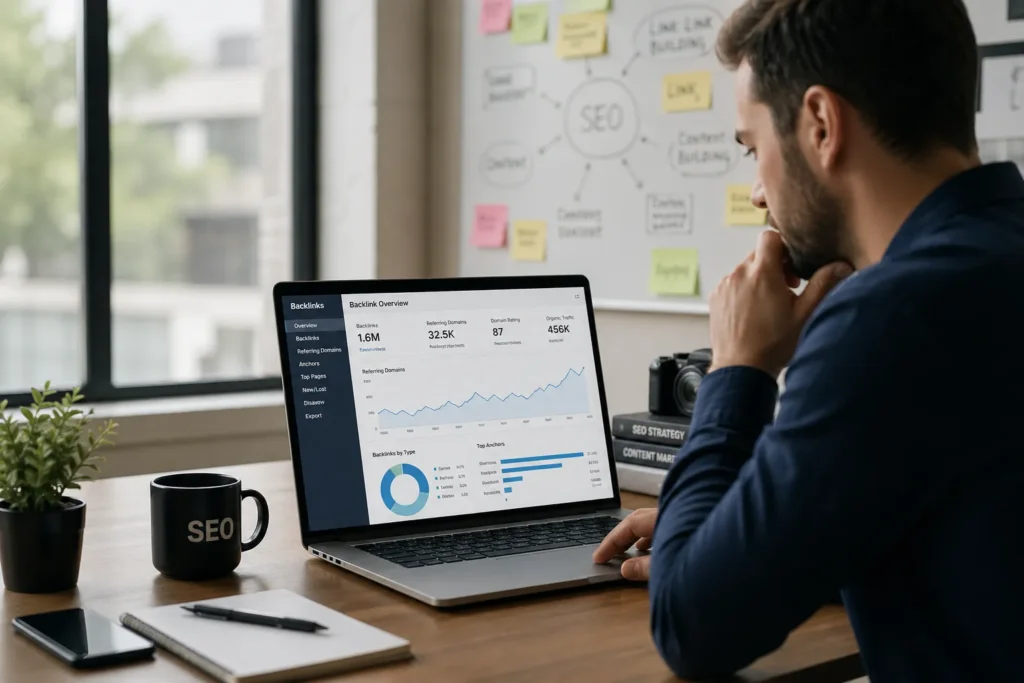
Most websites don’t have a single backlink. According to AIOSEO’s January 2026 data, 95% of all indexed pages sit at zero. None. And the pages that do rank at the top of Google? They’ve got roughly 3.8 times more backlinks than anything else on page one.
Backlinks for websites are links from other sites that point to yours. Search engines treat them as votes of confidence. A link from a trusted, relevant site tells Google your page is worth showing to people. That basic idea hasn’t changed since the early days of search. But what has changed is how much harder it’s become to earn the links that actually matter.
I’m not going to pretend this is simple. Building a real backlink profile takes months of work, real money, or both. But if you skip it, you’re competing with one hand tied behind your back. The global SEO services market hit an estimated $83.9 billion in 2026, per Mordor Intelligence. Businesses aren’t spending that kind of money on a tactic that doesn’t work.
This guide covers what backlinks actually do for your rankings, how to build them the right way, what they cost, which tools are worth your time, and how to avoid the mistakes that waste thousands.
Why Do Backlinks for Websites Still Matter in 2026?
Backlinks still correlate with higher rankings, more traffic, and stronger domain authority. That’s the short answer.
The longer one is a bit more complicated. Google’s Gary Illyes said backlinks remain a ranking factor but aren’t in the top three anymore. That statement made some people panic. It shouldn’t have. What it means is that backlinks alone won’t save bad content. But for two pages with similar quality and relevance, the one with stronger links wins almost every time.
A 2026 study of 1,462 domains found that pages ranking on page one had a median of 907 referring domains. That number varies wildly by industry. Home and garden sites averaged 461. Finance and insurance? Over 3,000. Your niche dictates your target, not some universal benchmark.
The real shift isn’t whether backlinks matter. It’s that Google (and AI systems like AI Overviews, ChatGPT, and Perplexity) now weigh link quality far more heavily than quantity. Ten links from relevant, authoritative sites beat 500 links from random directories. I’ve seen businesses with massive link profiles that still don’t rank because 90% of their links come from garbage sources. If you’re working with an SEO specialist who pushes volume over relevance, that’s a red flag.
How to Build High-Quality Backlinks
Not every backlink is equal. A single link from a site with genuine authority and topical relevance can move your rankings more than a hundred low-quality ones. The goal isn’t more links. It’s better ones.
Publish Content That Earns Links on Its Own
Original research, in-depth guides, and data-driven posts attract backlinks without you asking. AIOSEO’s 2026 report found that long-form content over 3,000 words pulls in 77.2% more backlinks than short posts under 1,000 words. Businesses running blogs get 97% more backlinks than those that don’t.
That doesn’t mean every post needs to be a 5,000-word behemoth. It means your content needs to say something worth referencing. If you’re rewriting what already exists on page one, nobody’s linking to it. The bar is original insight, real data, or a perspective people can’t get elsewhere. Eclipse Marketing’s guide on content’s role in SEO breaks down how to make that happen.
Use Guest Posting (But Be Selective)
Guest blogging still works. But the game has shifted. Writing generic 500-word posts for any site that’ll accept them? That was a 2018 tactic. In 2026, about 48.6% of SEOs surveyed by Editorial.Link considered digital PR the most effective link-building method, surpassing traditional guest posting.
If you guest post, target sites your actual audience reads. Write something specific enough that the host site’s editor would’ve commissioned it anyway. Anything less is a waste of your time.
Build Real Relationships
This one doesn’t scale quickly, and that’s exactly why it works. Engage with journalists, bloggers, and content creators in your space. Share their work. Respond to HARO queries or PR requests with useful quotes. Over time, you become someone they think of when they need an expert to cite.
I’ve watched this play out dozens of times. One well-placed relationship with a reporter at a major publication can produce more ranking impact than six months of cold outreach. The off-page SEO benefits compound over time.
Amplify Through Social Media
Social media links don’t directly pass link equity. But they get your content in front of people who do link: journalists, bloggers, other businesses. Think of social as distribution, not link building itself. The more eyeballs on your best content, the higher the chances someone references it in their own work.
Monitor What You’ve Built
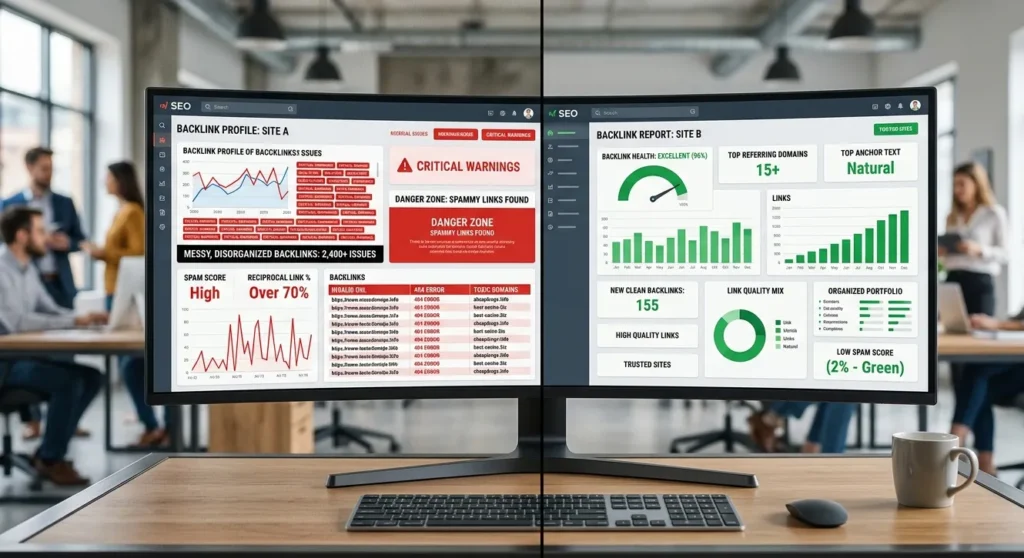
You can’t manage what you don’t track. Google Search Console shows your backlinks for free. Ahrefs and SEMrush give deeper data, including competitor analysis, toxic link detection, and new link alerts. Regular audits aren’t optional if you’re serious about this. A quarterly review catches problems (like spammy links showing up from sources you didn’t ask for) before they snowball into ranking drops. If you’re running a full SEO audit, backlinks should be a dedicated section.
What Do Backlinks Actually Cost in 2026?
This is the part most guides leave out because the numbers aren’t pretty.
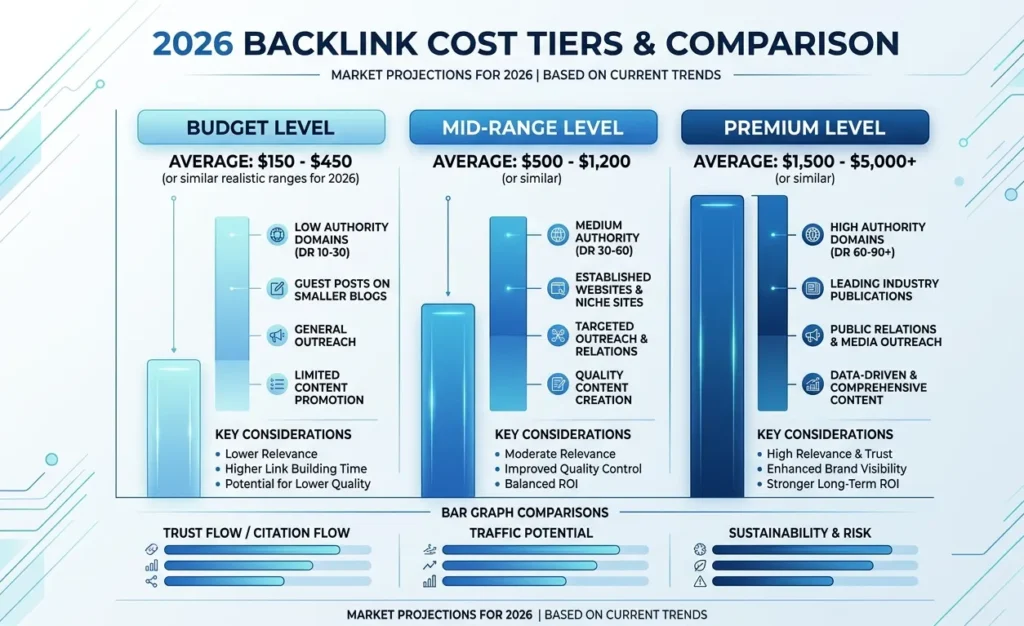
The average cost of a high-quality backlink sits around $361. An Editorial.Link survey from March 2026 found that SEOs consider roughly $509 an acceptable price for one good link. And that’s per link, not per month.
Monthly spend adds up fast. About 64% of SEOs who invest in link building spend $3,000 or more per month. Of those, 38% spend over $6,000 and 17% exceed $12,000.
| Tier | Per-Link Cost | Monthly Budget | What You Get |
| Budget | $100 – $300 | $1,000 – $3,000 | Basic outreach, lower-authority sites |
| Mid-Range | $300 – $700 | $3,000 – $6,000 | Targeted, relevant placements |
| Premium | $700 – $1,500+ | $6,000 – $12,000+ | High-authority digital PR, branded mentions |
Here’s my contrarian take: most businesses shouldn’t start with paid link building at all. If your site doesn’t have content worth linking to, you’re paying to drive authority toward pages that won’t convert. Fix the content first. Then invest in distribution and links. That ordering matters more than people think.
How to Pick the Right Backlink Tools
You don’t need five subscriptions. You need one or two that fit how you actually work.
What Should a Good Backlink Tool Do?
At minimum, it should show your existing backlinks, flag toxic ones, reveal competitor link profiles, and surface new opportunities. Ahrefs indexes roughly 35 trillion links. SEMrush claims 43 trillion. The raw database size matters less than how well the tool filters for relevance and freshness.
I’ve used both extensively. Ahrefs tends to be better for pure backlink analysis and content gap research. SEMrush edges ahead for all-in-one campaign management. SE Ranking offers a solid middle ground at a lower price point. The best AI SEO tools now integrate link analysis into broader AI-driven workflows.
Don’t Overspend on Tools
Free options exist. Google Search Console covers basic link tracking. Moz’s free tier gives you ten link queries per month. If you’re a small business running a blog and building five to ten links per month, a free or entry-level plan is enough. Enterprise tool pricing makes sense when you’re managing link campaigns across dozens of pages.
Backlink Strategies That Work for Real Businesses
Theory is nice. Execution is what moves rankings.
Work With Industry-Adjacent Content Creators
Say you run an e-commerce store. You’re not pitching cold emails to random bloggers. You’re finding creators who already write about your product category and offering something they need: exclusive data, early product access, expert quotes for their upcoming posts. The link comes naturally because you provided real value, not because you asked for a favor.
Get Active in Your Community
For local businesses, this means chambers of commerce, local news sites, and community event pages. For niche online businesses, it means Reddit communities, industry Slack groups, and forums where your audience hangs out. You’re not dropping links. You’re being useful. The links follow. If you want to understand how brand mentions compare to backlinks, the difference is smaller than most people assume.
Create Content With Built-In Link Incentives
Joint roundups, collaborative research, and co-authored guides give every contributor a reason to share and link. These work especially well for small and mid-size businesses that don’t have the domain authority to attract links passively.
How to Keep Your Backlink Strategy Current in 2026
SEO changes fast. Link building changes with it.
Stay on Top of Algorithm Updates
Google’s post-2024 core updates have pushed even harder toward quality and authority signals. AI Overviews now appear in over 50% of search results, and the content that gets cited tends to come from pages with strong E-E-A-T signals and authoritative backlink profiles. If you’re not following what Google’s doing, you’re guessing.
Audit Your Links Every Quarter
A 2026 Editorial.Link survey found that 78.1% of SEO professionals report positive ROI from link building. But that number assumes you’re cleaning out the bad stuff. Old, spammy, or irrelevant links drag your profile down. Use your backlink tool’s disavow feature for anything toxic that you didn’t build intentionally. Our piece on what to avoid when building backlinks covers the common traps.
Spread Your Links Across Source Types
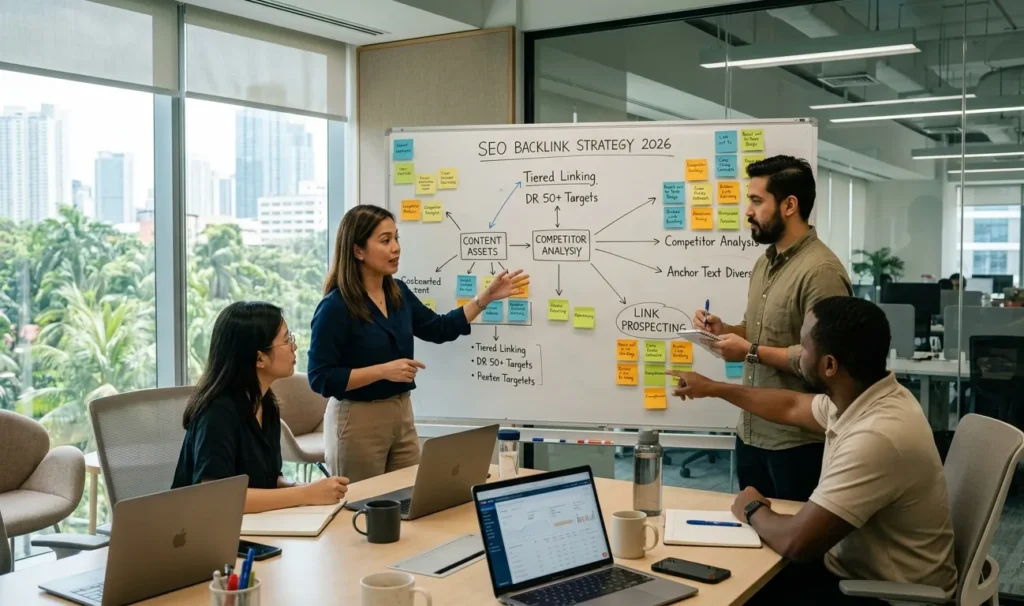
A healthy backlink profile doesn’t come from one channel. You need a mix: editorial links from publications, contextual links from guest content, brand mentions from PR, and local links from directories and community pages. If 80% of your links come from one source type, that’s fragile. Diversify.
Build a Site People Actually Want to Visit
This sounds obvious. It isn’t. Fast load times, mobile-friendly design, and clear navigation make your site more linkable. Nobody recommends a slow, confusing website to their audience. The design and SEO connection is tighter than most people realize. Fix the content first. Then invest in distribution and links. That ordering matters more than people think, and a free SEO consultation can help you figure out which step you’re actually on.
FAQs
How many backlinks does a website need to rank on page one?
There’s no magic number. A 2026 study of 1,462 domains found a median of 907 referring domains across page-one results, but that varies wildly by industry. Less competitive niches like apparel averaged 76 referring domains. Finance averaged over 3,000. Focus on your specific keyword competition, not a universal target.
Do backlinks for websites still matter with AI search?
Yes. Backlinks still correlate with higher rankings across Google’s traditional results and AI Overviews. AI systems like Google’s AI Overviews and ChatGPT tend to cite content from high-authority pages, and authority is still largely determined by backlink profiles. The difference is quality matters even more. Low-quality links offer almost no benefit.
How much does a quality backlink cost in 2026?
The average price for a high-quality backlink is about $361, according to 2026 data. An Editorial.Link survey found SEOs consider $509 acceptable for one premium link. Monthly link-building budgets range from $1,000 to $12,000+ depending on the scope and competitiveness of the target keywords.
Is it safe to buy backlinks?
Risky. About 74% of link builders have tried paid links, but Authority Hacker’s data shows they yield only about two extra links per month on average and carry real penalty risk. Google’s guidelines explicitly warn against link schemes. If you buy, you’re gambling. Earned links through content and digital PR produce better long-term ROI, with 78.1% of SEO professionals reporting positive returns.
What’s the difference between a good backlink and a bad one?
A good backlink comes from a relevant, authoritative website. It sits within actual content (not a sidebar or footer), uses natural anchor text, and comes from a site that your target audience might actually visit. A bad backlink comes from a low-authority site, a private blog network, or a spam directory. Bad links don’t just fail to help. They can actively hurt your rankings.
How long does it take for backlinks to affect rankings?
Most SEOs see initial movement within three to six months after acquiring quality links. FirstPageSage data suggests a break-even point around seven months for strong campaigns, with compounding returns over one to three years. Link building is a long game. Anyone promising overnight results from backlinks is either exaggerating or using risky tactics.
Can I build backlinks for my website myself, or do I need an agency?
You can absolutely do it yourself, especially with free tools like Google Search Console and entry-level plans from Ahrefs or SEMrush. The trade-off is time. DIY campaigns take weeks to months for meaningful results and carry higher risk of mistakes without experience. Professional link-building retainers typically run $3,000 to $10,000 per month but offer faster, higher-quality results with better risk management.