By Larry Collins, President of HFS Financial. Reviewed for accuracy by HFS Financial. Updated July 6, 2026.
For most general contractors, the best social media platforms are Facebook and Instagram, backed up by a free Google Business Profile. Facebook reaches the widest homeowner audience, Instagram sells your work with photos, and a Google Business Profile catches people who are ready to hire right now. Commercial builders should add LinkedIn. Trades with strong visuals, like pools, kitchens, and decks, do well on YouTube and TikTok. You do not need all of them. Pick two, post proof of your work every week, and answer every message. That beats spreading yourself thin across seven apps. Below we cover each platform, who it fits, and one move most contractors skip: putting a monthly payment option in front of homeowners who stall on price.
Social media marketing for general contractors means using platforms like Facebook, Instagram, YouTube, and a Google Business Profile to show finished work, collect reviews, answer homeowner questions, and bring in leads. Done well, it builds trust before the first phone call and turns local searchers into signed jobs.
Here is where your customers actually are. In Pew Research Center’s 2025 survey of U.S. adults, 84% use YouTube, 71% use Facebook, half use Instagram, and 37% use TikTok. Facebook and YouTube also lead on daily use, with about half of adults opening each one every day. Start where your buyers already spend their time.

Which platform is best for your type of business?
The best platform depends on who signs your checks. Residential remodelers win on Facebook and Instagram. Commercial and design-build firms win on LinkedIn. Highly visual trades add YouTube or TikTok. Here is a simple way to pick, based on what we see working with contractors across all 50 states.
| Your business | Where your buyers are | Start here | Add next |
|---|---|---|---|
| Residential remodeler or handyman | Local homeowners on Facebook | Facebook and Google Business Profile | |
| Kitchen, bath, pool, or deck (visual work) | Homeowners browsing photos | Instagram and Facebook | YouTube |
| Commercial or design-build | Developers, architects, property managers | YouTube | |
| New construction or custom homes | Buyers who research for months | Instagram and YouTube | |
| Roofing, HVAC, or fencing (urgent jobs) | People searching right now | Google Business Profile and Facebook | Nextdoor |
The contractors who book steadily are not on every app. They own two and work them well.
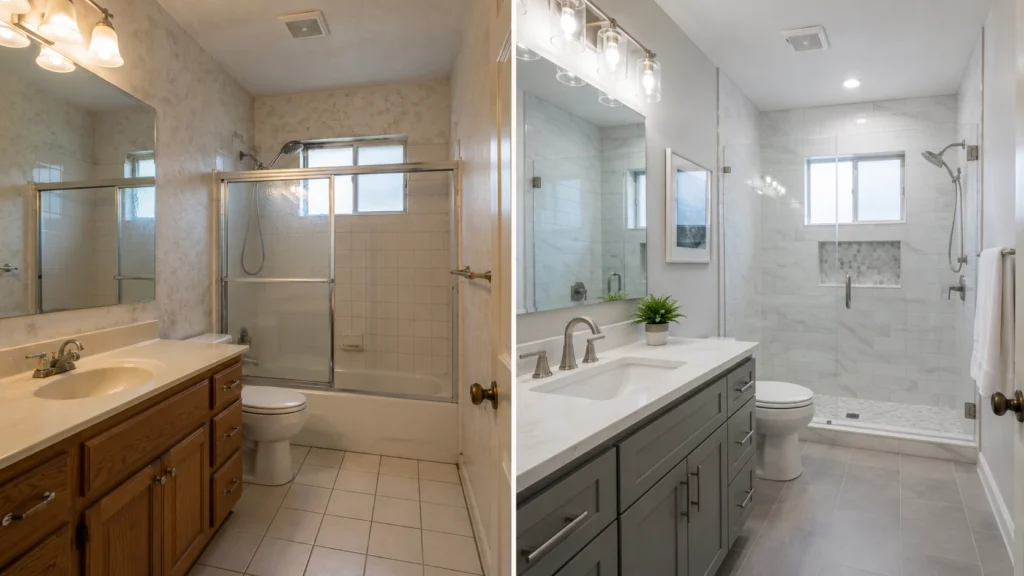
The best social media platforms for general contractors in 2026
Here are the platforms worth your time this year. Read the table first, then dig into the two or three that fit your business.
| Platform | Best for | U.S. adult reach (Pew, 2025) | Effort | Paid ads |
|---|---|---|---|---|
| YouTube | How-to and project videos | 84% | High | Yes |
| Local reach, groups, reviews | 71% | Low | Yes, strong local targeting | |
| Photos of finished work | 50% | Medium | Yes, through Meta | |
| TikTok | Short video, younger buyers | 37% | Medium | Yes |
| Commercial and B2B jobs | Business audience | Medium | Yes | |
| Design ideas and planning | Homeowner planners | Low | Yes | |
| Google Business Profile | Ready-to-hire local searches | Local search | Low | Free |
Facebook: your local home base
Facebook is still the first place a homeowner looks after your website. About 71% of U.S. adults use it, and roughly half open it daily. Set up a Business Page with your hours, service area, and phone number. Post finished projects, ask happy clients for a review, and join local community groups where neighbors ask for referrals. Facebook’s ad tool also lets you show a kitchen remodel only to homeowners in the ZIP codes you serve.
Instagram: proof in pictures
Instagram is where your work does the selling. Half of U.S. adults use it, and eight in ten of those under 30 do, so it skews younger than Facebook. Post before-and-after photos, short Reels of a job coming together, and close-ups of the details clients notice. Because Instagram and Facebook share one ad tool, you can run both from the same place without doubling your work.
YouTube: the platform hiding in plain sight
YouTube reaches more U.S. adults than any other platform at 84%, and it works like a second search engine. It rewards patience. A plain walkthrough of a finished basement, or a short “here is how we fixed this” video, can bring in leads for years. You do not need a studio. A phone, good light, and captions cover most of it.
LinkedIn: where commercial jobs start
LinkedIn matters most if you sell to businesses instead of homeowners. It is where developers, architects, and property managers do their homework before they shortlist a builder. Post project wins, safety milestones, and team updates. If your work is residential only, you can skip it and lose nothing.
TikTok: fast reach, younger homeowners
TikTok is worth a look if you like short video and want to reach first-time buyers. About 37% of U.S. adults use it now, up from 21% in 2021, and roughly half of people under 30 open it daily. Time-lapses, quick tips, and “a day on the job site” clips travel well here. Use it to get discovered, then send people to the link on your profile.
Pinterest: the planning board
Pinterest is a search and planning tool more than a social network. Homeowners save kitchen, bath, and backyard ideas here months before they hire anyone. Make boards by project type and link each pin back to the matching page on your site. It is low effort if you already have good photos.
Google Business Profile, Nextdoor, and Houzz: the local trio
These catch people who are ready to hire now. A free Google Business Profile is the most important listing a contractor can own, because it puts you on the map when someone searches for your trade nearby, and it is where your reviews stack up. About 75% of consumers regularly read online reviews of local businesses, and 88% say they would use a business that replies to all of its reviews, according to BrightLocal. Nextdoor reaches neighbors who trade referrals. Houzz connects you with homeowners already deep into a remodel and comparing pros.
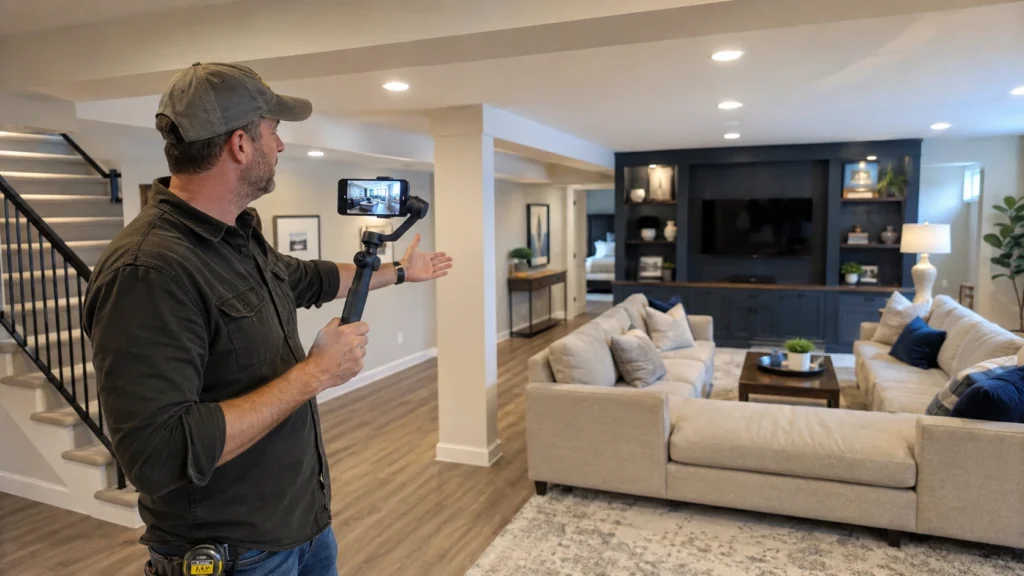
How to turn followers into booked jobs
Followers do not pay you. Booked jobs do. The content that converts is proof, reviews, and a clear next step, plus an answer to the question that kills most deals: how will I pay for this?
Post proof, not promotions. Before-and-after shots, in-progress photos, and short client testimonials do more than any “call us today” graphic. Ask for a review on every finished job, and reply to all of them, since most homeowners favor a business that responds.
Here is the part most contractors miss. Price is the number one reason a homeowner says “let me think about it.” You can answer that objection right in your posts. Instead of a $60,000 kitchen, show the same project as a monthly payment. For example, a $60,000 loan at a 7.8% fixed rate (8.08% APR) over 20 years runs about $494 a month, with no prepayment penalty. When a homeowner sees “about $494 a month” under a photo they already love, the big number stops being a wall.
We see this every day. HFS Financial has connected homeowners with home improvement financing since 2011, in all 50 states, and contractors who mention payment options in their marketing tend to close larger jobs than those who quote lump sums. Funding can move fast, too. One recent client had money in the bank a week after checking their rate.
You do not have to become a bank to do this. You add a “financing available” line and a link, and let a platform handle the loan while you keep control of the project. That is the whole idea behind general contractor financing with HFS, and it pairs well with the way we think about financing as a growth strategy. If you would rather hand the social side to a team that works with home improvement companies, social media management for remodelers is an option too. Ready-to-hire homeowners can also find vetted pros through our find a contractor directory.

How often should you post, and what should you skip?
Post two to four times a week on the one or two platforms you picked, and skip anything that does not lead to a call. Consistency beats volume. A weekly rhythm of one project post, one quick tip, and one review keeps you visible without eating your evenings.
Here is where we disagree with a lot of advice: chasing viral videos and being on every app is the wrong goal for a contractor. Follower count does not sign contracts. Your buyers sit on two or three platforms, mostly Facebook, YouTube, and Instagram, and they decide based on your reviews and your finished work, not your view count. Two platforms posted well every week will out-earn seven posted at random. A TikTok dance might pull 10,000 views and zero quotes.
The prize is real. U.S. homeowners spend more than $500 billion a year on improvements and repairs, according to Harvard’s Joint Center for Housing Studies. You only need a small, steady slice of your local market. So skip the busywork: buying followers, posting generic “happy Friday” graphics, and arguing in the comments. Spend that time replying to messages and asking for reviews, and read our take on the “let me think about it” objection while you are at it.
The best social media platforms for general contractors are the ones your customers already use and you will actually keep up with. For most, that is Facebook and Instagram plus a Google Business Profile. Post proof, reply to reviews, add a payment option, and stay consistent. That is how a free tool turns into booked work.
Frequently asked questions
What is the best social media platform for general contractors?
For residential contractors, Facebook and Instagram are the best platforms, since 71% of U.S. adults use Facebook and half use Instagram (Pew, 2025). Commercial builders should use LinkedIn. A free Google Business Profile is essential for anyone who wants ready-to-hire local searches.
Do general contractors really need social media?
Yes. Homeowners check your Facebook and reviews before they call, and about 75% of consumers regularly read online reviews of local businesses (BrightLocal). A steady social presence builds trust and gives you a free way to show finished work to the people in your service area.
How many social media platforms should a contractor use?
Two, done consistently. Your buyers cluster on Facebook, YouTube, and Instagram (Pew, 2025), so two platforms posted well every week beat seven posted at random. Pick the two that match your trade and audience, then add a third only if you have time.
Is TikTok worth it for contractors?
It can be, especially for reaching younger, first-time homeowners. About 37% of U.S. adults use TikTok, up from 21% in 2021 (Pew), and roughly half of people under 30 open it daily. Treat it as a discovery tool, not your main channel.
How do contractors get leads from social media?
Post proof of your work, collect and reply to reviews, and give every post a clear next step. Adding a financing or monthly payment option removes the price objection that stalls most jobs, which helps turn followers into booked projects.
What should general contractors post on social media?
Post before-and-after photos, in-progress shots, short walkthrough videos, client reviews, quick tips, and payment or financing options. Proof of real work and honest answers to homeowner questions convert far better than sales graphics.
How much does social media marketing for contractors cost?
Organic posting is free beyond your time. Paid ads on Facebook or Instagram can start at a small daily budget and scale as you see results. Offering financing to your clients through a partner like HFS Financial is free to the contractor.
Disclaimer: HFS Financial is not a lender. NMLS and MD CSB # 1680766. The payment example above is for illustration only. A closed-end loan from a third-party lender for $60,000 with a fixed rate of 7.8% and an APR of 8.08% for a term of 20 years would result in 240 payments of $494.10, assuming the loan is not paid off early. Loan programs described have no prepayment penalties. Not all will qualify. Rates and terms come from unaffiliated third-party lenders and are subject to change.