Local SEO for remodelers works faster than the industry admits. Most remodelers reach Google’s Map Pack in about 4 to 7 months, not the 12 that most agencies quote. Across 87 remodeling campaigns since 2019, the average was 4.2 months in a mid-competition metro and 6.8 months in a top-25 city. Nearly four out of five clients reached the top three local spots within six months.
That timing matters, because the Map Pack is where homeowners choose a remodeler. They search “kitchen remodeler near me,” scan a few reviews, and call one of the first three names. Everything under the map is a distant second.
This guide covers how local SEO for remodelers actually works: how long it takes, what it costs, and how organic leads compare with Angi and HomeAdvisor. Every benchmark here comes from real campaigns, not industry averages. Results vary by market and competition, but the pattern is consistent.
What is local SEO for remodelers?
Local SEO for remodelers is the work of getting a remodeling company into Google’s Map Pack and local search results when a homeowner searches for a remodeler nearby. It combines a Google Business Profile, consistent business listings, reviews, and city-specific website pages that turn “near me” searches into phone calls.
The Map Pack is the block of three businesses that shows up with the map, above the regular blue links. Google decides who lands there using three things: relevance (does your profile match the search), distance (how close you are to the searcher), and prominence (reviews, links, and how well known you are online). Google explains this in its own guidance on local ranking, and the order of those three shifts with every search.
Here’s what trips up most remodelers before they even start. When we audit a new client’s site, 94% of them have missing or duplicate title tags on their service pages. The homeowner never sees a title tag. Google does, and it’s often the first reason a remodeler can’t rank in their own city.

How long does local SEO take for a remodeler?
Measurable movement shows up in 30 to 60 days, first organic leads by month 3 to 4, and Map Pack entry in 4 to 7 months in most markets. The “SEO takes a year” line is usually an agency buying itself twelve months of billing before anyone checks the work.
Here’s the timeline we see across our campaigns:
| Milestone | Typical timing |
|---|---|
| Keywords enter the top 50 | 30 to 60 days |
| Page one for long-tail local terms | 60 to 90 days |
| Map Pack entry for the primary city keyword | 90 to 180 days |
| Steady flow of 15+ leads a month | 6 to 9 months |
| Top three for the primary service keyword | 8 to 12 months |
The twelve-month timeline is only true if you define success as ranking number one for the single most competitive term in a top-ten metro. For the terms that actually ring the phone, “bathroom remodeler in [neighborhood]” or “kitchen remodel cost [city]”, traction comes a lot sooner. Going into the second half of 2026, that gap between long-tail and head terms is wider than ever, because more remodelers are finally claiming their profiles and the easy wins get taken first.
One honest caveat: a new company with no reviews and no website history moves slower than an established remodeler with 40 reviews. We adjust the timeline per market. A flat “6-month plan” that ignores how crowded your city is a plan that misses.

What does local SEO cost for a remodeling company?
For a remodeling company, local SEO runs about $3,500 to $5,000 a month. The biggest variable is how competitive your metro is.
| Market type | Example cities | Typical monthly investment |
|---|---|---|
| Mid-size market | Boise, Raleigh | $3,500 to $4,000 |
| Top-10 metro | Los Angeles, Dallas | $4,500 to $5,000 |
No setup fees, and the good ones run month to month so you’re not locked in. Pricing varies by market and scope, so treat these as ranges, not a quote.
Now put that next to what you’re likely already spending. A remodeler paying $7,000 a month for shared Angi leads spends $84,000 a year and owns nothing at the end of it. The same company investing $4,500 a month in search spends $54,000 a year and keeps the rankings, the reviews, and the pages for good. One is rent. The other is an asset with your name on the deed.
Is local SEO better than Angi and HomeAdvisor for remodelers?
For most established remodelers, yes, because organic leads aren’t shared with four other contractors and they book estimates at a much higher rate. Here’s the comparison from client-reported data across our accounts:
| Organic search leads | Angi / HomeAdvisor leads | |
|---|---|---|
| Cost per lead | $0 marginal after month 6 | $87 to $142 |
| Shared with competitors | No | Often 4 or more |
| Booked to an estimate | 73% | 22% to 31% |
| Who owns it | You | The platform |
The math is not close. When a lead finds you on Google and calls you directly, you’re the only number they dialed. When that same homeowner buys a lead form off a platform, you’re one of five contractors racing to call first and undercut each other on price.
My position on this is blunt, and I’ll say it plainly: renting leads builds someone else’s business. The platform owns the relationship, sets the price, and can raise it whenever it wants. Organic search is the one channel a remodeler truly owns. If you want the longer breakdown of paid versus earned traffic, we cover how organic and paid differ in a separate piece, and there’s more on generating steadier remodeling leads without the platforms.

Set up your Google Business Profile the right way
Your Google Business Profile is the single fastest lever in local SEO, because the Map Pack drives the earliest wins. Get it right before you touch anything else.
Start by claiming the profile through Google’s Business Profile setup. Then fill it out the way most remodelers never do:
- Pick a primary category that matches the work (General Contractor, or a specific one like Kitchen Remodeler or Bathroom Remodeler), then add secondary categories for your other services.
- Load 25 or more real project photos and geotag them. Most remodelers we audit have three photos and a one-line description. That’s not a profile, that’s a placeholder.
- Fill in the services list, seed the Q&A with the questions homeowners actually ask, and set up review-response templates so no review sits unanswered.
The payoff is quick. A full profile with real photos raised map-view impressions 340% in the first 90 days across our accounts. You can update pages for months and still not gain the ground that one properly filled-out profile delivers in its first quarter.
Should you hide your business address?
If you work out of your home or a truck and meet clients at their houses, set a service area and hide the street address. Most remodelers are service-area businesses, not storefronts. Showing a home address can get your profile filtered, and worse, it scatters your address across the web in ways that confuse Google. This is the setup choice that trips up the most remodelers, and it costs rankings every day.

Get reviews that move the Map Pack
Recency and steady volume matter more than a big lifetime count. A remodeler with 40 reviews and a fresh one every week will usually outrank one with 90 reviews that all landed two years ago.
The problem is that most remodelers wait for reviews to show up on their own, so they get one every couple of months. We install an automated request that fires a text a few days after the job wraps. Clients go from 0 or 1 review a month to 4 to 6. One anonymized Dallas-area kitchen and bath remodeler went from 47 reviews to 119 in eight months on that system alone.
Be realistic about the starting line, though. If you have fewer than 10 reviews and the remodelers ranking above you have 80-plus, the Map Pack takes longer to crack. We front-load review building in those cases and set the expectation at 4 to 6 months instead of 2 to 3. BrightLocal’s annual local consumer review survey has found year after year that the large majority of homeowners read reviews before choosing a local company, and you can see the current numbers in BrightLocal’s review research.
Keep your citations and NAP consistent
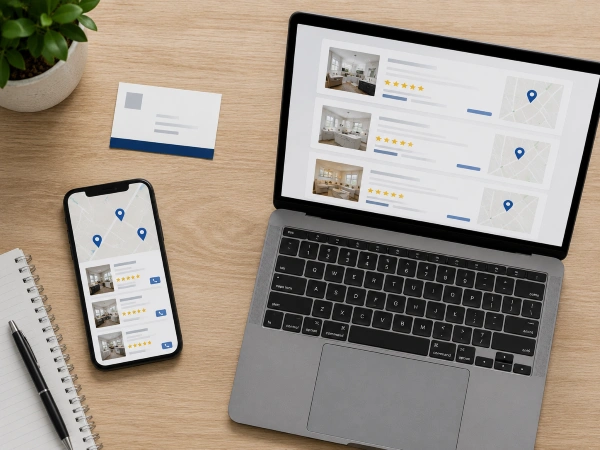
A citation is any online listing of your business name, address, and phone number (NAP). The goal is not to be everywhere. It’s to be identical everywhere.
Skip the tool that blasts you into 200 directories. That’s how you end up with three slightly different addresses across the web, which drags down local rankings instead of helping them. Focus on 15 to 20 listings that carry weight: Google, Yelp, the Better Business Bureau, Houzz, your free Angi profile, and a few niche construction directories, all with the exact same information.
I’ve watched this go wrong in a way that still makes me wince. A client changed their phone number, updated it on the website, and forgot the 37 citation sites it also lived on. They dropped from third in the Map Pack to fourteenth in a matter of weeks. We now roll out any NAP change across every directory at once, on purpose.

Do remodelers qualify for Local Services Ads?
Most remodelers do qualify, and the badge they earn is Google Guaranteed, not the “Google Screened” label you’ll see repeated in other guides (that one is for professional services like lawyers and financial planners). Google Guaranteed verifies your license, insurance, and a background check, then places you in the Local Services Ads block that sits above the Map Pack.
You pay per lead there, so it works best alongside organic rather than instead of it. Ads bring calls today while your rankings build the free flow for later. Confirm the current requirements on Google’s Local Services Ads pages before you apply, since eligibility by trade changes over time.

Build local links Google trusts
Links from real, local, relevant sites tell Google you belong in the area. For a remodeler, the best ones are close to home: suppliers and trade partners, local home and lifestyle press, event sponsorships, and niche construction directories.
We build 15 to 25 of these a month per client. No private blog networks, no bulk link farms, no shortcuts that get sites penalized. A brand-new company needs more up front. One Colorado whole-home remodeler started with zero domain authority and no backlinks at all, so we ran 30 links a month for the first four months just to build a foundation. If you want the mechanics of earning links, we go deeper on building backlinks that count.
Does local SEO change by remodel type?
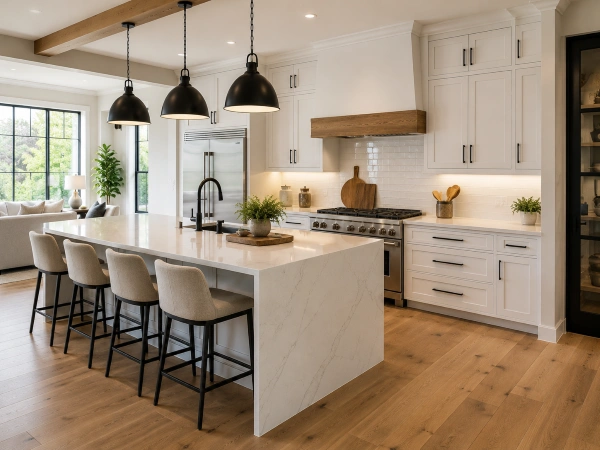
It does, more than most owners expect, and matching the approach to the work is where a lot of leads are won or lost. Kitchen and bath remodelers depend on Houzz and photo galleries, because homeowners shop those projects with their eyes. Whole-home remodelers compete on broader city terms and need more content to cover the range. Garage conversion and ADU contractors work a long-tail, permit-heavy set of searches with low volume but high intent.
That last point is worth sitting with. One high-end Pacific Northwest kitchen remodeler was drowning in budget shoppers because the site looked like every $20,000 kitchen company in town. We rebuilt it around six-figure projects: detailed galleries with real material and cost notes, and content aimed at what a $100,000 kitchen remodel involves. Lead volume actually dropped, from about 15 a month to 11. But qualified leads jumped from 30% to 72%, and the close rate went from 12% to 34%. Fewer calls, far bigger jobs. Choosing the right keywords for each service is what makes that possible.

How do remodelers show up in AI search?
The same signals that win the Map Pack also feed AI answers. When someone asks ChatGPT, Gemini, or Google’s AI Overview for a remodeler recommendation, those systems lean on a complete Google Business Profile, deep and recent reviews, and clear, direct answers on your site.
So the work isn’t separate. A profile filled out for Google and pages that answer real questions in plain language are what get a remodeler cited by an AI engine too. We wrote more on where AI search is heading for owners who want to get ahead of it. The remodelers building this now will own the answer box before their competitors know it exists.
Can you do local SEO yourself, or hire an agency?
You can do the basics yourself: claim the profile, ask for reviews, and clean up your listings. A competitive metro usually needs consistent content and link work over 6 to 12 months, which is where most owners run out of time. Run through this quick check first.
Score yourself on five questions. Are you spending $3,000 or more a month on lead platforms? Do you have 20 or more Google reviews? Have you been in business three years or longer? Is your average project $15,000 or more? Are you willing to invest for 6 to 12 months? Four yeses out of five means SEO is a strong fit and worth doing seriously.
If you tried SEO before and it flopped, it’s worth asking what you actually paid for. Nine times out of ten it was one of three things: a $500-a-month shop that just submitted you to directories, a generalist agency that treated a remodeler like an online store, or a relative who “knows websites.” None of that is real remodeling SEO, which takes local keyword work, city-specific pages, steady review building, and consistent links. We can show you exactly what a past provider did (or didn’t do) by pulling the link data.
If it’s a fit, our SEO for home remodeling companies service and a look at how a site should be built to rank are the next steps. For remodelers who need calls this week while search builds, Google Ads run in parallel fill in until the organic flow takes over, and there’s a place for showing project photos on social as a supporting channel.

How do you track local SEO results?
Track leads and rankings by location, not vanity traffic. A remodeler can rank first in one zip code and eighth three miles away, so a single ranking number hides the truth.
We use LocalFalcon to map Map Pack position at the zip-code level, Google Search Console and Analytics for first-party click and impression data, and call plus form tracking so every lead ties back to a source. If a keyword ranks but never converts to a call, we say so and move the effort. Setting up the right schema for local SEO helps Google read your pages correctly while you track all of it.
The rankings you build are the only lead source you own outright. Angi rents you a spot on a corner it controls. Local SEO for remodelers, done right, hands you the whole block. If you want to know where you stand, talk to our team. Eclipse guarantees a top-three ranking for agreed target keywords within 12 months or refunds the fee, and results vary by market, competition, and how involved you are along the way.
Frequently asked questions
How long does local SEO take for a remodeling company?
Expect keyword movement in 30 to 60 days and first organic leads by month 3 to 4 in most markets. Map Pack entry averages 4 to 7 months across 87 campaigns, though a new company with few reviews takes longer.
How much does local SEO cost for remodelers?
Usually $3,500 to $5,000 a month, set mostly by how competitive your metro is, with no setup fee and no long-term contract. Pricing varies by market and scope.
Is local SEO better than Angi for remodelers?
For most established remodelers, yes. Organic leads aren’t shared and book estimates at 73% in client-reported data, versus 22% to 31% for shared-platform leads, and you keep the rankings for good.
Do I need a new website for local SEO?
Not always. About a third of new clients need a rebuild because their platform blocks proper SEO, but the rest can be fixed in place.
Can I do local SEO myself?
Yes for the basics: claiming your profile, gathering reviews, and cleaning up listings. Competitive markets usually need consistent content and link work over 6 to 12 months to hold the Map Pack.
How many leads should a remodeler expect?
Clients average 18 to 24 organic leads a month by month 8. Results vary by market and competition, and the guarantee covers ranking position, not a specific lead count.