
Brand SERP Optimization: Control Your Search Results (2026)
Google your own business name right now. Seriously, open an incognito tab and do it. Whatever shows up on that results page is what your prospects, investors, and potential partners see before they ever visit your website. That page is your Brand SERP, and roughly 81% of consumers run exactly that search before making a purchase decision.
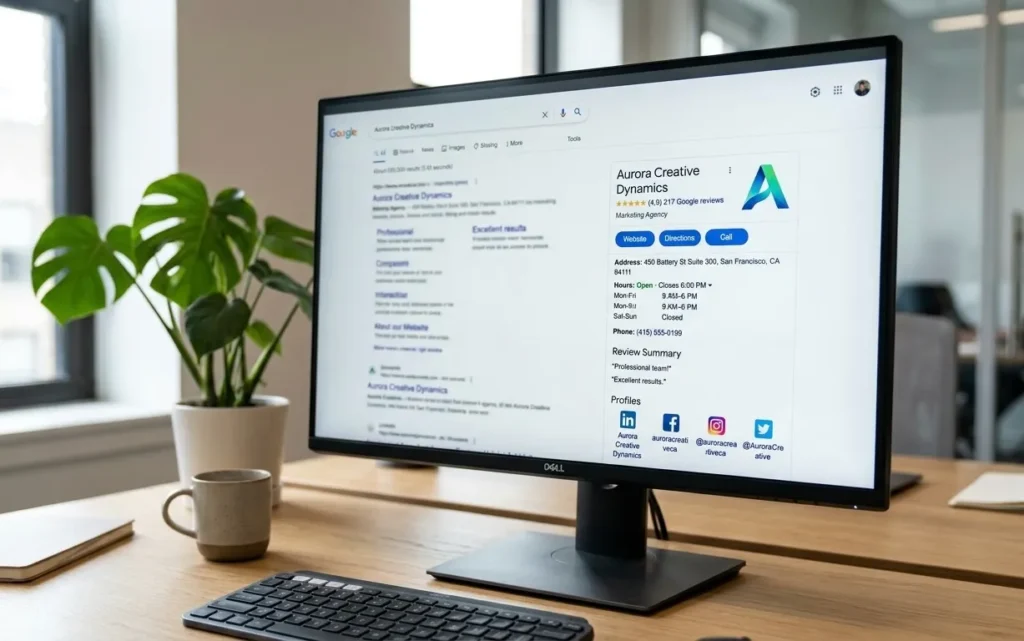
Brand SERP optimization is the practice of controlling and curating the search engine results page that appears when someone searches your brand name. It goes beyond ranking your homepage at position one. It means owning as many of those top 10 results as possible: your social profiles, review sites, press mentions, Knowledge Panel, and videos. All telling the story you want told.
I’ve worked with clients at Eclipse Marketing who lost deals because a two-year-old complaint thread sat at position three with no counterbalancing content. One fintech company reportedly lost $2 million in funding because negative reviews dominated their branded results, while they had no Knowledge Panel to offset them. That’s not a ranking problem. That’s a brand perception problem that starts and ends on the SERP.
What Is Brand SERP Optimization?
Brand SERP optimization is the process of managing how your business appears in search results for branded queries, meaning searches that include your company name, personal name, or product name. It combines entity SEO, reputation management, content strategy, and structured data to shape what Google displays about you.
Picture the difference between a messy storefront and a polished one. Except this storefront lives on Google, and according to a 2025 BrightLocal survey, 65% of consumers say search results directly shape their trust in a business.
The old advice was simple: “Just rank your homepage number one.” That hasn’t been enough since roughly 2023. In 2026’s AI-heavy SERPs, you need to control 7 to 10 of the top 10 results, trigger rich features like a Knowledge Panel, and show up in AI Overviews. Position one alone doesn’t cut it anymore.
Why Does Your Brand SERP Matter in 2026?
Your Brand SERP matters more now than it did even 12 months ago. Google is rewarding brand signals in 2026 more aggressively than ever, and three shifts made that true.
How AI Overviews Changed Branded Search
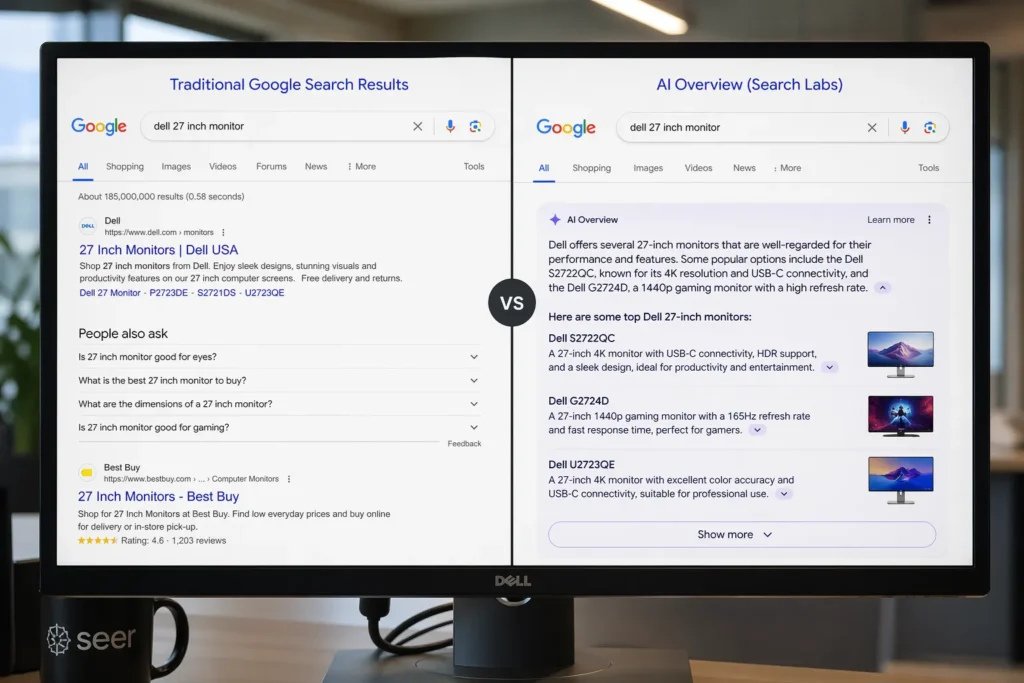
Google’s AI Overviews now appear in over 50% of all searches. When someone searches your brand name and an AI Overview pops up, Google is writing a summary about your business using information it pulls from across the web. If you haven’t fed it the right signals, that summary might highlight your worst review, an outdated Wikipedia stub, or nothing useful at all.
An Ahrefs study found that 76% of AI Overview citations come from pages already ranking in the top 10. Recent AI Overview citation patterns confirm that the same content you’d optimize for traditional Brand SERP also feeds the AI’s narrative. You don’t get to ignore one and focus on the other.
Brands that already appear in AI responses see up to 91% higher paid click-through rates from what researchers call the “halo effect.” Being cited by AI builds trust before the click even happens, and that dynamic is only growing as AI reshapes search across every industry.
Zero-Click Branded Searches
Roughly 65% of branded searches now result in zero clicks beyond the SERP itself. People search your name, glance at the results page, and form their opinion without visiting a single link. Your Knowledge Panel, review stars, social profiles, and top-ranking pages are the only information most searchers ever see.
That’s why Brand SERP optimization isn’t a vanity project. For most prospects, your SERP is your first impression.
Brand Signals as Ranking Factors
The 2024 Google Search API leak confirmed what many SEO practitioners had suspected: branded search volume, brand mentions, and user engagement with branded queries all function as trust signals. Branded searches (people typing “[Your Brand] reviews” or “[Your Brand] pricing”) tell Google your business has real demand. That signal feeds back into your broader SEO authority.
Jason Barnard, one of the most cited experts on Brand SERPs, puts it bluntly: your Brand SERP is “Google as your new business card.” If that business card looks incomplete or negative, it undermines everything else you’re doing in marketing.
How to Optimize Your Brand SERP
Brand SERP optimization isn’t a one-time project. It’s an ongoing process with three core phases.
Audit Your Current Brand SERP
Start by searching your brand name in incognito mode. Log every result on the first page: which ones you own, which ones you don’t, and which ones hurt you. Check for a Knowledge Panel. Look at People Also Ask questions. Note whether AI Overviews appear and what they say.
Do this on desktop and mobile. Results differ. Check Google, Bing, and ChatGPT. Search Engine Land published a detailed Brand SERP audit framework in mid-2025 that walks through categorizing each result by sentiment and ownership. I’d recommend following something similar at least quarterly, or after any Google core update.
Build Your Entity Home
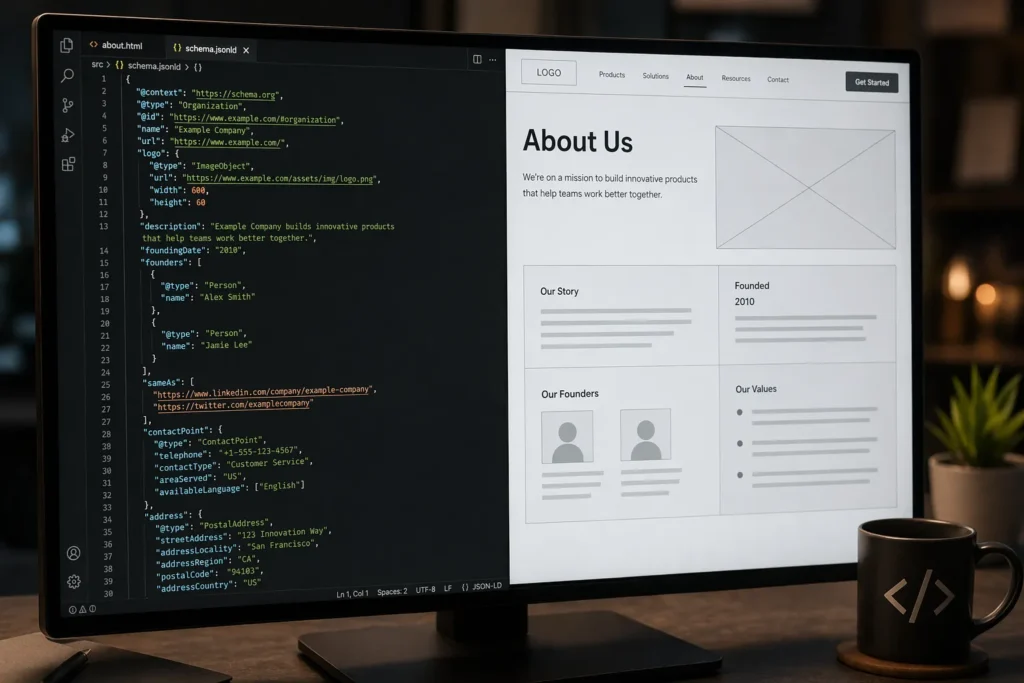
Your “entity home” is the single page Google uses as the primary source of truth about your brand. For most businesses, that’s your homepage or About page. It needs to clearly state who you are, what you do, and where you’re located, written for both humans and machines.
Pair that with Organization schema markup, consistent NAP (Name, Address, Phone) data, and links to your official social profiles. This page is the anchor. Everything else connects back to it. Ignoring technical SEO problems here can undo all the entity work you build on top of it.
A common mistake I see: businesses pour effort into off-site mentions but leave their About page with three vague sentences and no structured data. Schema alone won’t do the job, but you can’t skip it either. Barnard’s research consistently shows that entity consistency across your own properties is the first signal Google needs before it trusts third-party corroboration.
Off-Site Signals and Third-Party Validation
Google doesn’t trust what you say about yourself in isolation. It wants to see other authoritative sources confirming who you are. That means claiming and completing profiles on every relevant platform: LinkedIn, industry directories, review sites, YouTube, and podcast listings.
Get featured in industry publications. Earn mentions from recognized sources. Understanding content’s role in search is key here, because these don’t need to be backlinks. Brand mentions without a link still register as entity signals. The goal is corroboration: multiple independent sources agreeing on the same facts about your business.
This is where most businesses stall. They set up their Google Business Profile and call it done. But Google’s entity understanding evolves constantly. Backlinks still matter as authority signals, and old information, conflicting details across platforms, or gaps in third-party coverage lead to outdated panels or AI misrepresentations. It requires ongoing monitoring, not a set-and-forget approach.
Knowledge Panels and Rich SERP Features
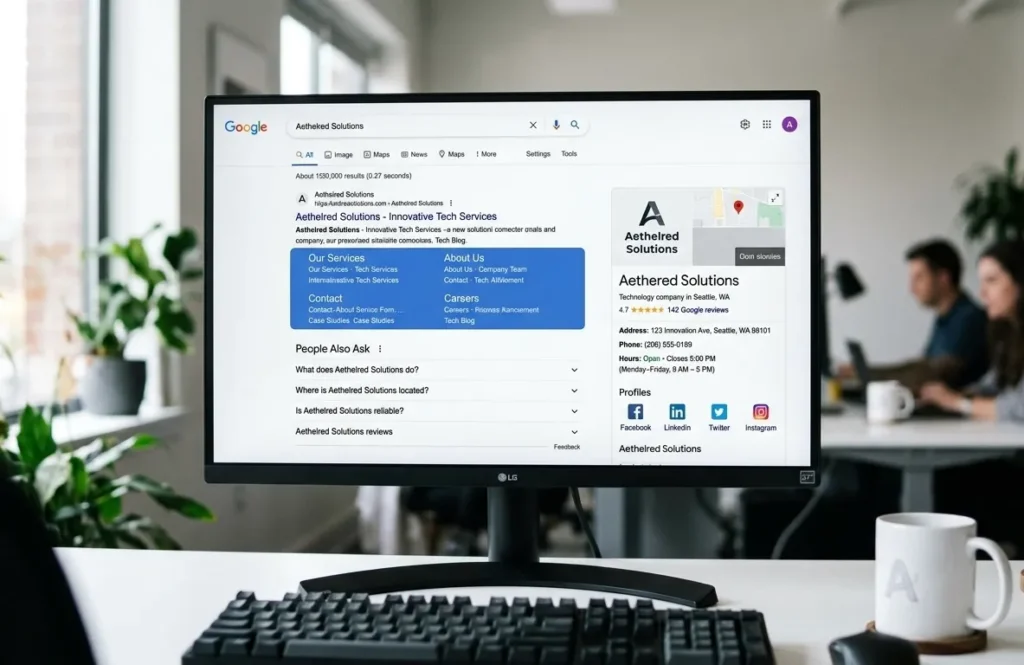
A Google Knowledge Panel is the information box that appears on the right side of search results (or at the top on mobile) for recognized entities. Google expanded corporate Knowledge Panel cards in 2025, and triggering one for your brand is a major trust signal.
You don’t need a Wikipedia page to get one, despite what many people assume. Consistent entity data, Organization schema, a verified Google Business Profile, and strong third-party corroboration can trigger a Knowledge Panel. But it takes time. Typically a few months of consistent signals before Google surfaces one. Barnard’s team has documented this process extensively and reports that most brands see panel activation within 3 to 6 months of focused entity work.
Beyond Knowledge Panels, you should also target sitelinks (those sub-links beneath your main result), People Also Ask placements, image packs, video carousels, and social profile links. Each additional feature you trigger is real estate you control. Understanding how featured snippets affect rankings applies here too, because Semrush Sensor data shows that only about 1.2% of SERPs display zero SERP features, meaning your branded results almost certainly include them. The question is whether they feature your content or someone else’s.
Brand SERP Optimization vs. Traditional SEO
Traditional SEO chases non-branded keywords like “best CRM software” or “plumber near me.” Brand SERP optimization focuses exclusively on what happens when someone already knows your name and searches for it.
The skillsets overlap (schema markup, content strategy, link signals), but the goal is fundamentally different. Traditional SEO drives discovery. Brand SERP optimization drives conversion and trust. Both rely on solid on-page and off-page SEO, but they point that effort in very different directions.
I’d argue Brand SERP optimization is actually more cost-effective for many businesses, especially service companies and B2B firms, where the sales cycle involves a “Google the company name” step. You can spend thousands on top-of-funnel SEO to drive traffic, but if your Brand SERP is a mess, you’re leaking conversions at the finish line.
With AI search tools like ChatGPT, Perplexity, and Google’s AI Mode pulling from entity data to answer brand-related questions, the gap between these two disciplines is shrinking fast. Brands with strong entity signals show up in both traditional and AI-generated results. Brands without them disappear from both.
The move is clear: treat your Brand SERP as the most important page on the internet for your business. Because for most of your prospects, it is.
FAQs
Does branded search volume actually affect Google rankings?
Yes. The 2024 Google Search API leak confirmed that branded search volume functions as a trust signal. When people type your company name into Google, especially queries like “[Brand] reviews” or “[Brand] pricing,” it tells the algorithm your business has real demand. Stronger branded search correlates with higher overall domain authority, and post-leak analyses through 2025-2026 have reinforced that these signals help sites outperform competitors who rely only on non-branded keyword optimization.
How do I trigger a Knowledge Panel without a Wikipedia page?
Focus on entity consistency. Make your homepage or About page the clear “entity home” with Organization schema, consistent NAP data, and links to official social profiles. Then build third-party corroboration through industry directories, review platforms, and press mentions where the same facts about your business are confirmed. It typically takes 3 to 6 months of consistent signals. A Wikipedia page helps but isn’t required.
Can negative results on my Brand SERP actually cost me money?
Absolutely. A negative review sitting at position three or four erodes trust before anyone clicks through to your site. One widely cited example involves a fintech company that reportedly lost $2 million in funding because their Brand SERP showed negative press with no Knowledge Panel or positive content to counterbalance it. Recovery through reputation management and content displacement typically takes 6 to 12 months.
How often should I audit my Brand SERP?
Quarterly at minimum. After any Google core update (there were three in 2025: March, June, and December), after major PR events, or after launching a new product. Use incognito mode plus multiple browsers and devices. AI features change frequently enough that a SERP you checked two months ago might look completely different today.
What’s the difference between Brand SERP optimization and regular SEO?
Traditional SEO targets non-branded keywords to drive discovery, reaching people who don’t know you yet. Brand SERP optimization targets branded queries from people who already know your name and are evaluating whether to trust you. The tactics overlap (schema, content, link signals), but the goal is different: conversion and trust vs. traffic and visibility.
Is Brand SERP optimization worth it for small businesses?
It’s arguably more important for small businesses. A local contractor or boutique agency might get fewer branded searches, but each one carries higher intent. If a prospect Googles your name and sees an incomplete result with no Knowledge Panel, no reviews, and maybe a random directory listing, they move on. The investment is modest compared to the cost of losing a deal you’d already almost won.
How is Brand SERP optimization different for AI search vs. traditional Google?
AI tools like ChatGPT and Perplexity pull from entity data and authoritative mentions to generate brand summaries. Traditional Google ranks individual pages. Optimizing for both requires the same foundation: consistent entity signals, strong content across owned and earned properties. But AI search puts extra weight on third-party corroboration and structured data. Brands with weak entity signals risk being misrepresented or omitted entirely from AI-generated answers.

Michael Vale has over 5 years of experience helping clients improve their business visibility on Google. He combines his love for teaching with his entrepreneurial spirit to develop innovative marketing strategies. Inspired by the big AI wave of 2023, Michael Vale now focuses on staying updated with the latest AI tools and techniques. He is committed to using these advancements to deliver great results for his clients, keeping them ahead in the competitive online market.