
Are Backlinks Still Important In 2026?
Yes. Backlinks still influence how Google ranks pages in 2026. But the game looks nothing like it did even two years ago. Google’s August 2025 Spam Update and October 2025 refinements cracked down hard on AI-generated guest post farms and paid link schemes through its upgraded SpamBrain system. The days of buying 50 links a month and watching rankings climb are over.
A backlink is a link from one website to another that acts as a signal of trust and relevance. In 2026, backlinks remain a confirmed Google ranking factor, but the authority of the linking site, topical relevance, and editorial context matter far more than the raw number of links pointing to a page.
Here’s what I’ve seen across dozens of client campaigns in the last year. Sites that earned five to ten editorial links from relevant, authoritative sources outperformed competitors sitting on hundreds of low-quality directory links. The gap isn’t closing. It’s widening. This article breaks down what a “good” backlink looks like now, what the latest data says about their ranking impact, and where link building actually belongs in your priorities.
What Is a Backlink?
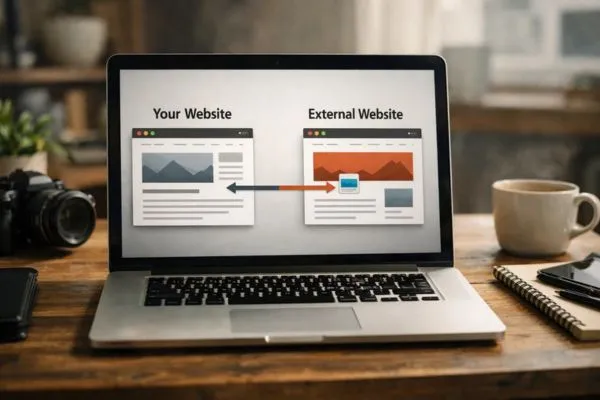
A backlink is a hyperlink on someone else’s website that points to yours. Think of it as a referral. When a respected industry site links to your page, it tells Google your content is worth paying attention to.
Google has used links as a ranking signal since its earliest days, when the original PageRank algorithm treated each link as a vote. That core idea hasn’t changed. What’s changed is how aggressively Google now filters out the fake votes. Understanding why backlinks still carry weight starts with recognizing that Google cares about the source, not just the link itself.
How Do Backlinks Affect Your Rankings?
Backlinks influence three signals Google uses to rank pages: authority, trust, and topical relevance. And increasingly, those same signals determine whether your content gets cited in AI Overviews.
Not every link carries equal weight. A single mention from a well-known publication in your niche can do more for your rankings than 200 links from sites nobody reads.
Authority Links Move the Needle Most
A Backlinko study of over 11.8 million search results (updated April 2025) found that the number one Google result averages 3.8 times more backlinks than positions two through ten. Ahrefs data shows the top-ranking pages gain 5–14% more followed links every month, while 95% of all pages have zero backlinks at all.
But here’s what those numbers don’t tell you. Many top-ranking pages attracted links because they already ranked well, not the other way around. I’ve watched pages with thin link profiles outrank heavily linked competitors when the content and on-page signals were stronger. Links amplify what’s already working. They rarely carry a page on their own.
Site Reputation Carries Weight
Google’s systems evaluate the reputation of the site linking to you. A link from a well-known university or a major trade publication sends a very different signal than a link from a random blog with 12 monthly visitors.
This ties into E-E-A-T. When credible sources repeatedly reference your content, Google treats your site as a safer recommendation. That trust compounds over time and supports better performance across your entire domain, not just the one page that earned the link. You can read more about how Google’s E-E-A-T framework connects to these signals.
Topical Relevance Sends the Right Signals
Links from sites covering your same subject area reinforce what your page is about. If you run a plumbing company and earn a link from a home improvement publisher, that connection tells Google your content belongs in that conversation.
This matters even more now with AI-powered search. A 2025 SEMrush study found a Pearson correlation of 0.65 between link quality and AI Overview mentions. Ahrefs data shows 76.1% of pages cited in AI Overviews also rank in the top 10 organically. Relevant, authoritative backlinks feed both traditional rankings and AI citation systems.
What Does a Good Backlink Look Like in 2026?
A good backlink comes from a real site, in a relevant context, with a real reason to reference your page. That sounds simple, but most link building falls short on at least one of those points.
Signs you’re looking at a strong link:
- The linking site has real traffic and covers topics related to yours
- The link sits inside the main body content, not a footer or sidebar
- The anchor text describes what it’s linking to without keyword stuffing
- The link was earned editorially, not bought or traded
- It comes from a domain that doesn’t already link to you dozens of times
- The referring domains pointing to your site are diverse, not clustered
One editorial link from a niche-relevant site with real readership is worth more than 50 directory submissions. I’ve seen a single link from an industry association move a page from position 12 to position 5 within six weeks. There are different types of backlinks worth pursuing, and knowing the difference saves you time and money.
Red Flags That Signal a Bad Backlink
Bad backlinks come from irrelevant sites, obvious link schemes, or pages that exist only to sell placement. They create risk without offering any ranking benefit.
Watch for these warning signs:
- The linking site covers a completely unrelated topic
- The page is packed with outbound links to dozens of unrelated sites
- The link came from a paid arrangement with no editorial value
- Anchor text is stuffed with exact-match keywords
- You see a sudden spike of new links from sites you’ve never heard of
- The linking pages are thin on content or loaded with ads
Google’s SpamBrain got a major upgrade in late 2025 and now catches AI-generated guest post farms faster than ever. Sites caught in these schemes face manual actions that take six to twelve months to recover from. Some never fully bounce back.
Are Backlinks More Important Than Other SEO Work?
Here’s where I’ll push back on something the SEO industry repeats without questioning. Google’s own Gary Illyes said at the 2024 SERP Conference that Google needs “very few links to rank pages” and that links have become less important over the years. John Mueller has echoed this, warning SEOs against over-focusing on link counts.
So are backlinks overrated? Not exactly. But they’re overweighted in most people’s priorities.
If your site loads slowly, your content doesn’t answer the searcher’s question, or your pages aren’t crawlable, links won’t rescue you. I’ve audited sites with strong link profiles that underperformed because their on-page fundamentals were broken. Content quality, site performance, and user experience are the foundation. Backlinks are what you add once that foundation is set.
A December 2025 Editorial.Link survey found that 58.4% of SEO professionals rated links’ impact as “high.” But flip that number. Roughly 42% didn’t rate them high. That split tells you the industry isn’t unanimous on this anymore, and it shouldn’t be. The answer depends on your market and where your site stands today.

How to Earn More Backlinks in 2026
Earning links consistently comes down to building pages that other people want to reference when writing their own content. Forced outreach and link trades lose effectiveness every year. Content that pulls citations naturally is the only strategy with staying power.
Create Content People Actually Want to Reference
The bar for content that earns links keeps rising. Generic advice pieces don’t attract references because there are already hundreds of them on every topic. What does attract links: original data, specific case studies, clear frameworks, and comparison tables that save someone else the research.
If your page reads like it could’ve been published by any brand in your space, it won’t earn links. Specificity attracts citations. Generic blends in.
Does Long-Form Content Really Earn More Links?
Yes, but with a big caveat. A Backlinko study of 912 million pages found that content over 3,000 words earns 77.2% more backlinks than content under 1,000 words. That’s a meaningful gap.
Length alone isn’t the driver, though. Longer pages tend to cover more subtopics and answer more follow-up questions, which gives writers more reasons to cite them. A 3,000-word page that rambles won’t outperform a tight 1,500-word guide that answers the query better than anything else ranking on page one.
Build Sections That Get Cited
Most backlinks point to a specific section, not the page as a whole. Add parts that are easy for other writers to reference: quick definitions, comparison tables, numbered breakdowns, and short summaries that capture the core point.
Clear, direct language helps here. AI systems and Google’s ranking systems both pull citations more confidently from pages that use natural phrasing and answer questions the way people actually ask them.
Make Your Pages Easy to Link To
Strong content loses links when readers can’t find what they need quickly. Use descriptive headings, keep each section focused on one idea, and lead with direct answers before expanding.
If a writer has to scroll through 2,000 words to find the one stat they want to cite, they’ll move on to a source that’s easier to skim. Remember that backlinks can take weeks or months to show measurable impact, so make every earned link count by keeping your pages structured for easy referencing.
Where Backlinks Belong in Your SEO Strategy
Backlinks matter. They just don’t belong at the top of your priority list until the basics are covered. Their real value appears after strong content, clear intent matching, and solid site performance give search engines something worth amplifying.
Backlinks Multiply Results, They Don’t Create Them
If your pages aren’t ranking at all, links probably aren’t the bottleneck. I’ve seen teams burn through $10,000 or more on link building for pages with thin content and broken internal linking. That money would’ve gone further fixing the content first.
Pages already showing traction (ranking 8–20, gaining impressions) respond best to a few well-placed backlinks. That’s where the multiplier effect kicks in.
When Should You Start Building Links?
Once you have pages that rank or show signs of momentum. For most sites, that means your on-page SEO and content quality need to be solid first. Trying to build links to pages that aren’t ready is one of the most common budget-wasters in SEO. I’ve watched teams working with an experienced SEO partner skip this mistake entirely by getting the sequencing right from the start.
Pick the Pages That Earn the Highest Return
Not every page needs backlinks. Prioritize cornerstone content, comparison guides, and resource pages that support your entire topic cluster. These pages keep earning traffic for months or years and pass authority to related content across your site.
Cost context matters here. A quality backlink from a DR 30–50 site runs $300 to $500 on average, per RhinoRank’s February 2026 data. Premium editorial placements through digital PR cost $1,250 to $1,500 per link. Link building costs rose about 23% year-over-year in the premium tiers. Here’s how the main methods compare:
| Link Building Method | Avg. Cost Per Link | Authority Impact | Risk Level |
| Guest Posts (direct outreach) | $200–$800 | Moderate to High | Low (if editorial) |
| Guest Posts (via vendors) | $930–$1,459 | Moderate | Medium |
| Digital PR / Editorial | $1,250–$1,500 | High | Very Low |
| Niche Edits (link insertions) | ~$141 | Low to Moderate | Medium |
| Directory Submissions | $50–$200 | Low | Low to Medium |
Sources: RhinoRank (Feb 2026), SiegeMedia (Mar 2026), BuzzStream (Jan 2025)
Spend where the returns compound. A $1,300 editorial link that strengthens a page earning $5,000 per month in organic traffic pays for itself quickly. A $141 niche edit on a low-traffic blog probably doesn’t.
Keep It Earned, Not Manufactured
The best backlinks happen when someone links to your page because it was the best source they could find. Outreach still works, but only when you’re pointing people to something actually useful.
Backlinks still matter in 2026. They just work differently than they did five years ago. Build on relevance and trust, and your link profile becomes something that protects your rankings through every algorithm update, not something that puts them at risk.
FAQs
Are backlinks still a top ranking factor in 2026?
Yes. Backlinks remain one of Google’s confirmed ranking signals in 2026. A Backlinko study (updated April 2025) found the number one Google result averages 3.8 times more backlinks than positions two through ten. The difference now is that Google’s SpamBrain heavily penalizes low-quality and manipulative links, so only editorially earned links from relevant, authoritative sites provide meaningful ranking benefits.
How many backlinks do you need to rank on Google?
There’s no fixed number. Google’s Gary Illyes stated in 2024 that Google needs “very few links to rank pages.” In low-competition niches, strong content with solid on-page SEO can rank with minimal links. In competitive markets, the top results tend to have significantly more referring domains. Focus on earning links from diverse, relevant sources rather than chasing a specific count.
Do backlinks affect AI Overview citations?
They do. Ahrefs research shows 76.1% of pages cited in Google’s AI Overviews also rank in the organic top 10. A 2025 SEMrush study found a Pearson correlation of 0.65 between backlink quality and AI Overview mentions. Pages with strong, relevant link profiles are more likely to be surfaced as sources in AI-generated answers.
What’s the average cost of a quality backlink in 2026?
A backlink from a site with a DR/DA of 30–50 and real traffic costs $300 to $500 on average. Guest posts run $200 to $800 through direct outreach, or $930 to $1,459 through vendors. Premium editorial placements through digital PR cost $1,250 to $1,500 per link. Costs in the premium tier rose about 23% year-over-year during 2025, per RhinoRank and SiegeMedia data.
Can you rank without any backlinks in 2026?
Yes, in low-competition niches. Ahrefs data shows 95% of all pages have zero backlinks, and some of those pages still receive organic traffic. Strong content targeting long-tail queries with clear search intent can rank without links. In competitive verticals, though, backlinks remain a significant differentiator between pages stuck on page two and those reaching the top five.
Are nofollow links worth anything for SEO?
More than they used to be. A 2025 SEMrush study found nofollow and image-based links show meaningful correlations with AI Overview visibility (Pearson values of 0.34–0.50). Google treats nofollow as a “hint” rather than a directive, meaning some link equity can still pass through. A diverse link profile with a mix of followed and nofollowed links looks more natural than one built entirely on dofollow placements.
Is buying backlinks safe in 2026?
No. Purchasing links violates Google’s spam policies and triggers SpamBrain penalties. Google’s August 2025 Spam Update and October 2025 refinements specifically target paid link schemes and AI-generated guest post networks. Sites caught face manual actions that take six to twelve months to recover from. Some never fully recover. The only safe path is earning links through content quality and editorial outreach.

Michael Vale has over 5 years of experience helping clients improve their business visibility on Google. He combines his love for teaching with his entrepreneurial spirit to develop innovative marketing strategies. Inspired by the big AI wave of 2023, Michael Vale now focuses on staying updated with the latest AI tools and techniques. He is committed to using these advancements to deliver great results for his clients, keeping them ahead in the competitive online market.