
Topic Clusters Vs Keywords: Which Strategy Wins In 2026?
Clustered content pulls roughly 30% more organic traffic and holds rankings 2.5x longer than standalone keyword-targeted pages, according to a 2025 cluster analysis in Search Engine Land. That single stat explains why topic clusters vs keywords isn’t really a debate anymore. It’s a structural decision, and most sites are making the wrong one.
A topic cluster is a group of interlinked pages built around a single subject, with one pillar page covering the broad theme and supporting articles going deep on subtopics. Keyword targeting, by contrast, treats each page as an island built around one search phrase. Clusters build compounding authority. Isolated pages don’t.
I’ve watched dozens of sites try to rank with nothing but keyword-targeted blog posts. Some get quick wins on low-competition terms, but those rankings erode within months. Eclipse Marketing has restructured enough of these sites to know: the fix is almost always architectural, not editorial.

What Is Keyword-Based SEO?
Keyword-based SEO means optimizing individual pages around a single search query, matching it in the title tag, H1, meta description, and body copy. For over a decade, this was the playbook. You picked a keyword, wrote a page, and moved on to the next one.
It still works for narrow, low-competition terms. But the cracks are obvious now. Sites end up with dozens of posts competing against each other for similar phrases, and that cannibalization tanks rankings across the board. Semrush’s analysis of 500,000 domains found that sites with fragmented content structures had about 2.3x lower crawl rates than sites using clustered architecture.
What Is a Topic Cluster?
A topic cluster organizes content around a central subject instead of scattering pages across unrelated keywords. The model has three parts: a pillar page that covers a broad topic, supporting pages that answer specific sub-questions, and internal links connecting everything in a hub-and-spoke structure.
HubSpot popularized this framework back in 2016-2017, and it’s only gotten more relevant. Their 2025 updates emphasize clusters as the primary way to map content to buyer intent and earn AI citations. A site that covers SEO pricing, SEO pricing models, what affects SEO cost, and how to choose a provider signals far more authority than one page chasing all those queries at once.

How Do Topic Clusters Compare to Keyword Targeting?
The core difference between topic clusters and keyword targeting comes down to structural depth versus page-level optimization.
| Keyword Targeting | Topic Clusters | |
| Scope | Single query per page | Full subject across multiple pages |
| Structure | Standalone, disconnected | Hub-and-spoke with internal links |
| Ranking Duration | Shorter, rankings decay faster | 2.5x longer ranking retention |
| Traffic Impact | Limited to one query | ~30% more organic traffic |
| AI Citation Rate | Lower, no depth signal | 3.2x higher AI citations |
| Cannibalization Risk | High without careful mapping | Lower with distinct intent per page |
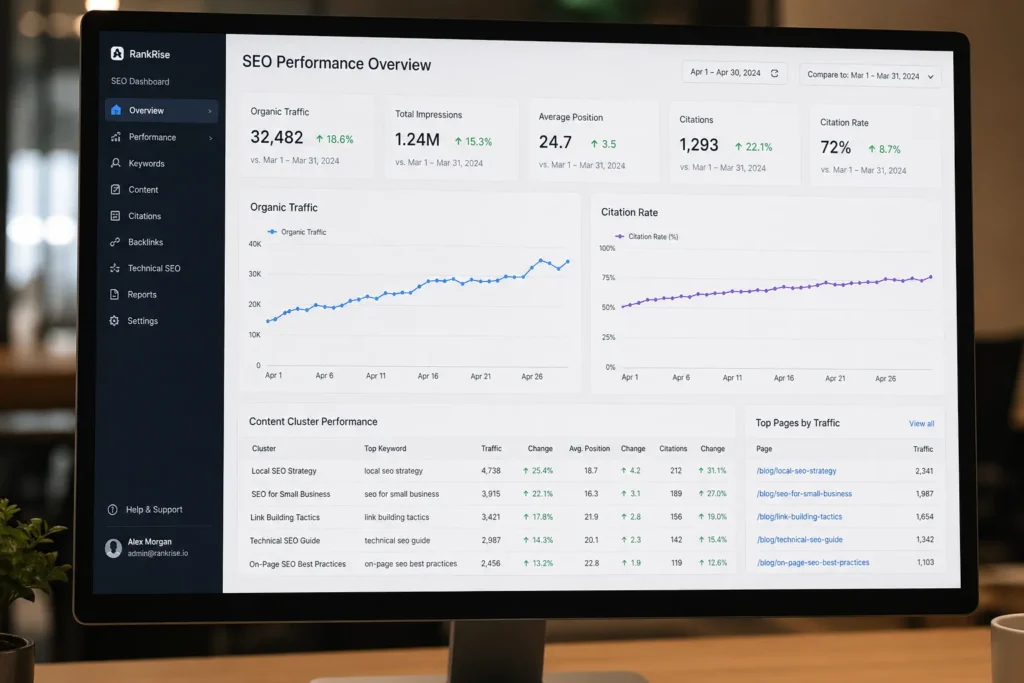
That 3.2x AI citation figure comes from a 2025 analysis of over 100 sites that implemented topic cluster architecture. Sites with clusters averaged 3.2x organic traffic growth over 12 months compared to sites relying on standalone posts.
Why Are Keyword-Only Strategies Falling Behind in AI Search?
Google’s 2024-2025 core updates accelerated a shift that was already underway. The algorithm now rewards topical authority (depth, consistency, and subject coverage) over isolated keyword matching. Sites with thin, disconnected content got hit hard.
How Do AI Systems Evaluate Content Differently Than Traditional Search?
Google, ChatGPT, and Perplexity don’t count keyword mentions. They evaluate entity relationships and contextual signals. A site with one post about “local SEO” and no supporting content around citations, Google Business Profile, or review management gives AI systems nothing to validate.
I’ve seen this in real audits. A site with 200 blog posts and zero clustering will consistently lose citations to a competitor with 40 well-structured pages.
Do AI Overviews Favor Topic Authority Over Keywords?
Absolutely. Roughly 23% of content cited in AI Overviews is less than 30 days old, according to recent AI search research. But freshness alone isn’t enough. AI Overviews pull from sources with coherent subject coverage, not pages that happen to match a keyword.
Content marketing returns about £3 for every £1 invested, per a 2024-2025 industry analysis. Clusters maximize that return because each supporting page strengthens the pillar, and the pillar lifts every supporting page.

What Does Topical Authority Actually Look Like in 2026?
Topical authority is what happens when a site covers a subject more completely and more coherently than its competitors, in a structure that search engines and AI systems can actually parse.
Semantic Coverage and Content Depth
AI doesn’t care that you targeted three variations of a keyword. It cares whether you’ve explained the concept thoroughly enough to be quoted accurately. That means defining terms clearly, answering the follow-up questions your audience would ask next, and addressing subtopics that other sites skip.
A Moz guide from May 2025 recommends using tools like their Topic Tree Map to audit content gaps and group pages by intent. It’s a practical starting point for anyone still operating without a cluster structure. Fixing common on-page SEO gaps is a prerequisite before any clustering effort pays off.
Why Does Internal Linking Matter for Topic Clusters?
Internal links are the connective tissue of a topic cluster. They tell search engines your pages are related and that authority should flow between them. Sites without proper linking structures see up to 40% less traffic than properly linked clusters.
This isn’t just a UX improvement. A well-linked cluster gets indexed faster and earns higher crawl priority. Understanding on-page and off-page SEO signals is what separates sites that get cited from sites that get skipped.
Entity Depth and Brand Recognition
The brands’ AI systems recommend are the ones they’ve learned to associate with a topic through consistent signals: structured data, recurring terminology, and external mentions. This compounds over months, not days. The future of AI search is moving in this direction fast.

How to Build Content That AI Systems Actually Cite
Forget publishing volume. The four-step framework below is how you turn content into something AI systems can extract and cite.
1. Pick Subject Areas, Not Just Keywords
Start with topics tied directly to revenue. If you’re an SEO provider, “technical SEO” is a subject worth owning. “Best SEO tools 2026” is a keyword worth targeting inside that cluster. Don’t confuse the two.
2. Build Pillar Pages That Cover the Full Subject
Your pillar page isn’t a long blog post. It’s a structured resource that answers every foundational question about the topic and links out to deeper supporting content. Content’s role in SEO is exactly the kind of subject that deserves pillar treatment.
3. Create Supporting Articles With Distinct Intent
Each supporting page earns its place by answering one specific sub-question. “How to fix technical SEO issues” supports a broader pillar on technical SEO. Every supporting page links back to the pillar and sideways to related cluster pages.
4. Structure for AI Extraction
Use a clear heading hierarchy. Open each section with a direct answer. Include FAQ sections. Add comparison tables. Implement Article, FAQ, and Organization schema. Targeting featured snippets through proper formatting is one of the fastest ways to signal extractability.
Do Keywords Still Matter in 2026?
Yes, but their role has changed. Keywords are research inputs, not strategy outputs.
Use keyword data to validate demand and map intent before building a cluster. Group related keywords into buckets that map to pillar and supporting pages. But don’t let a keyword list drive your site architecture. That’s how you end up with 150 disconnected posts and zero topical authority.
According to Ahrefs, roughly 64% of search queries contain four or more words. Long-tail queries are exactly what supporting cluster pages capture.
Topic Clusters vs Keywords: The Verdict for 2026
The sites earning AI citations and holding page-one positions right now aren’t the ones with the most content. They’re the ones with the most coherent content.
If you’re still publishing standalone blog posts for individual keywords, you’re building on a foundation Google has been moving away from since 2023. Clusters aren’t optional. They’re how authority works in AI-driven search.
One action you can take today: audit your top 10 pages by traffic. If none of them link to each other, that’s your problem, and it’s fixable.
FAQs
How do topic clusters help with AI Overviews and generative search in 2026?
Topic clusters signal to AI systems that your site has deep, connected coverage of a subject. One 2025 analysis found that sites with clustered content architecture received 3.2x more AI citations than sites built on standalone pages. AI Overviews pull from sources that demonstrate coherent expertise, not pages that happen to match a keyword.
Can topic clusters prevent keyword cannibalization?
Yes, when they’re built correctly. Each page in a cluster targets a distinct search intent, so your own content stops competing against itself. Poor execution makes it worse, though. If two cluster pages target the same intent with weak internal linking, you’ll get the same cannibalization problem you started with. Audit existing content for overlapping intent before building anything new.
How long does it take to see results from a topic cluster strategy?
Supporting pages typically start showing ranking improvements within 60-90 days. The real compounding effect kicks in over 6-12 months as the pillar strengthens and internal links accumulate authority. Don’t expect overnight results. This is a long-game strategy, and the payoff grows over time.
Should I still do keyword research if I’m using topic clusters?
Absolutely. Keywords are the research inputs that tell you which clusters are worth building. You still need keyword data to validate demand, map search intent, and identify gaps. The difference is that keywords feed into your cluster architecture instead of driving individual page decisions. Ahrefs data shows 64% of queries are four or more words. That long-tail volume is exactly what cluster supporting pages capture.
What’s the most expensive mistake businesses make with content structure?
Building dozens of standalone keyword-targeted pages with no hub structure. It fragments your authority, creates cannibalization, and produces content that decays fast. Clustered content holds rankings 2.5x longer than isolated posts, according to a 2025 Search Engine Land analysis. Every month you spend publishing disconnected pages is compounding the cost of the eventual restructuring.
What’s the difference between a content hub and a topic cluster?
A content hub is primarily a navigation and branding tool. It organizes content around a theme but doesn’t always follow a strict pillar-and-spoke linking model. A topic cluster is built specifically for SEO authority, with a pillar page, supporting articles targeting distinct sub-queries, and strategic internal links flowing in both directions. Clusters are more intentional about how link equity and topical signals move between pages.

Michael Vale has over 5 years of experience helping clients improve their business visibility on Google. He combines his love for teaching with his entrepreneurial spirit to develop innovative marketing strategies. Inspired by the big AI wave of 2023, Michael Vale now focuses on staying updated with the latest AI tools and techniques. He is committed to using these advancements to deliver great results for his clients, keeping them ahead in the competitive online market.