
Will AI Replace SEO? What Smart Businesses Need To Know
AI won’t replace SEO. That’s the short answer, and the numbers back it up. The U.S. SEO and internet marketing consulting market hit $104.6 billion in 2024 with 13.6% growth that year, according to IBISWorld. Employment in the sector grew to over 607,000 people. Anyone asking whether SEO will exist in five years should look at that growth curve. An industry getting “replaced” doesn’t add six figures’ worth of new jobs in 12 months.
The real shift isn’t replacement. It’s transformation. Google’s AI Overviews now reach 2 billion monthly users (Semrush, November 2025), and AI-referred traffic to websites surged 527% year over year in a 2025 study tracking 19 web properties. Businesses that ignore those changes will fall behind. But businesses that treat AI as a reason to ditch SEO entirely are making an expensive mistake.
AI will replace SEO is a myth built on misunderstanding. AI is a tool that makes search optimization more complex, more data-dependent, and ultimately more valuable for businesses willing to update their approach. The threat isn’t AI itself. It’s clinging to outdated SEO tactics while consumer behavior and search technology move on without you.
What Is AI Actually Replacing?
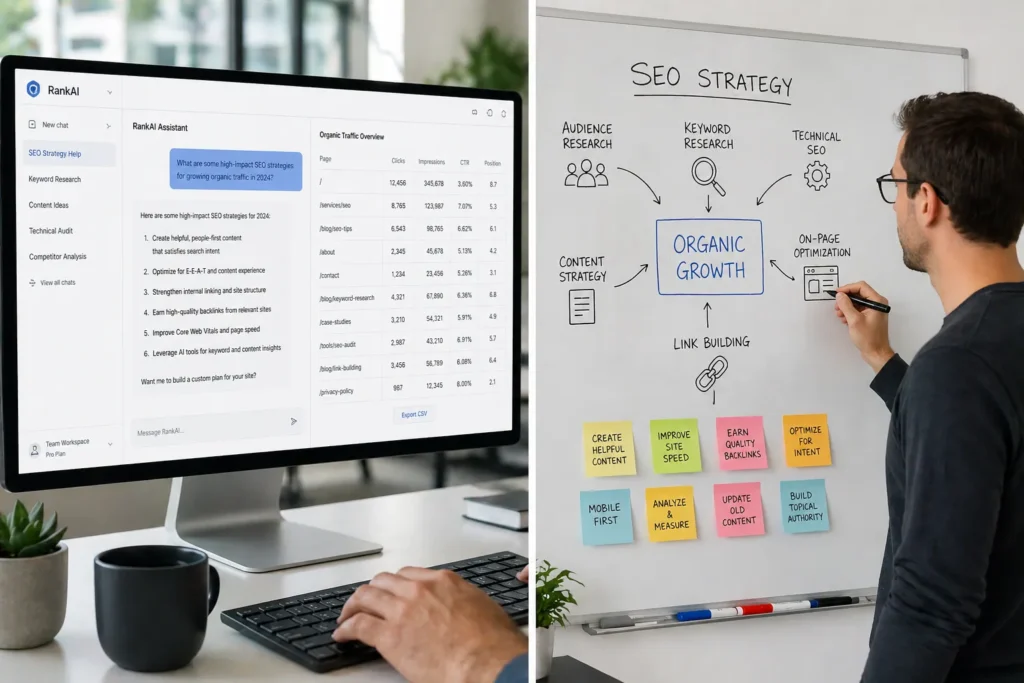
AI isn’t replacing SEO. It’s absorbing the low-skill, repetitive work that used to pad timesheets and agency invoices.
Front-line customer support is the most visible change. Chatbots handle FAQs, order tracking, and basic troubleshooting at a level that was unthinkable three years ago. The human agent isn’t gone, but they’re fielding fewer routine questions.
Data entry and spreadsheet cleanup fall in the same bucket. Summarizing reports, cleaning contact lists, spotting patterns in analytics dashboards. AI does that faster and cheaper than a junior analyst ever could.
Basic copywriting took a hit too. Generic product descriptions, templated email copy, repetitive ad variations. They don’t need a human anymore. And honestly? That work was never where SEO value lived in the first place.
Then there’s routine technical audits. Flagging missing alt text, broken links, duplicate meta tags. Tools from Screaming Frog to Semrush have automated these checks for years. AI just made them faster and more scalable.
None of this is an SEO strategy. These are tasks within SEO. The judgment calls, the business context, the ability to turn raw data into competitive decisions… AI doesn’t touch that.
Why Won’t AI Replace SEO?
Despite all the noise, AI raises the bar for search optimization rather than eliminating it. Roughly 86% of SEO professionals already use AI tools in their daily workflows, according to Exploding Topics (April 2026). They’re using AI to work faster. They’re not replacing themselves.
Search Engines Still Run on Core SEO Signals
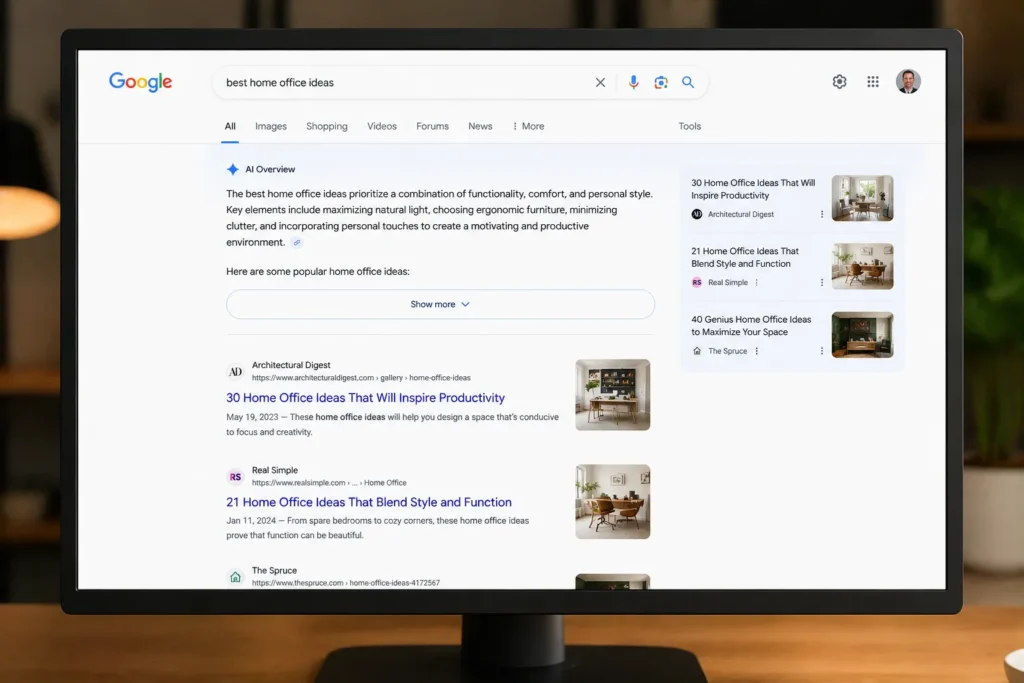
Google still crawls and indexes content. It still evaluates site quality, weighs E-E-A-T signals, interprets search intent, and reads structured data. An AI Overview showing up at the top of a results page doesn’t change any of those mechanics.
The opposite is happening. An Ahrefs study from February 2026 found AI Overviews reduce clicks to the top organic result by up to 58% when present. Alarming at first glance. But AI Overviews pull their answers from pages that already rank well. A site that isn’t technically sound, lacks topical authority, and has weak entity signals won’t get cited in those AI-generated answers either.
Clean architecture and strong E-E-A-T signals aren’t just ranking factors anymore. They’re the price of admission for the future of search visibility powered by AI.
Can AI Build Brand Authority?
No. And this is where the “AI replaces everything” argument falls apart completely.
Brand authority comes from human experience, credibility, and trust. Google’s E-E-A-T framework spells it out. First-hand expertise and real-world experience carry more weight than machine-generated summaries. Users and search engines both want to know who stands behind the content and why that person is qualified.
AI drafts content at speed. But Semrush reported in November 2025 that nearly 70% of businesses see higher ROI from AI in SEO specifically when human oversight is part of the process. The return comes from humans steering the machine, not the machine running unsupervised.
Earning backlinks, building trust, and positioning a brand as a genuine authority still requires industry specialists and strategists who understand the audience on a human level.
Technical SEO Still Demands Human Judgment
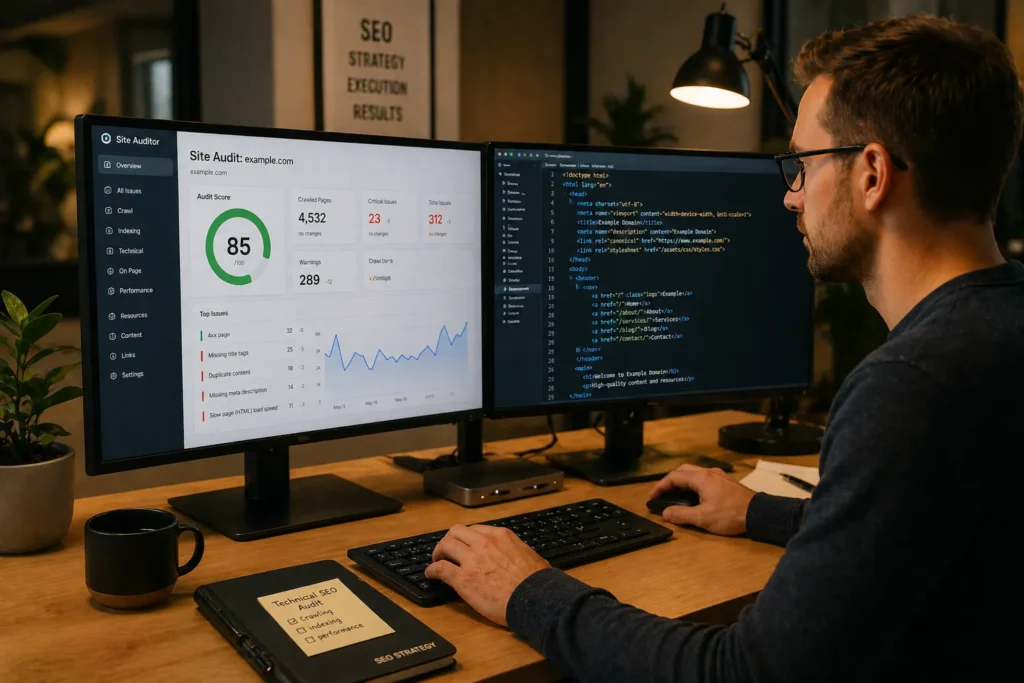
AI tools flag slow pages, redirect chains, and crawl errors. That’s the easy part.
The hard part is figuring out why those technical SEO problems exist and fixing them without creating new ones. Balancing page speed with user experience, navigating platform constraints, coordinating with developers on deployment timelines, and deciding which fixes actually move revenue… that’s human problem-solving.
A December 2025 Cloudflare report noted that AI crawlers surged during the year, with many publishers blocking non-Google bots because the referral traffic wasn’t worth the server load. Deciding which bots to allow, structuring crawl budgets, and knowing when a full technical overhaul beats incremental fixes requires business context. AI doesn’t have that context.
AI Can’t Replicate Brand Voice or Creativity
AI generates content fast. Nobody disputes that anymore. But speed without originality produces what practitioners bluntly call “generic slop.” Forums and industry discussions are packed with complaints about AI-generated content that Google eventually pushes down in rankings because it fails to engage readers.
Every brand has a distinct tone built through years of audience interaction and communication choices. AI mimics style patterns, but it can’t understand the brand behind those patterns. Without human direction, AI content sounds interchangeable. Swap in a different company name and nothing else has to change. That’s the opposite of what builds brand equity.
AI Doesn’t Understand Business Goals
Every business runs on unique priorities. Growing revenue, improving lead quality, entering new markets, cutting acquisition costs, repositioning a brand. These goals require human judgment to translate into a search strategy.
AI has zero awareness of internal constraints, competitive dynamics, or long-term vision. It executes tasks. It doesn’t decide which tasks matter most. Strategic decisions still demand people who understand the brand, the market, and the audience.
How Businesses Can Stay Ahead of AI in Search
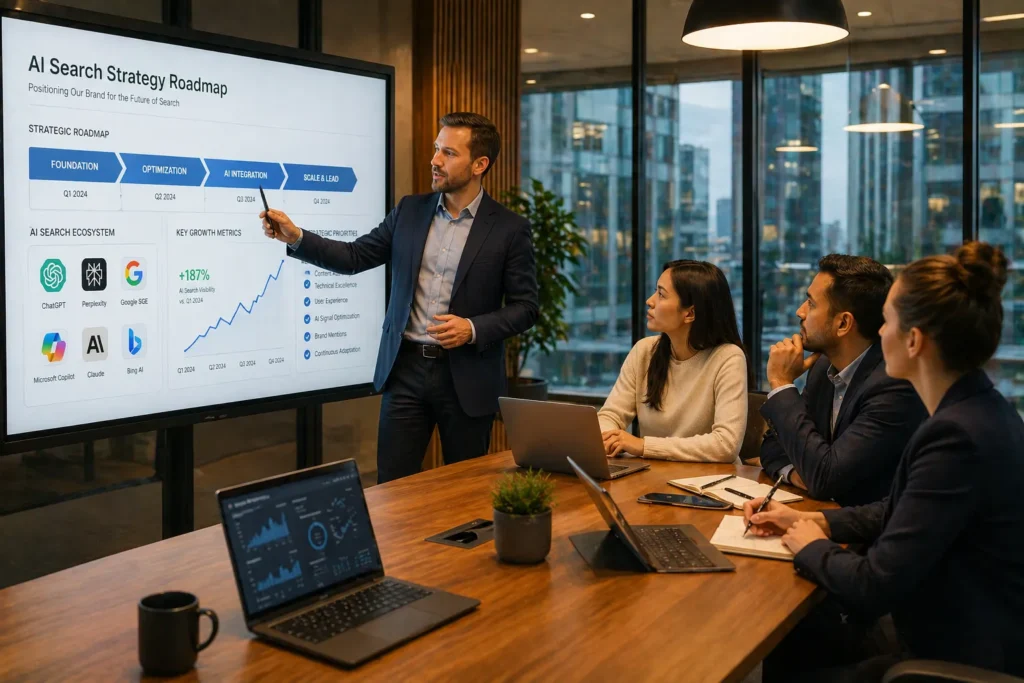
Sitting still isn’t an option. Businesses that treat AI as a workflow accelerator while keeping humans in charge of strategy will outpace competitors stuck at either extreme.
| Approach | What It Looks Like | Likely Outcome |
| Ignore AI completely | No AI tools, manual-only workflows | Slower output, missed AI visibility |
| Full AI automation | Mass-produced content, no human review | Generic output, penalties, eroding trust |
| AI-augmented with human strategy | AI for research and drafts, humans for strategy and QC | Higher ROI, stronger authority signals |
Three practical moves worth making right now:
- Audit AI visibility. Track whether the brand shows up in AI Overviews and LLM-generated responses, not just traditional rankings. The best AI SEO tools now monitor this automatically. Being cited in an AI-generated answer is becoming as valuable as a top-three organic position.
- Invest in Generative Engine Optimization (GEO). Some businesses wonder whether GEO will replace SEO entirely. It won’t, but it’s becoming a required layer. GEO focuses on getting content cited in AI summaries, not just ranking in traditional results. Structured data, entity optimization, and content formatted for clean AI extraction are the building blocks. The U.S. SEO software market is projected to nearly double from $20.8 billion in 2024 to $35.9 billion by 2030, according to Grand View Research, and GEO features are a major growth driver.
- Keep human expertise at the center. AI handles research, initial drafts, and pattern recognition. Humans handle strategy, quality control, brand voice, and the judgment calls that protect reputation. Businesses reporting the highest ROI from AI-integrated SEO share one common trait: strong governance frameworks that prevent AI outputs from going live without review.
The question was never “will AI replace SEO?” It was always “will businesses adapt fast enough to use AI within SEO before their competitors do?”
FAQs
How much traffic have AI Overviews taken from organic search results?
An Ahrefs study from February 2026 found AI Overviews reduce clicks to the number-one organic result by up to 58% when present. The impact varies by query type. Informational queries see the biggest drops, while commercial and transactional searches still drive strong click-through rates.
What is Generative Engine Optimization (GEO)?
GEO is a branch of SEO focused on getting content cited in AI-generated answers rather than just ranking in traditional blue links. It builds on E-E-A-T principles but adds structured data, entity optimization, and content formatting designed for clean AI extraction. The U.S. SEO software market is projected to hit $35.9 billion by 2030 (Grand View Research), with GEO capabilities driving significant growth.
Will AI replace SEO jobs?
The data says no. IBISWorld reports that U.S. employment in SEO and internet marketing consulting grew to over 607,000 in 2024, with projections reaching 714,838 by 2025. AI is shifting what SEO professionals spend their time on, but it’s creating demand for higher-level strategy and AI-integration skills rather than eliminating positions.
Should businesses block AI crawlers from their websites?
It depends. A December 2025 Cloudflare report showed many publishers block non-Google AI crawlers because the referral traffic doesn’t justify the server resources. Blocking Googlebot itself would hurt traditional rankings. The smart move is evaluating each AI crawler’s traffic contribution individually before making blanket decisions.
Does AI-generated content rank on Google?
Google doesn’t penalize content based on how it was produced. It evaluates quality, accuracy, and whether the content satisfies search intent. Ahrefs found no correlation between AI-generated content and ranking performance. The deciding factor isn’t the tool used to write it. It’s whether the output demonstrates real expertise and value.
How do businesses measure ROI from AI-integrated SEO?
Traditional metrics like rankings and organic clicks still matter, but they’re not the full picture anymore. Businesses should also track AI Overview citations, brand mentions in LLM responses, and assisted conversions from AI-referred traffic. Semrush data from 2025 shows nearly 70% of businesses report higher ROI when AI is properly integrated with human oversight into their SEO workflows.

Michael Vale has over 5 years of experience helping clients improve their business visibility on Google. He combines his love for teaching with his entrepreneurial spirit to develop innovative marketing strategies. Inspired by the big AI wave of 2023, Michael Vale now focuses on staying updated with the latest AI tools and techniques. He is committed to using these advancements to deliver great results for his clients, keeping them ahead in the competitive online market.