
The 3 C’s Of SEO In 2026: Content, Code, And Credibility
The 3 C’s of SEO (Content, Code, and Credibility) are the three pillars that control whether your website ranks or disappears. Every SEO decision ties back to one of these categories. Get all three working together, and your site earns traffic. Miss one, and the other two can’t pick up the slack.
The 3 C’s of SEO is a framework that organizes search optimization into three connected pillars: Content (what your site communicates and how well it matches user intent), Code (the technical foundation that makes your pages crawlable and fast), and Credibility (the off-site trust signals that prove your site deserves to rank). These three elements form the basis of every effective ranking strategy in 2026.
I’ve applied this framework across dozens of campaigns. It’s the quickest diagnostic tool I know for figuring out why a site isn’t performing. Most businesses cover one or two of the C’s decently. Almost nobody nails all three. And that gap is exactly where your competitors are winning.

Content: The First C That Drives Everything
Content is the material on your site that search engines evaluate and users actually read. Without strong content, nothing else in your SEO strategy matters. According to HubSpot’s 2026 State of Marketing report, website and blog content remains the number one ROI channel for marketers, with 27% citing it as their top performer.
But good SEO content isn’t about publishing volume. It’s about precision.
How Do Keywords Fit Into SEO Content?
Keywords tell search engines what your page is about. But the old approach of stuffing primary keywords into every other sentence? That’s been dead for years. Google’s algorithms in 2026 read context, not just keyword counts.
Pick one primary keyword per page and support it with natural variations. If your target term is “bathroom remodel cost,” you’d also mention “renovation pricing,” “what contractors charge,” and “remodeling budget.” That’s how people actually talk about a topic, and Google rewards that kind of natural language.
Why Search Intent Matters More Than Volume
Search intent is the reason behind a query. Someone searching “what are the 3 C’s of SEO” wants an explanation. Someone searching “SEO agency near me” wants to hire. Different intent, different content.
I’ve watched businesses chase high-volume keywords that drove zero conversions because the content didn’t match what users actually wanted. A 50-search-per-month term with the right intent will outperform a 5,000-search term that attracts the wrong audience. Every time.
What Makes Content Actually Worth Reading?
Content earns value when it answers questions better than the alternatives. Specific advice beats general tips. Real scenarios beat abstract principles. Original analysis beats recycled information from three other blog posts.
Roughly 44% of all AI citations pull from the first 30% of an article’s text. Front-load your most useful information. If you bury the answer after six paragraphs of setup, AI systems and impatient readers will both skip you.
Code: The Technical Backbone of Your Rankings
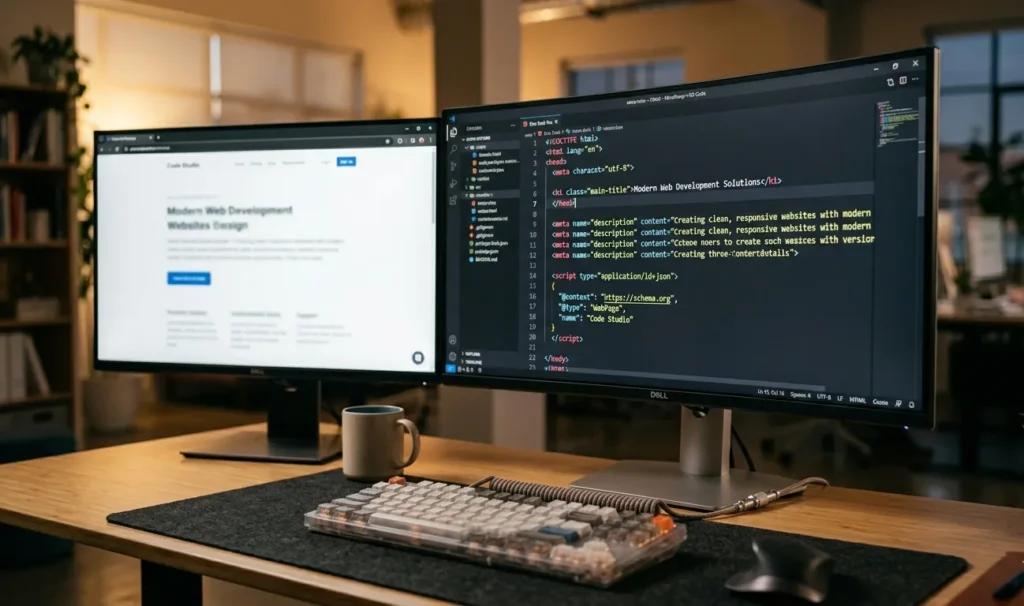
Code is the underlying structure of your website. The HTML, CSS, and JavaScript that search engines crawl to understand and index your pages. You can have the best content in your SEO program, but if your code is broken, search engines won’t find it and users won’t stay.
Do Header Tags Still Matter in 2026?
Yes. H1, H2, and H3 tags still tell Google how your content is organized. One H1 per page. Subheadings in logical order. Include your target keyword in at least one heading, but don’t force it into every section. Modern search engines read context well enough to understand your topic without exact-match text in every header.
What Role Do Meta Tags Play?
Meta titles and descriptions are your site’s first impression in search results. A clear, compelling meta title with your keyword near the front gets clicks. A generic one doesn’t.
Google’s March 2026 Core Update, which rolled out from March 27 through April 8, reinforced that quality signals matter at every level. That includes how you present pages in the SERPs. Your meta description is a sales pitch. Write it like one.
Alt Text and Image SEO
Every image on your site needs descriptive alt text. Not keyword-stuffed alt text. Descriptive. Search engines can’t see images the way humans do. Alt text provides context, and it makes your site accessible to screen readers. Skipping it is lazy and costs you ranking signals you could have earned for free.
How Structured Data Powers AI Search
Structured data (schema markup) is code you add to help search engines understand your content at a deeper level. With AI reshaping search and zero-click searches sitting near 60%, schema has become more valuable than ever. FAQ schema, article schema, and product schema all give AI systems machine-readable hooks to cite your content directly in their responses.
If you’re not using structured data in 2026, you’re invisible to a growing percentage of how people find information online.
Credibility: The C Most Businesses Overlook
Credibility is the trust that search engines and users place in your website. You can write strong content and run a technically sound site, but without trust signals, you’ll stall out. This is where off-page SEO enters the picture.
Building Real Authority
Authority comes from other credible sources pointing to your site. Quality backlinks from reputable websites, mentions in industry publications, and brand citations all tell Google your content is worth recommending. Ahrefs data cited in Demandsage’s 2026 SEO statistics shows that top-ranking pages gain 5 to 14.5% more do follow backlinks per month than their lower-ranking competitors.
Buying cheap links to game the system? That’s the single most expensive mistake I see businesses make. Google’s March 2026 Spam Update hit private blog networks and paid link schemes harder than any previous update, with nearly 80% of top-three results shifting in some datasets. The penalty risk alone can wipe out months of progress.
Does User Experience Affect SEO Rankings?
Absolutely. Google measures how visitors interact with your site through Core Web Vitals and engagement signals. If people click through and bounce immediately, that tells Google your page isn’t delivering.
Fast load times, clear navigation, and mobile responsiveness aren’t optional extras. They’re ranking factors. Research shows a 0.1-second improvement in load time can boost revenue by roughly 1%. For sites with any kind of technical SEO problems, fixing user experience issues often delivers the fastest results.
Why Reputation Can Make or Break Your SEO
Reviews, business listings, and brand mentions all feed into how search engines judge your credibility. Positive reviews send trust signals. Accurate listings across directories reinforce legitimacy. Unethical tactics like keyword stuffing or duplicate content do the opposite. They actively damage the reputation you’ve spent months building.
And here’s something most guides won’t tell you: reputation management isn’t a one-time project. It’s an ongoing process. One wave of negative reviews or a penalty from a bad link-building campaign can undo a year of work.
Is Site Security a Ranking Factor?
Yes. HTTPS has been a confirmed ranking signal for years, and Google actively flags non-secure sites to users. An SSL certificate, a reliable hosting provider, regular software updates, and a solid backup system aren’t just technical checkboxes. They’re a credibility infrastructure that protects both your visitors and your rankings.
| The 3 C’s of SEO | What It Covers | Common Mistakes |
| Content | Keywords, search intent, E-E-A-T, value | Publishing volume over quality; ignoring intent |
| Code | Headers, meta tags, alt text, schema, speed | Skipping structured data; slow load times |
| Credibility | Backlinks, reviews, UX, security, reputation | Buying cheap links; neglecting site security |
How to Put the 3 C’s of SEO to Work in 2026
The 3 C’s of SEO don’t work in isolation. Strong content needs clean code to get discovered. Good code is pointless without content worth indexing. And neither content nor code builds the credibility that pushes you above competitors on page one.
With the global SEO services market reaching $83.98 billion in 2026 according to Mordor Intelligence, more businesses are investing in search than ever. But investment without structure is just spending. If your site isn’t ranking where it should, one of these three pillars is the bottleneck. Identify it. Fix it. And treat SEO as an ongoing system that ties content, code, and credibility together, not a one-time task you check off a list.
FAQs
What are the 3 C’s of SEO?
The 3 C’s of SEO stand for Content, Code, and Credibility. Content covers the written and visual material on your site that matches user search intent. Code refers to the technical HTML structure, meta tags, schema markup, and site speed that make your pages crawlable. Credibility includes off-page trust signals like backlinks, reviews, and brand mentions. All three work together to determine your search rankings.
Which of the 3 C’s of SEO matters most?
None of them work alone. But if you’re starting from scratch, content typically delivers the first measurable results because it directly targets the queries your audience is searching for. HubSpot’s 2026 data shows 27% of marketers rank website content as their top ROI channel. Code and credibility amplify what good content starts.
How does credibility affect SEO rankings?
Credibility signals tell search engines your site can be trusted. Backlinks from reputable sites, positive customer reviews, accurate business listings, and HTTPS security all contribute. Ahrefs data from 2026 shows top-ranking pages earn 5 to 14.5% more dofollow backlinks monthly than lower-ranking competitors. Without credibility, even great content stalls.
Is technical SEO (code) still important in 2026?
More than ever. Google’s Core Web Vitals measure real-world page speed and responsiveness. Sites that load slowly or shift layout during loading get penalized in rankings. Structured data (schema markup) is also increasingly important because it gives AI search systems the machine-readable context they need to cite your content in AI Overviews and answer engines.
How long does it take to see results from the 3 C’s of SEO?
Most sites see initial movement within 3 to 6 months when all three pillars are addressed simultaneously. Content improvements can show traction in weeks if you’re targeting low-competition terms. Code fixes (like improving page speed) often produce the fastest ranking changes. Credibility-building through backlinks and reputation takes the longest, typically 6 to 12 months for compounding results.
Do the 3 C’s of SEO apply to local businesses?
Yes. Local businesses benefit from all three pillars. Content should target location-specific queries. Code should include local business schema and accurate NAP (name, address, phone) markup. And credibility for local SEO relies heavily on Google Business Profile reviews, local directory citations, and backlinks from community or industry-relevant sites.
What’s the biggest mistake businesses make with SEO?
Focusing on one pillar and ignoring the others. A common pattern: a business invests heavily in content but never fixes technical issues holding the site back. Or they build backlinks aggressively but publish thin, unhelpful pages. Google’s March 2026 updates penalized sites with weak credibility signals and rewarded those with balanced quality across content, code, and trust.

Michael Vale has over 5 years of experience helping clients improve their business visibility on Google. He combines his love for teaching with his entrepreneurial spirit to develop innovative marketing strategies. Inspired by the big AI wave of 2023, Michael Vale now focuses on staying updated with the latest AI tools and techniques. He is committed to using these advancements to deliver great results for his clients, keeping them ahead in the competitive online market.