Video marketing for remodelers works best as a closing tool, not a lead source. A homeowner almost never finds you because of a video. They find you on Google, then they watch your video to decide whether to call. That order is the whole game, and most advice online has it backward.
We run search marketing for remodeling companies in 18 markets, and we’ve watched this pattern hold across 87 campaigns since 2019. The testimonial that helped close a $94,000 kitchen job did its work after the homeowner had already searched, clicked, and landed on the site. So this guide skips the pep talk. Here’s what video really does for a remodeler, what to film, what to skip, and what to spend in 2026, with the numbers behind each call.
What is video marketing for remodelers?
Video marketing for remodelers is the use of video, project walkthroughs, client testimonials, before-and-after tours, and short social clips, to earn trust and turn interested homeowners into booked estimates. For a remodeling company, video rarely creates demand by itself. It converts demand that search, referrals, and ads already created.
Keep that distinction in your head as you read. A cinematic drone tour is not going to make a homeowner want a kitchen they weren’t already considering. But it might be the reason they pick you over the two other remodelers they found the same afternoon.
Does video marketing actually get remodelers leads?
Usually not on its own. Video influences the decision far more than it creates the search. In Wyzowl’s 2026 State of Video Marketing report, 85% of video marketers said video helped them generate leads. That sounds decisive until you remember it’s marketers grading their own homework. It’s a survey of opinion, not a measure of where the phone calls came from.
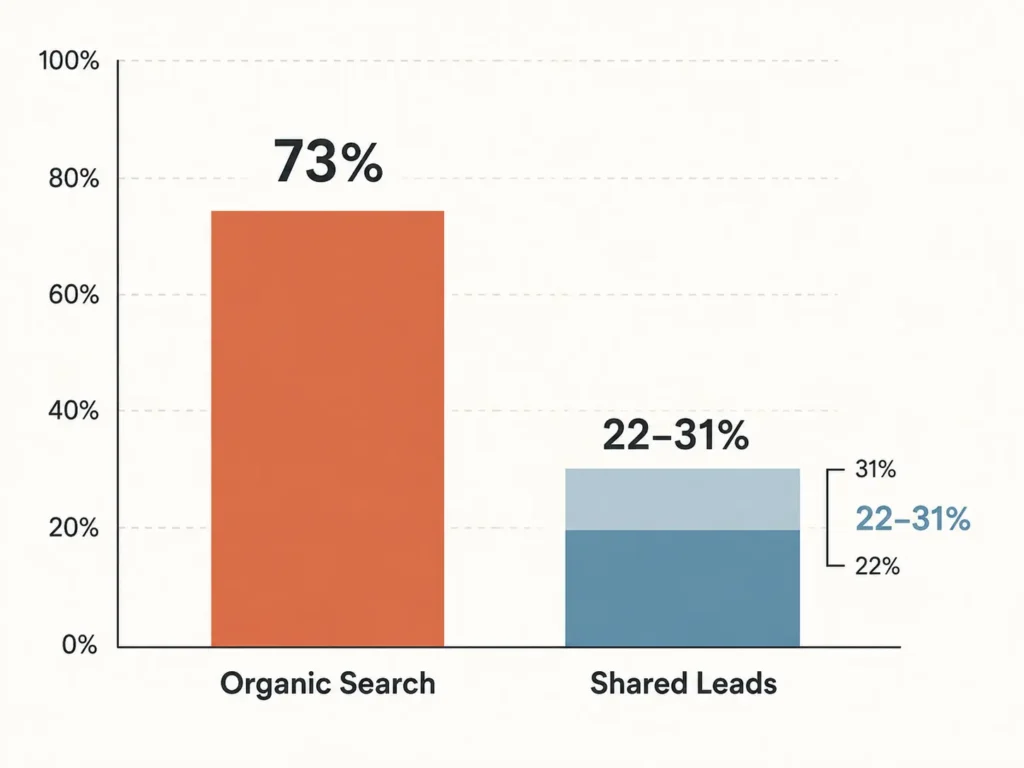
Our first-party data tells a sharper story. Across our clients, about 73% of leads from organic Google search turn into booked estimates. Leads bought from shared platforms like Angi convert at 22% to 31%, based on what those clients report to us. The homeowner who searched “kitchen remodeler near me,” read your reviews, and watched a 90-second testimonial is a different buyer than one whose contact info was sold to five contractors at once.
Here’s the part that stings if you love making videos: in early 2024 we tested informational content against high-intent pages across four remodeling clients. The service pages produced 3.2 times the leads. The content converted at 1.8%; the service pages at 6.4%. Video follows the same rule as any other content. Attention is cheap. Attention from someone ready to hire is what pays. (Results vary by market, competition, and client engagement. Past performance does not guarantee identical future results.)
So the honest answer: video won’t get you leads. It closes the ones Google already sent you.
Where video earns its keep for a remodeling company
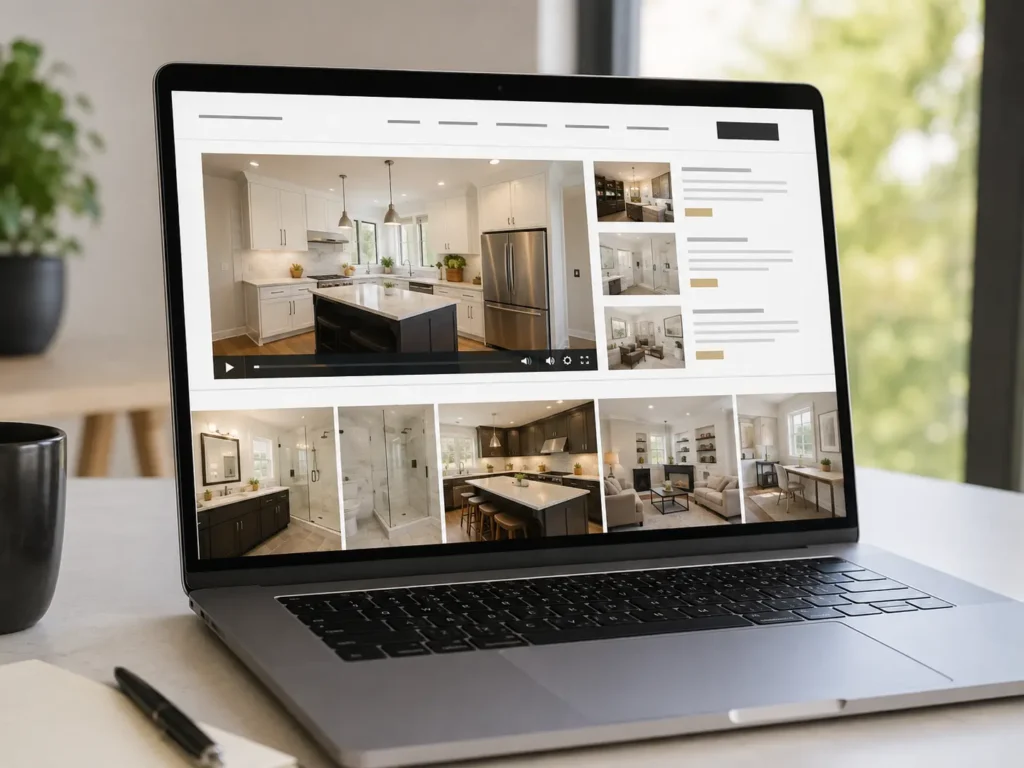
Video pays off at the moment of decision, on the pages a homeowner already reached. Put your best video where the choice actually happens: your service pages, your Google Business Profile, and your follow-up emails, not just a social feed.
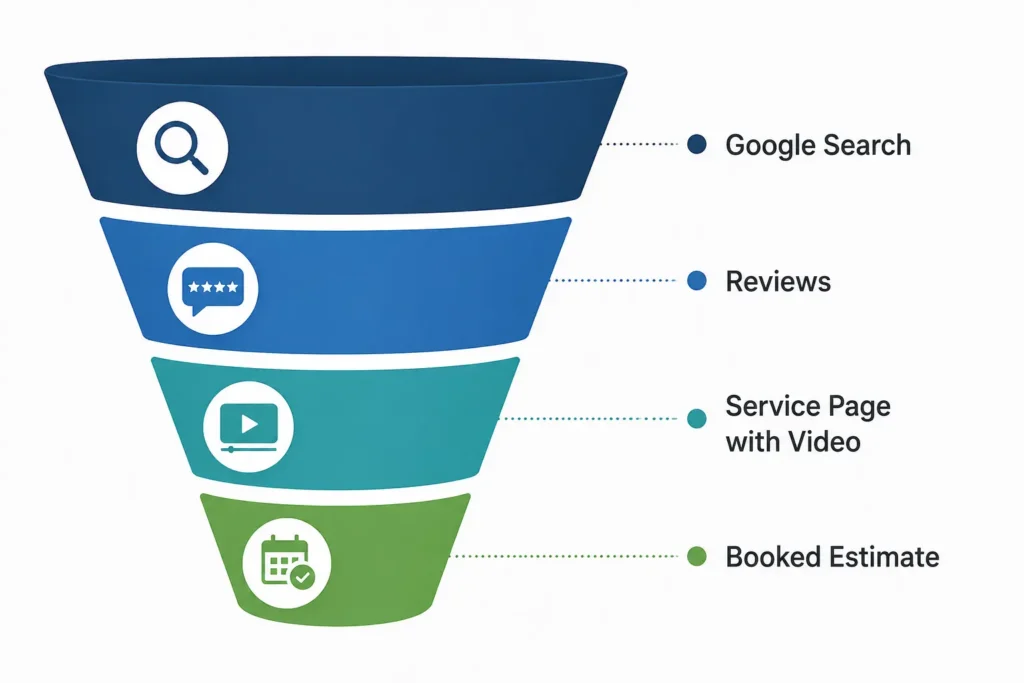
Think about the sequence. A homeowner searches, checks the map results, reads reviews, and clicks into two or three remodelers’ sites. On the page they land on, a short project walkthrough or a client saying “these are the people who redid our kitchen” does more than another gallery of photos. Wyzowl’s 2026 data backs the trust point: 89% of consumers say video quality affects how much they trust a brand, and 82% of video marketers say video keeps visitors on their site longer.
That extra time matters for reasons beyond the sale. Longer, more engaged visits are one of many signals search engines read when they decide which pages deserve to rank, which is part of what a search company is actually paying attention to. Video isn’t a magic ranking button, and anyone who tells you embedding a clip lifts you to page one is selling something. But a page people actually watch and stay on beats a thin page every time.
Reviews close the loop. In BrightLocal’s 2025 Local Consumer Review Survey, 83% of consumers said they use Google to read reviews before choosing a local business. A video testimonial and a written five-star review do the same job from two angles: they let a stranger vouch for you at the exact second the homeowner is deciding.
The videos worth making, and the order to make them in
Start with the videos that answer a homeowner’s real question, which is “can I trust these people,” then work outward. You do not need a full library on day one. You need three or four videos that do real work.
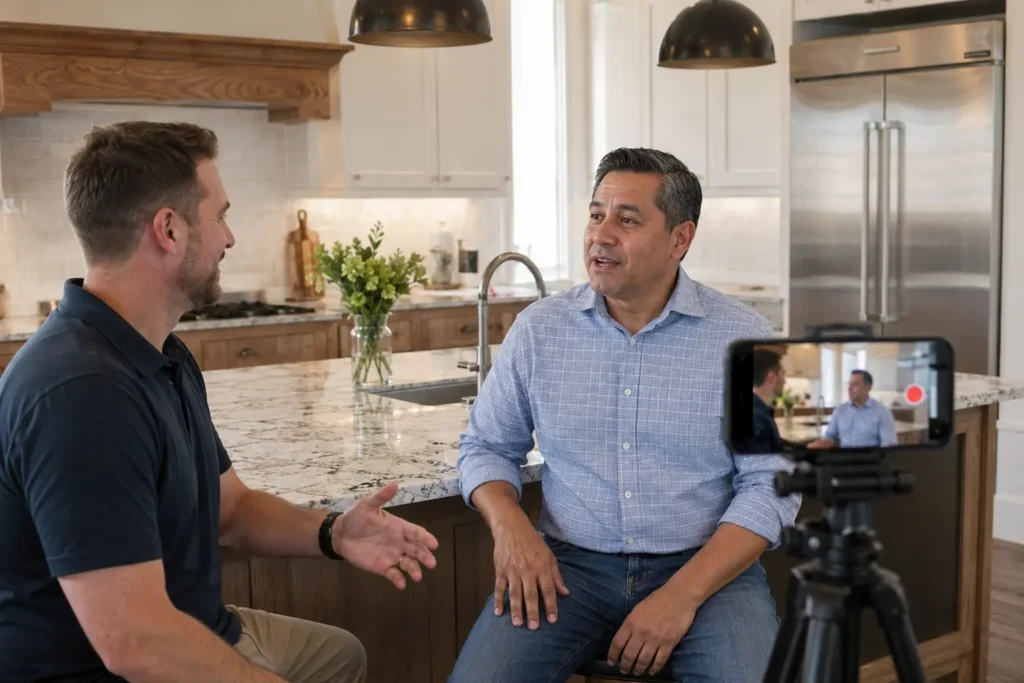
Make client testimonials first. They carry more weight than anything you can say about yourself, and a homeowner watching one often thinks “that sounds exactly like my situation.” Wyzowl’s 2026 survey found 57% of marketers already produce them, second only to social clips, and 96% of people say they’ve watched a video to learn about a product or service.
Next, film one project walkthrough. Walk a finished remodel, point out the choices you made, the problem you solved in an older home, the materials you used. If you’re comfortable, name a real price range without exposing a specific client’s number. This is the video that makes a homeowner picture their own project.
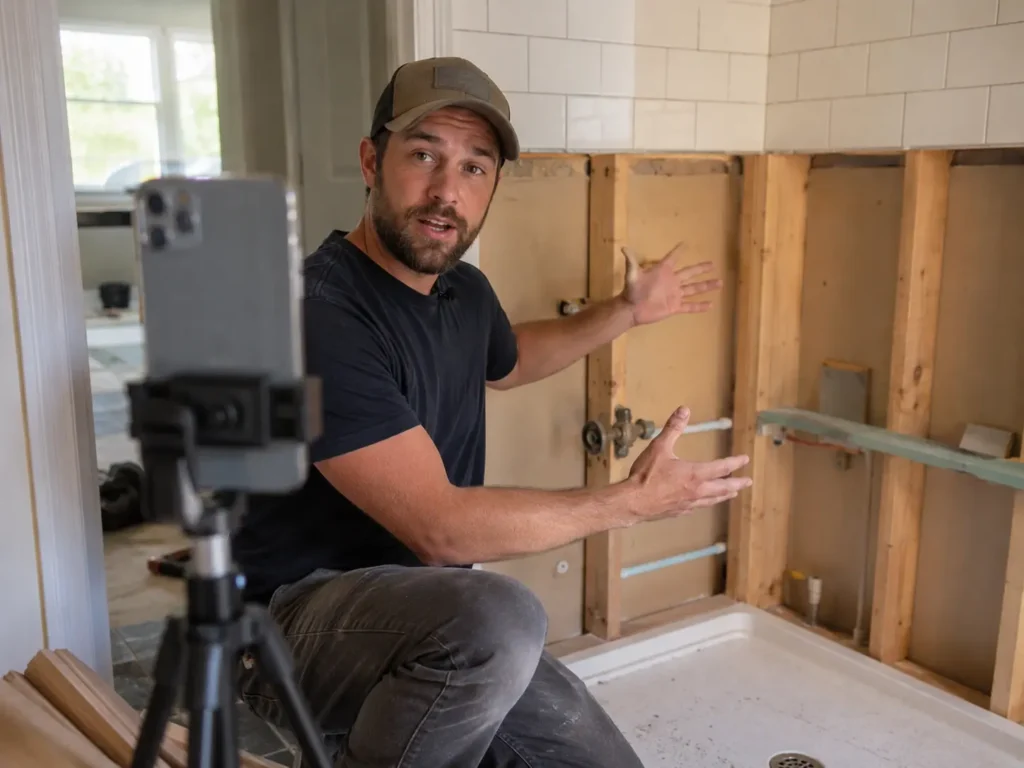
After that, a short before-and-after and a plain meet-the-team clip round out the set. Then explainer videos, the “here’s how we handle a permit in this county” or “here’s what water damage behind a shower looks like” kind, are strong because they prove you know the work. These can be rough. A phone at the job site is fine. Polished lighting is not the point; knowing your trade is.
One more, borrowed from my own experience. I’ve published 85 or so videos on my own channel, and they average around 1,200 views. None of them went viral. They didn’t need to. A handful of the right people watched the right video at the right time, and that’s the entire job of video for a business like yours.
How much should you spend on video in 2026?
Less than the internet wants you to believe. Most remodelers get more return from a modest, repeatable setup than from one expensive brand film. Here’s what we see remodelers actually pay:
| Approach | Typical 2026 cost | Best for |
|---|---|---|
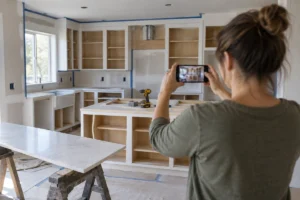
| Phone setup (tripod, clip-on mic, small light) | $0 to $600 | Testimonials, site updates, social clips |
| Freelance videographer, half day | $800 to $2,000 | A batch of testimonials and one walkthrough |
| Full brand shoot (pro editing, drone, b-roll) | $3,000 to $8,000 | One hero video plus several short cutdowns |
| Ongoing monthly content help | $1,000 to $3,000 per month | Steady social and testimonial output |
The competitor pages pushing $10,000 to $25,000 packages are describing what an agency wants to sell, not what a remodeler needs to start. Wyzowl’s 2026 data shows 59% of marketers now make video in house, and 71% say the videos that work best run between 30 seconds and 2 minutes. You do not need a film crew to shoot a two-minute testimonial.
Spend the first dollars on getting the basics filmed and posted consistently. Save the big check for a single strong walkthrough once you know video is earning its place. (Pricing varies by market and scope. These are general ranges, not a quote.)
The platforms worth your time, and the one to skip
Put video where remodeling buyers actually make decisions, which means your own site and Google first, YouTube and Instagram second, and almost everything else a distant maybe. Being on every platform is a time cost most remodeling owners can’t afford, and it rarely returns the hours.
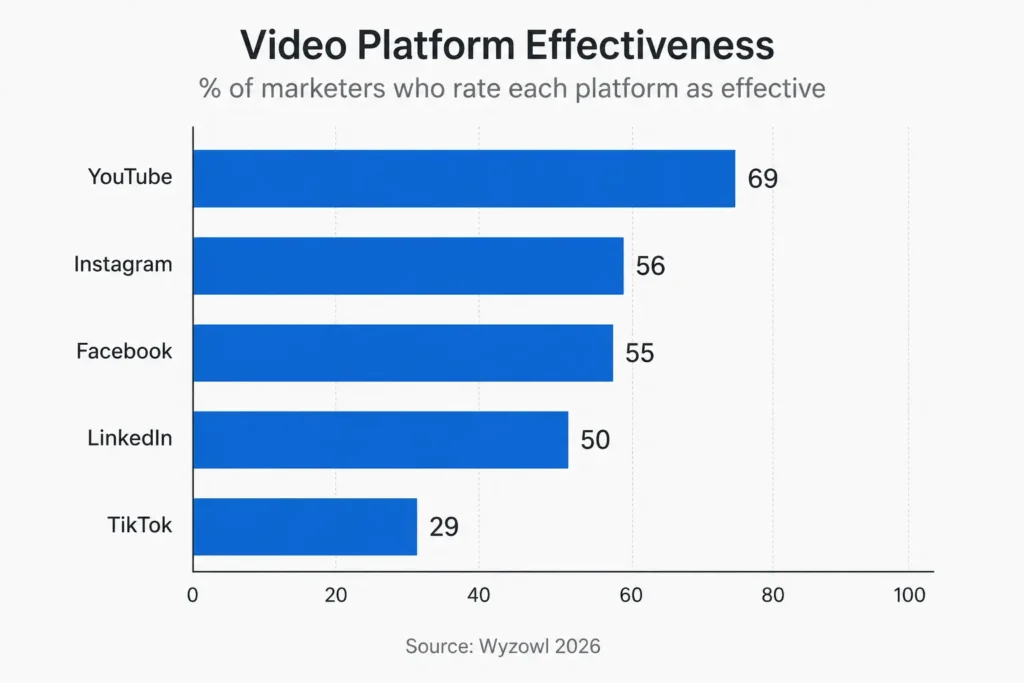
Wyzowl’s 2026 numbers are blunt about effectiveness. YouTube is used by 82% of video marketers and rated the most effective by 69%. Instagram and Facebook follow. TikTok sits near the bottom, rated effective by just 29%. Yes, a few remodelers do well on TikTok, and if you enjoy it, keep going. But building your plan around it, the way a lot of contractor advice suggests, means pouring hours into the platform marketers rank as their least effective.
The practical move: film once, post everywhere. A testimonial you shoot for your service page becomes a YouTube upload, an Instagram clip, and a Facebook post. If keeping that consistent across channels sounds like one more job you don’t have time for, that’s exactly the kind of thing handing the social side to a team is for. And be honest about return: for most remodelers, one new five-star Google review does more than 30 social posts.
How to tell if your videos are working
Track booked estimates, not views. A video with 40,000 views and zero calls is a hobby; a testimonial with 300 views that helped close two kitchens is a marketing asset. The vanity numbers feel good and tell you almost nothing about revenue.
Watch three things instead. First, are people who land on a page with video staying longer and more likely to fill out a form than on the same page without it. Second, are new leads mentioning the videos, “I watched the one where you walked through the Oak Street remodel” is the signal you want. Third, on YouTube, watch average view duration and click-through on the thumbnail, since a weak thumbnail is the video’s version of a weak title tag, the same way click-through shapes search performance. If people click and immediately leave, fix the open. If they never click, fix the thumbnail and title.
Should you film it yourself or hire a pro?
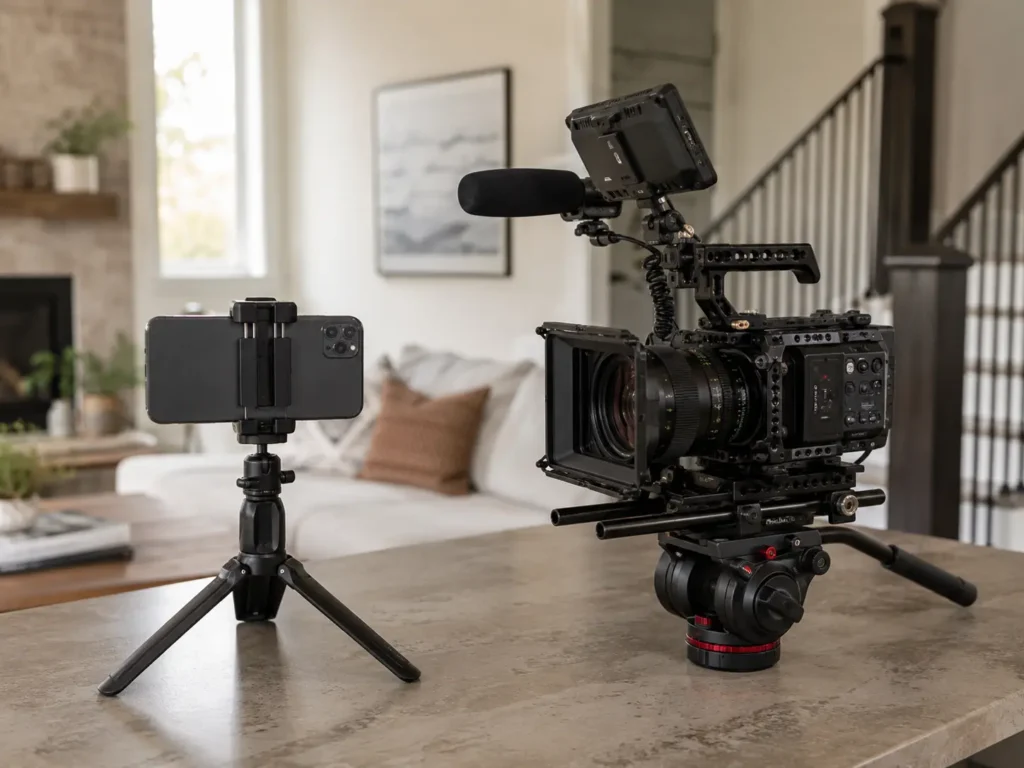
Do it yourself to start, and hire out only when the basics are already working. A phone shoots a fine testimonial, and the authenticity of a remodeler talking plainly at a job site often beats a glossy edit that feels like an ad. Since 59% of marketers already create video in house, you’d be in good company.
Bring in a professional for two specific jobs: a hero brand video you’ll use for a year, and any walkthrough where drone shots and clean audio genuinely change the impression, a high-end whole-home remodel, say. If your time is worth more than the few hours of learning to edit, pay someone. Just don’t let “we’re waiting on the videographer” become the reason you have no video for six months. Rough and posted beats perfect and hypothetical.
Where video fits in a remodeler’s marketing plan
Video is a supporting player, so build the engine first, then add video to close more of what it brings in. The homeowner’s path runs through Google: they search, they read reviews, they land on a page, they decide. Video helps at the last step. It does not replace the first three.
That’s why we tell clients to get the fundamentals right before touching a camera: rankings that put you in front of buyers, a fast site, and a steady flow of reviews. If you need calls this month while those build, search ads can carry the gap. Search is also shifting, with AI answers changing how homeowners discover and vet remodelers, which makes clear, trustworthy pages, video included, matter more, not less. When you’re ready to line all of this up instead of guessing, the way we build remodeling marketing starts with the search side and treats video as the closer it actually is.
Get that sequence right and video marketing for remodelers stops being a cost you feel guilty about ignoring and becomes the thing that turns a good week of Google leads into a booked calendar.
FAQs
Does video marketing get remodelers leads?
Rarely on its own. Homeowners find remodelers on Google, then watch video to decide who to call. In Wyzowl’s 2026 survey, 85% of marketers said video helped generate leads, but that’s self-reported. Across our 87 remodeling campaigns, organic search drives the leads and video helps close them.
What kind of videos should a remodeler make first?
Start with client testimonials, then one project walkthrough. Testimonials answer the homeowner’s real question, which is whether they can trust you, and 96% of people say they’ve watched a video to learn about a product or service (Wyzowl 2026). A walkthrough helps them picture their own project.
How much does video marketing cost for a remodeler in 2026?
Anywhere from $0 with a phone to $3,000 to $8,000 for a professional shoot with editing and drone footage. Most remodelers get more return from a $600 setup and consistent testimonials than from one expensive brand film. Pricing varies by market and scope.
Is TikTok worth it for remodelers?
For most, no. In Wyzowl’s 2026 data, TikTok was the least effective platform, rated effective by just 29%, while YouTube led at 69%. Post there if you enjoy it, but don’t build your plan on it.
Do I need a professional videographer?
Not to start. 59% of marketers make video in house (Wyzowl 2026), and a phone shoots fine for testimonials and social clips. Hire a pro for a hero brand video or a drone walkthrough once the basics are already working.
Where should remodeling videos go to actually help?
On your service pages and Google Business Profile first, then social. 82% of video marketers say video keeps visitors on their site longer (Wyzowl 2026), and 83% of consumers read Google reviews before choosing a local business (BrightLocal 2025), so the page a homeowner lands on is where video changes the decision.