
What’s The Difference: Rich Snippets Vs Featured Snippets?
Featured Snippets are Google’s answer boxes that appear at position zero above organic search results, providing direct answers to user queries. Rich Snippets are enhanced search listings that display additional information like star ratings, prices, and images within regular search results using structured data markup. At Eclipse Marketing, we help businesses understand these distinctions and leverage comprehensive SEO services to maximize their search visibility.
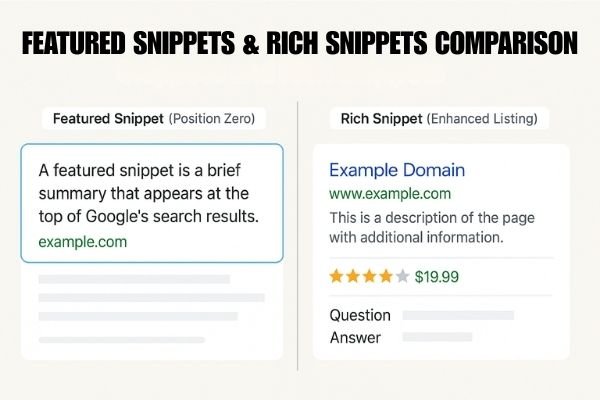
The key difference: Featured Snippets appear at the very top of search results as extracted content answers, while Rich Snippets appear within standard search listings with extra visual elements. Featured Snippets target informational queries with quick answers, whereas Rich Snippets work for various query types including shopping, reviews, and events.
Both snippet types significantly boost website visibility and click-through rates. Featured Snippets can increase traffic by 20-30% through prime positioning and authority building. Rich Snippets improve click rates by making search results more attractive and informative with preview information.
To optimize for Featured Snippets: target question-based keywords starting with “how,” “what,” “why,” and “when,” structure content with clear headings and subheadings, provide direct answers in 40-60 words, and use numbered lists or tables for step-by-step content.
For Rich Snippets: implement structured data markup using Schema.org formats, choose appropriate schema types (Product, Review, FAQ, Recipe, Event), and test implementation with Google’s Rich Results Test tool. WordPress users can use plugins like Yoast SEO or Schema Pro to add markup without coding knowledge.
This comprehensive guide covers optimization strategies, common myths, advanced tactics, and essential tools for maximizing both Featured and Rich Snippet visibility in search results.

Understanding Featured Snippets and Rich Snippets for SEO Success
Search results today offer more than simple blue links to websites. Google now highlights content using special formats called Featured Snippets and Rich Snippets. Both formats aim to make searching better, but they work differently. Featured Snippets provide quick, direct answers at the top of results pages. Rich Snippets add extra details to standard listings like ratings and pricing. Learning how each format works helps you optimize content for better visibility through professional SEO strategies. This knowledge leads to higher click-through rates and stronger search authority.
Learning about both snippet types helps strengthen your SEO approach effectively. Optimizing for these features can increase your organic website traffic. This knowledge also helps you create better user experiences overall.
What are Featured Snippets?
Featured Snippets give short, direct answers to user questions at Google’s top. These snippets help users find quick, useful information without clicking search results. People call them “position zero” because they show above the first search result.
Different Types of Featured Snippets
Google uses several Featured Snippet types to answer different search questions:
- Paragraph Snippets: These give brief, text-based answers to questions. They work best for definitions or simple explanations.
- List Snippets: These show information in bulleted or numbered lists. They’re perfect for step-by-step guides or rankings.
- Table Snippets: These display data in organized table formats. They help users compare information or view statistics easily.
- Video Snippets: These feature videos, usually from YouTube, that answer queries directly.
Real Examples You’ll See
Here are common Featured Snippet examples you might encounter:
- Paragraph Snippet: Searching “What is SEO?” shows a short paragraph explaining the term.
- List Snippet: Asking “Steps to change a tire” gives numbered steps to follow.
- Table Snippet: Searching “2024 car models comparison” displays a comparison table.
- Video Snippet: Looking up “How to tie a tie” brings up YouTube tutorial videos.
Why Featured Snippets Matter for SEO
Featured Snippets offer incredible value for SEO success for these reasons:
- Increased Visibility: Appearing at the top of search results boosts your content visibility significantly.
- Higher CTR: Users click more often on results that provide quick answers.
- Establishing Authority: Being chosen as a Featured Snippet makes your website more trustworthy.
- Driving Traffic: Many users still click through for more detailed information after reading snippets.
Optimizing for Featured Snippets can boost your website’s performance and user engagement greatly.
What are Rich Snippets?
Rich Snippets are search results that show extra information beyond basic titles and descriptions. This bonus information comes from structured data on your webpage using special coding formats. Rich Snippets help users see more detailed information quickly, making search results more attractive and useful.
Different Types of Rich Snippets
Rich Snippets come in various formats, each serving different content types. Here are common types you’ll see:
- Review Snippets: Show star ratings and sometimes review counts. Example: Product reviews with star ratings under search results.
- Recipe Snippets: Include cooking times, calorie details, and sometimes food images. Example: Recipe results showing prep time, cooking time, and user ratings.
- Event Snippets: Display event details like dates, locations, and ticket information. Example: Concert results showing date, venue, and ticket prices.
- Product Snippets: Provide information like prices, availability, and product ratings. Example: Shopping results showing product price, stock status, and star ratings.
- FAQ Snippets: Display question and answer lists directly in search results. Example: Webpage results showing common questions and answers about topics.
Real Examples You’ll Encounter
Here are Rich Snippet examples you might see while searching:
- Review Snippets: Searching “iPhone 13 reviews” shows results with star ratings and review numbers.
- Recipe Snippets: Asking “chocolate chip cookie recipe” displays results with cookie pictures, ratings, and prep times.
- Event Snippets: Looking up “upcoming concerts in New York” brings up event listings with dates and prices.
- Product Snippets: Searching “best DSLR cameras” shows product listings with prices, availability, and star ratings.
- FAQ Snippets: Searching “how to use Google Analytics” displays common questions and answers directly.
Why Rich Snippets Matter for SEO
Rich Snippets provide several benefits for SEO success:
- Enhanced Search Appearance: Rich Snippets make your results stand out with additional information and visuals.
- Increased CTR: The extra details provided by Rich Snippets attract more user clicks.
- Improved User Experience: Rich Snippets offer users valuable information quickly, improving their search experience.
- Providing Detailed Information: They help users understand content better before clicking, leading to higher-quality traffic.
Rich Snippets can significantly boost your content performance by making listings more appealing and informative.
Key Differences Between Featured Snippets and Rich Snippets
Understanding the main differences between Featured Snippets and Rich Snippets helps you optimize content effectively. Here’s a detailed comparison in easy-to-read table format:
| Feature | Featured Snippets | Rich Snippets |
| Placement in Search Results | Appear at the very top of Google’s search results (Position Zero) | Appear within the regular search results |
| Appearance and Format | Brief extract from a webpage, formatted as paragraph, list, table, or video | Enhanced search results with extra information like ratings, prices, and images |
| How They Are Triggered | Selected by Google’s algorithm from high-ranking pages with well-structured content | Triggered by structured data (Schema.org markup) presence on the webpage |
| Impact on Click Rates | Often lead to higher click-through rates due to prime placement and quick answers | Increase click rates by making search results more appealing and informative |
| User Intent and Search Types | Typically appear for informational queries where users want quick answers | Can appear for various query types, including shopping, navigational, and informational searches |
| Examples | “How to bake a cake” might show step-by-step list at top of results | “Best DSLR cameras” might show product listings with star ratings and prices within regular results |
Understanding these differences helps you develop a complete SEO strategy. This knowledge lets you use both Featured Snippets and Rich Snippets effectively. The result is maximum visibility and better user engagement for your content.
How to Get Your Content Featured in Snippets
Getting Featured Snippets can boost your visibility and drive more website traffic significantly. Here are detailed strategies to help you achieve this goal:
1. Research the Right Keywords
Strong optimization begins with complete keyword research that targets your audience effectively. Find long-tail keywords and question-based searches that your target audience uses regularly. Tools like Ahrefs, SEMrush, and Google Keyword Planner help you discover these keywords. Focus on phrases starting with “how,” “what,” “why,” and “when” since they appear in Featured Snippets commonly.
2. Organize Your Content Structure
Arrange your content in a clear, organized way with proper headings and subheadings. Use HTML tags like H2 and H3 to break content into easy-to-read sections. This helps Google understand your content better while improving user readability significantly. Professional web design services can ensure your site structure supports optimal snippet performance.
3. Answer Common Questions Directly
Create content that answers common questions in a direct and brief way. Use your researched keywords and write content that provides clear, straightforward answers always. For example, if you’re targeting “how to optimize for featured snippets,” make sure your content gives step-by-step answers to this question.
4. Use Lists and Tables Effectively
Lists and tables appear in Featured Snippets very often, so use them wisely. If your content works well as a list format, like process steps or item rankings, format it as numbered or bulleted lists. For data comparisons, use tables to present information clearly and simply.
5. Focus on Quality and Relevant Content
High-quality, relevant content remains absolutely crucial for Featured Snippet success. Make sure your content is accurate, well-researched, and completely up-to-date always. Use trusted sources to support your claims and provide detailed information. Content that answers the user’s question thoroughly gets featured more often.
Real Example in Action:
Here’s a practical example that shows these strategies working together effectively. Let’s say you’re optimizing for “how to make a smoothie.” Your content structure might include:
- Introduction: Brief overview of smoothie-making basics and benefits.
- Ingredients List: Use a bulleted list to outline all necessary ingredients clearly.
- Step-by-Step Instructions: Numbered list explaining each step in the smoothie-making process.
- Tips and Variations: Additional information to make the content more valuable and complete.
Structuring your content this way increases your chances of Google selecting it significantly. This approach combines all the optimization strategies into one cohesive content piece.
How to Get Rich Snippets for Your Content
Rich Snippets make your search results more attractive with extra information and visuals. They make your listings more appealing and informative for users. Here are detailed strategies to optimize for Rich Snippets successfully:
1. Add Structured Data to Your Website
Structured data, or schema markup, is special code added to your website pages. It helps search engines understand your content better and create Rich Snippets automatically. You can add structured data manually or use plugins on platforms like WordPress. Moz’s comprehensive guide provides detailed insights on implementing structured data effectively for better search visibility.
2. Choose the Right Schema Types
Different schemas work for different content types you create on your website. Some common schemas include these popular options:
- Product Schema: For online stores, it displays product prices, availability, and customer ratings.
- Review Schema: Adds star ratings and review counts to your search results.
- FAQ Schema: Lists questions and answers, helping users find relevant information faster.
- Recipe Schema: Shows cooking times, ingredients, and nutritional information for food content.
- Event Schema: Displays event details like dates, locations, and ticket prices clearly.
3. Implement and Test Your Schema Code
After choosing the right schema type, add it to your website properly. You can use Google’s Structured Data Markup Helper to create the necessary code. Once you’ve added it, test the schema using Google’s Rich Results Test tool. You can also use the Structured Data Testing Tool to make sure there are no errors.
4. Helpful Tools for Schema Setup
Several useful tools can help you add and manage schema markup easily:
- Google’s Structured Data Markup Helper: Helps you create the markup code step-by-step.
- Yoast SEO Plugin: A popular WordPress plugin that makes schema implementation much simpler.
- Schema Pro Plugin: Another helpful tool for easy schema markup integration on WordPress websites.
- Ahrefs: Can help you find Rich Snippet opportunities and track their performance over time.
Real Example in Practice:
Here’s a practical example that shows these strategies working together effectively. Suppose you have an online store selling cameras and want Rich Snippets. You could:
- Product Schema: Add information about camera prices, stock status, and user ratings clearly.
- Review Schema: Include star ratings and the total number of customer reviews.
- FAQ Schema: Answer common questions about the cameras you sell to help customers.
Benefits of Featured Snippets for Your Website
Featured Snippets provide many advantages for website visibility and user engagement success. Here are the key benefits you can expect:
1. Get Maximum Visibility
Featured Snippets take the valuable “position zero” at the top of search results. This prime placement makes your content significantly more visible to users. This top spot ensures your content gets seen first, often leading to higher website traffic.
2. Boost Your Click Rates
The top position of Featured Snippets leads to higher click-through rates significantly. Users click more often on results that provide quick answers to their questions. Even though the snippet shows a summary, many users still click for more detailed information.
3. Build Trust and Authority
Being chosen as a Featured Snippet shows users that your content is trustworthy and reliable. This recognition can improve your brand’s reputation and credibility in your industry significantly.
4. Increase Your Website Traffic
Despite giving direct answers, Featured Snippets often drive significant organic traffic to your website. Users who want more complete information will click through to your site. This increases your overall site visits and engagement substantially.
5. Improve User Experience
Featured Snippets improve user engagement by giving immediate answers to user questions effectively. This creates a better user experience that keeps people satisfied with your content. Happy users return to your site for future searches, increasing repeat visits and engagement.
Real Success Example:
For example, suppose your website has a detailed guide on “how to plant a garden.” Optimizing your content to answer specific questions directly can earn you a Featured Snippet. An answer to “how to plant a garden” shown at the top drives users to your detailed guide. This increases traffic while establishing your site as a gardening authority.
Benefits of Rich Snippets for Your Business
Rich Snippets offer several advantages that can improve your search results performance significantly. They also boost user engagement with your content effectively. Here are the key benefits you’ll see:
1. Make Your Results Stand Out
Rich Snippets make your search results more visually attractive by adding extra information. They include ratings, prices, and images that catch users’ attention immediately. This improved appearance helps your result stand out from regular listings effectively.
2. Get More Clicks
The extra details provided by Rich Snippets often lead to higher click-through rates. Users click more often on results that include complete information like ratings and prices. This information appears directly in the search results for easy viewing.
3. Create Better User Experience
Rich Snippets provide detailed information at a glance, making user experience much better. Users can quickly find the information they need without clicking through multiple search results. This makes their search process more efficient and satisfying for everyone.
4. Give Users Preview Information
Rich Snippets give users a preview of the content they’ll find on your webpage. For example, a product Rich Snippet shows price, availability, and ratings clearly. This helps users make informed decisions quickly and confidently about clicking your link.
5. Attract Better Quality Visitors
Rich Snippets provide more context, so the traffic they bring is often higher quality. Users clicking on Rich Snippets have a clearer idea of what they’ll find. This leads to lower bounce rates and higher engagement on your website.
Real Business Example:
For example, suppose you run an online store selling laptops and use Rich Snippets effectively. You can display product ratings, prices, and availability to attract targeted users. A search result for “Best laptops under $1000” with Rich Snippets shows detailed reviews and price comparisons. This makes users much more likely to click on your result.

Common Myths About Snippets You Should Know
Understanding and clearing up common myths about Featured Snippets and Rich Snippets helps you use these tools better. This knowledge can improve your SEO strategy and results significantly.
1. Featured Snippets and Position Zero Are the Same Thing
A common mistake is thinking Featured Snippets and Position Zero are different things. In reality, Position Zero refers to the top spot in Google’s search results. This spot is typically filled by a Featured Snippet, so people use these terms interchangeably.
2. Rich Snippets Won’t Hurt Your Rankings
Some people worry that adding Rich Snippets can cause search engine penalties if done wrong. While incorrect setup can create issues, using structured data properly won’t hurt you. Following Google’s guidelines correctly enhances your search visibility instead of causing problems.
3. Featured Snippets Are Easier Than You Think
Many people think getting a Featured Snippet is difficult and requires advanced technical skills. While competitive keywords can be challenging, you can still succeed with good content. Focus on giving clear, brief answers to common questions that people search for. Good content structure and high-quality information are the real keys to success.
4. Adding Schema Is Simpler Than It Looks
Another myth is that adding structured data for Rich Snippets is too complicated. However, many helpful tools and plugins make this process much easier. Google’s Structured Data Markup Helper and SEO plugins like Yoast let you add schema markup easily. You don’t need advanced coding knowledge to get started successfully.
Real Examples of These Myths in Action:
- Featured Snippets vs Position Zero: Searching “how to tie a tie” shows a Featured Snippet at the top. This is also called Position Zero – they’re the same thing.
- Rich Snippets and Penalties: Properly added review schema showing star ratings for “best smartphones 2024” enhances results safely. No penalties occur when done correctly.
- Difficulty of Achieving Featured Snippets: A well-organized article about “benefits of meditation” with clear headings can earn Featured Snippets. Good structure and answers make this achievable for most content creators.
- Misconceptions About Implementation: Using Yoast SEO plugin to add FAQ schema for “how to use Google Analytics” makes the process simple. This improves search result appearance without requiring technical expertise.
Advanced Strategies to Win More Snippets
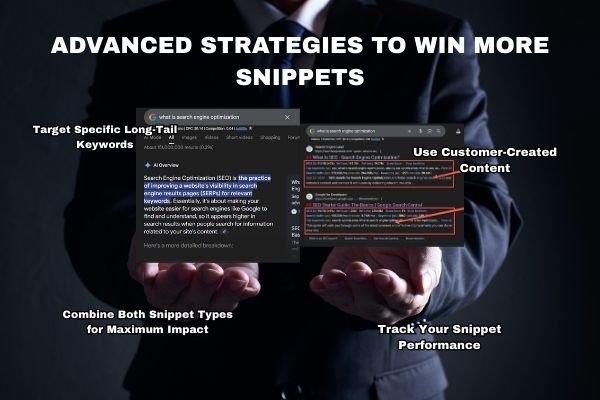
Getting Featured Snippets and Rich Snippets involves more than just basic SEO techniques. Here are some advanced strategies to help you stay ahead of your competition effectively.
1. Target Specific Long-Tail Keywords
Long-tail keywords are more specific and less competitive than short, general keywords. They often lead to higher conversion rates because they capture users with clear search intent. Research and target long-tail keywords that match the types of searches that create snippets. For example, instead of targeting “SEO,” use “how to optimize for featured snippets in SEO.”
2. Use Customer-Created Content
Include customer-created content like reviews, testimonials, and frequently asked questions on your website. This content provides fresh material and helps create rich, relevant snippets for search engines. Encourage customers to leave detailed reviews and answer common questions on your site. Adding FAQ schema to these pages can improve their appearance in search results. Businesses requiring Google consulting services can benefit from professional guidance on leveraging user-generated content effectively.
3. Combine Both Snippet Types for Maximum Impact
Optimize your content to get both Featured and Rich Snippets at the same time. For example, a blog post about “best coffee makers 2024” can include a comparison chart. This creates Rich Snippets while also answering common questions for Featured Snippets. This combined strategy captures more search space and brings different types of visitors.
4. Track Your Snippet Performance
Check your performance regularly using tools like Google Search Console and Ahrefs performance tracking for comprehensive monitoring. Monitor which snippets your site earns and how they affect traffic and engagement. Use this information to improve your content strategy over time effectively. Find searches where you rank but don’t have snippets, then adjust your content accordingly.
Real Examples of Advanced Strategies:
- Using Long-Tail Keywords: Targeting “how to prepare vegan meals on a budget” can help you capture Featured Snippets for specific dietary searches.
- Leveraging Customer Content: A product page with customer reviews and FAQ sections can display Rich Snippets for both reviews and questions.
- Combining Snippets: A detailed guide about “top-rated hiking gear” can include a product comparison table. It can also answer common questions, optimizing for both snippet types successfully.
Essential Tools for Snippet Success
Using the right tools and resources makes optimizing for Featured Snippets and Rich Snippets much easier. Here are some valuable tools and resources that can help you succeed:
1. Google Search Console
Google Search Console is a must-have tool for watching your website’s presence in Google search results. It helps you track your site’s performance and find opportunities for Featured Snippets easily. You can also fix any issues related to structured data markup. Check the Performance Report regularly to see which searches bring traffic and where you can target Featured Snippets.
2. Schema.org
Schema.org gives you a complete guide to structured data markup for your website. It offers many different schema types you can use to optimize content for Rich Snippets. Learn about the schemas that match your content type and make sure they work correctly.
3. SEO Plugins and Helper Tools
Several SEO plugins and tools can make adding structured data to your website much simpler:
- Yoast SEO Plugin: This popular WordPress plugin includes features for adding structured data easily. It also helps optimize your content for search engines effectively.
- Schema Pro Plugin: Another WordPress plugin that makes implementing structured data simple and straightforward. You don’t need advanced coding knowledge to use it successfully.
- Ahrefs: A powerful tool for keyword research, site audits, and tracking your website performance. Ahrefs helps you find snippet opportunities and monitor your search rankings over time.
For businesses seeking comprehensive digital marketing support, including Google Ads management alongside SEO optimization, professional agencies can provide integrated strategies that maximize both snippet visibility and paid advertising performance across all search channels.
Conclusion
In summary, while rich snippets enhance search results with additional context and information, featured snippets offer direct answers to user queries right on the search results page. Rich snippets enrich the appearance of search results, potentially increasing click-through rates and providing users with more comprehensive information, whereas featured snippets prioritize concise answers, establishing authority and driving targeted traffic. Both snippets are invaluable for SEO and content marketing strategies, and understanding their distinctions and optimization techniques can greatly benefit a website’s search engine performance.
By incorporating both types of snippets into their strategy and creating high-quality, relevant content, website owners can maximize visibility in search results, provide users with valuable information, and ultimately drive more traffic to their site. Whether you need assistance with local SEO in Denver, New Brunswick, or Las Vegas, implementing these snippet optimization strategies can enhance your search presence. For businesses requiring comprehensive support, contact our team to develop a customized approach that leverages both Featured and Rich Snippets for maximum search visibility and user engagement.
Frequently Asked Questions
1. What’s the main difference between Featured Snippets and Rich Snippets?
Featured Snippets appear at the top of search results as direct answers. Rich Snippets appear within regular results with extra information like ratings and prices. Featured Snippets focus on quick answers, while Rich Snippets enhance listings with details.
2. Do I need coding skills to get Rich Snippets?
You don’t need advanced coding knowledge to add Rich Snippets successfully. WordPress users can use plugins like Yoast SEO or Schema Pro easily. Google’s Structured Data Markup Helper also creates necessary code without programming knowledge.
3. Will Featured Snippets hurt my website traffic?
Featured Snippets actually increase website traffic in most cases, not decrease it. Many users still click through for more detailed information. Being featured builds trust and authority while giving you maximum visibility.
4. How long does it take to get snippets?
Getting Featured Snippets can happen within weeks if content answers questions clearly. Rich Snippets appear faster once you add structured data markup. However, competitive keywords may take longer than less competitive topics.
5. Can I optimize for both snippet types simultaneously?
Yes, you can optimize for both snippet types on the same content. For example, product reviews can include comparison tables for Featured Snippets. They can also use review schema for Rich Snippets simultaneously.

Mike has over 5 years of experience helping clients improve their business visibility on Google. He combines his love for teaching with his entrepreneurial spirit to develop innovative marketing strategies. Inspired by the big AI wave of 2023, Mike now focuses on staying updated with the latest AI tools and techniques. He is committed to using these advancements to deliver great results for his clients, keeping them ahead in the competitive online market.