
Why SEO In Web Design Still Decides Who Gets Found In 2026
Most websites fail before anyone sees them. Not because the design is bad. Because nobody thought about searching until after launch.
SEO in web design is the practice of building search engine visibility into a website’s structure, speed, and content from the first wireframe. It covers everything from how your URLs are organized to whether Google’s crawlers can actually read your pages. And in 2026, with AI Overviews dominating over half of all search results, a site that ignores SEO during the design phase is a site that’s invisible.
I’ve watched businesses spend $15,000 on a gorgeous redesign, then wonder why organic traffic dropped 40% the month after launch. The answer is almost always the same: the design team and the SEO team never talked to each other. Or worse, there was no SEO team.
The U.S. SEO and internet marketing consulting industry hit $104.6 billion in revenue in 2024, according to IBISWorld. That number isn’t growing because SEO is a nice extra. It’s growing because businesses keep learning the hard way that design without search strategy is money wasted.
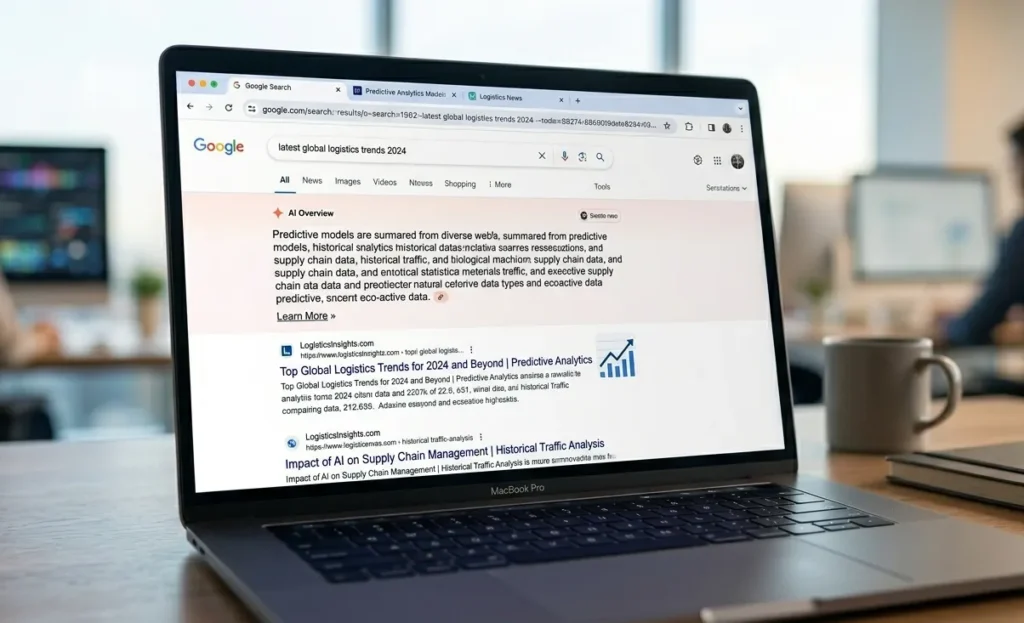
How Does SEO Actually Affect Search Rankings?
Search engines can’t admire your color palette. They read code, crawl links, and measure how users behave on your pages. A visually stunning site with messy code, missing meta tags, and bloated images won’t rank.
Roughly 75% of users never scroll past page one. If your site doesn’t show up there, it basically doesn’t exist for that search query. And “showing up” now means more than a blue link. Google’s AI Overviews pull structured content directly into results. If your site architecture doesn’t support that extraction, you lose visibility even if you technically rank.
Building SEO into the design stage means your primary keywords are mapped before a single page is built. Title tags, header hierarchy, image alt text, URL structure, and internal linking all get planned alongside the visual layout. Not bolted on after.
Google’s own documentation on how core updates evaluate content makes this clear: sites that align structure, quality, and user experience get rewarded. Sites that treat SEO as a post-launch add-on get filtered out.
This isn’t just theory. I’ve seen sites go from page three to page one within 90 days simply because the redesign included proper heading structure and crawlable navigation. No backlink campaign. No content overhaul. Just fixing what the original design team ignored.
What’s the Real Connection Between UX and SEO in 2026?
Google doesn’t separate user experience from rankings anymore. They’re the same evaluation.
Core Web Vitals, the performance metrics Google uses to grade your site, are direct ranking signals. These measure how fast your largest content element loads (LCP), how quickly the page responds to a click (INP), and how much the layout shifts while loading (CLS). A site that scores poorly on these metrics gets pushed down in results, regardless of how good the content is.
Three core algorithm updates rolled out in 2025 alone (March, June, and December), and each one put more weight on user experience signals. Marie Haynes, who tracks every Google update, noted increased E-E-A-T scrutiny in how sites are designed and structured.
Good UX and good SEO overlap almost completely. Clear navigation keeps visitors on your site longer and helps search engines map your content. Logical content hierarchy makes pages scannable for readers and crawlable for bots. Reducing bounce rates by giving people what they came for sends Google a signal that your page answered the query.
The BLS reports 214,900 web developers and digital designers were employed in 2024, with a projected 7% growth rate through 2034. That’s faster than average across all occupations. The demand is there because businesses finally understand that a developer who can’t think about search is building something incomplete.
Does Page Speed Still Matter for SEO?
More than ever. And most sites still get it wrong.
A one-second delay in page load can cut conversions by 7%. That’s old data, and the reality in 2026 is probably worse. Users expect pages to load in under two seconds on mobile. Google’s 2025 core updates effectively tightened Core Web Vitals thresholds in practice, even if the official numbers didn’t change.
SEO-focused design handles speed at the architecture level. That means choosing the right hosting and CDN before launch, compressing images during the build (not after complaints roll in), minimizing JavaScript that blocks rendering, and using browser caching properly.
One question clients almost never ask: “Does my hosting provider even support the Core Web Vitals thresholds post-2025 updates?” Most don’t think about it until their PageSpeed score comes back red.
A fast site keeps people engaged. A slow site sends them to your competitor. And Google notices both.
Why Is Internal Linking an Underrated SEO Strategy?
Internal links are the cheapest, most overlooked ranking lever in web design. They cost nothing to implement and they compound over time.
A good internal linking structure starts with understanding what a sitemap does and building your pages around it. Internal links do two things. They help users find related content without hunting for it. And they distribute link equity across your site so deeper pages aren’t orphaned from search engines.
Most design teams build navigation menus and stop there. But the real value is in contextual links within your content, connecting related pages in a way that creates topical clusters. If you’ve written about how backlinking affects SEO, and you’ve also covered brand mentions versus backlinks, those pages should link to each other. That cluster tells Google (and AI citation systems) that your site has real depth on the topic.
Google explicitly warns against design patterns that enable site reputation abuse, which includes poor internal architecture that lets third-party content hijack your domain authority. Proper internal linking is part of protecting your site’s integrity.
I’ve audited sites with 200+ pages where fewer than 10% had any internal links at all. Every page was an island. Fixing that alone moved several pages from position 15-20 into the top 10 within two months.
Plan your internal links during the sitemap phase. Not after the site is live.

Is SEO in Web Design a One-Time Project or Ongoing Work?
SEO isn’t something you finish. It’s something you maintain.
Designing your site with SEO from the start gives you a strong foundation. But search algorithms change constantly (three major updates in 2025 alone), competitors publish new content daily, and user behavior shifts. A site that ranked well in January can slip by June if nobody’s watching.
Paid ads stop the second you stop paying. SEO-driven organic traffic, if maintained, compounds. A Mordor Intelligence estimate projects the global SEO services market at roughly $83.98 billion in 2026, growing at a 12.12% CAGR through 2031. Businesses aren’t increasing that spend because SEO is a fad. They’re increasing it because the returns accumulate.
The most expensive mistake I see? Launching a site without proper technical SEO, then paying to retrofit it six months later. That remediation often costs more than the initial build. For mid-sized businesses, lost organic traffic during that gap can represent $10,000 to $50,000 or more in missed revenue per year.
Build it right the first time. Then keep it updated.
DIY vs. Professional: What Does SEO-Integrated Web Design Cost?
This is where a lot of businesses get tripped up. They assume a website builder handles SEO for them. It doesn’t. Not at the level that matters in 2026.
| Aspect | DIY (Wix/Squarespace) | Professional SEO-Integrated Design |
| Year-One Cost | $0-$450 + 20-60 hours of your time | $1,500-$50,000+ (SEO included) |
| SEO Quality | Basic templates, limited control | Full technical + on-page + schema |
| Typical Conversion Rate | 1-2% | 3-5% |
| Maintenance | Self-managed | Included or $100-$300/mo |
| Expected Redesign Timeline | 1-2 years | 3-5 years |
A commonly repeated claim is “just use a builder and you’re SEO-ready.” That was barely true in 2022. In 2026, with AI-driven search requiring structured data, clean schema markup, and E-E-A-T signals baked into your site’s architecture, template builders fall short fast.
Professional SEO services typically run $1,000 to $2,500 per month for small-business campaigns, with one-time website SEO setup ranging from $2,500 to $10,000, according to multiple 2025 agency pricing analyses. The cost depends on your market, your competition, and how much technical debt the existing site carries.
SEMrush’s December 2025 trend report stressed that AI visibility and zero-click searches are reshaping how sites need to be built. If your SEO strategy is building brand awareness alongside rankings, the design choices you make today determine whether AI systems cite your content or skip it entirely.

Make SEO the Blueprint, Not the Afterthought
SEO in web design isn’t a line item you add at the end of a project quote. It’s the blueprint the entire project should be built on.
Every choice during the design process, from URL structure to mobile responsiveness to how images are compressed, affects whether your site gets found. And “getting found” in 2026 means more than ranking on page one. It means showing up in AI Overviews, being cited by large language models, and surviving algorithm updates that punish sites built without search in mind.
If you’re planning a new site or a redesign, the team at Eclipse Marketing can help you start with the SEO and build the visual design around it. Not the other way around.
FAQs
Does web design actually affect SEO rankings?
Yes. Technical design elements like Core Web Vitals scores, mobile-first indexing compatibility, and crawlable site architecture are direct ranking signals in Google’s algorithm. Google rolled out three core updates in 2025, and each one increased the weight on user experience metrics that are determined by design choices.
How much does adding SEO to a web design project cost?
For a standard small-business site, adding proper technical SEO integration during the design phase typically adds $500 to $2,000 to the project. Full professional web design with SEO built in ranges from $1,500 for a basic site to $50,000 or more for custom e-commerce builds, according to 2025 agency pricing data. Retrofitting SEO after launch almost always costs more.
Should I build a new SEO-optimized site or fix my existing one?
It depends on how much technical debt your current site carries. If the URL structure is messy, the code is bloated, and the content architecture was never planned around search, a ground-up rebuild with SEO baked in will usually deliver faster results than patching an old site. Google’s 2025 updates penalized thin, legacy content structures, making fresh architecture with proper E-E-A-T signals the stronger play.
Can I handle SEO in web design myself with a builder like Wix or Squarespace?
You can handle the basics. But template builders limit your control over technical SEO elements like schema markup, crawl directives, and Core Web Vitals optimization. Google’s 2025 core updates rewarded sites with strong human-first expertise signals over automated or template-driven content. If you’re a local service business competing for real organic traffic, a builder probably won’t cut it.
What happens to my traffic if I ignore AI Overviews in my site design?
You lose visibility even if you rank. AI Overviews now appear in over 50% of search results, and roughly 23% of the content they cite is less than 30 days old. If your site doesn’t have structured data, clean heading hierarchy, and self-contained content blocks that AI can extract, you’ll be invisible in the fastest-growing part of search.
How long does it take to see results from SEO-integrated web design?
Most sites see measurable organic traffic improvement within 6 to 18 months of launching with proper SEO foundations. That timeline shortens if you’re fixing a site that had major technical problems. It lengthens in highly competitive markets. SEO compounds over time, so the gap between an optimized site and a non-optimized one widens every month.
How do I future-proof my web design against Google algorithm updates?
Focus on what Google has consistently rewarded: fast load times, mobile-friendly layouts, clear site architecture, original content with real expertise behind it, and clean structured data. Sites that chase algorithm tricks get hit by updates. Sites built on strong technical foundations and real E-E-A-T signals tend to survive them.

Mike has over 5 years of experience helping clients improve their business visibility on Google. He combines his love for teaching with his entrepreneurial spirit to develop innovative marketing strategies. Inspired by the big AI wave of 2023, Mike now focuses on staying updated with the latest AI tools and techniques. He is committed to using these advancements to deliver great results for his clients, keeping them ahead in the competitive online market.