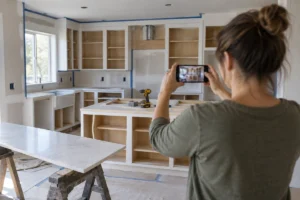

A kitchen remodel is a $60,000 decision a homeowner makes over three to nine months. Most home remodeling retargeting ads are set to a 30-day window. That gap is why so much remodeler retargeting quietly loses money, and it has nothing to do with the ad creative.
The approach that works runs the other way. You retarget the people who already showed intent, the ones who opened your project gallery or sat on your kitchen page, and you skip the cold crowd. You keep the window long enough to cover a real remodeling decision. Then you build the whole thing on first-party data and server-side tracking, because the third-party cookie it used to lean on is fading fast. Done right, retargeting is the cheapest lead source a remodeler has. You already paid to earn that first visit. This stops you from wasting it.
Home remodeling retargeting ads are paid ads shown to people who already visited your website or engaged with your business online. A tracking tag adds each visitor to an audience, then serves them ads on Google, YouTube, Facebook, and Instagram as they browse elsewhere, keeping your remodeling company in front of homeowners who left without booking a consultation.

How home remodeling retargeting ads actually work
Retargeting works by tagging your site visitors, sorting them into audiences, and showing those audiences ads across other sites and apps. When someone lands on your bathroom remodel page, a small piece of code (the Google tag or the Meta Pixel) adds them to a list. You set the rule: visited the kitchen page, did not reach the thank-you page. From then on, your ads follow that person while they read the news, watch YouTube, or scroll Instagram.
You do not need heavy traffic to start. Google now builds a retargeting audience from as few as 100 visitors in the past 30 days, down from the old 1,000-user floor, which puts it within reach of a remodeler getting a few hundred site visits a month. The tag belongs on every page, including the landing pages you send ad traffic to, and it should pair with conversion tracking so you can see which audiences book estimates instead of guessing.

Do home remodeling retargeting ads still work in 2026?
Yes, but the cookie-based version is weakening, and the fix is to stop depending on third-party cookies. Here is what changed.
Safari has blocked third-party cookies since 2020, and Firefox blocks them by default too. Together they run close to one in five US sessions (Safari near 15% and Firefox around 3%, per StatCounter), and none of those visits can be retargeted the old way. Chrome, which holds most of the market, kept third-party cookies after all. Google reversed its deprecation plan in April 2025 and wound down most of the Privacy Sandbox that October, but it moved cookie control to a user privacy choice, so the signal is thinner than it used to be. On social, Apple’s tracking prompt did the damage: only about 44% of US users allow app tracking, per AppsFlyer, which cut the data Facebook and Instagram rely on to match and measure retargeting.
The fix is first-party data. Capture emails and phone numbers through your quote forms, keep them in a CRM (we run every client’s leads through GoHighLevel), then upload those lists as audiences you own. Turn on server-side measurement, Google Enhanced Conversions and the Meta Conversions API, so a conversion still registers when the browser blocks the pixel. The remodelers getting hurt by the privacy shift are the ones who never collected first-party data. They rented audiences from the platforms instead of owning a list. Build the list, and you are far less exposed to whatever Chrome or Apple decides next.

Where should remodelers run retargeting ads?
Run retargeting where your buyers already are, which for remodeling means Google first and social second. In the client data we track, about 72% of homeowners looking for a remodeler start and finish on Google, so that is where the intent lives.
On Google, use Display and YouTube to stay visible, and use remarketing lists for search ads to bid higher when a past visitor searches again. If someone read your kitchen page last month and later types “kitchen remodeler near me,” that setting inside Google Ads lets you show up above cold competitors who have never met this person. Then there is Facebook and Instagram, where visual proof lands best. Retarget past visitors with real project photos and short video walkthroughs, not a plain “get a quote” banner. Social supports the decision. Google closes it.
How long should your retargeting window be?
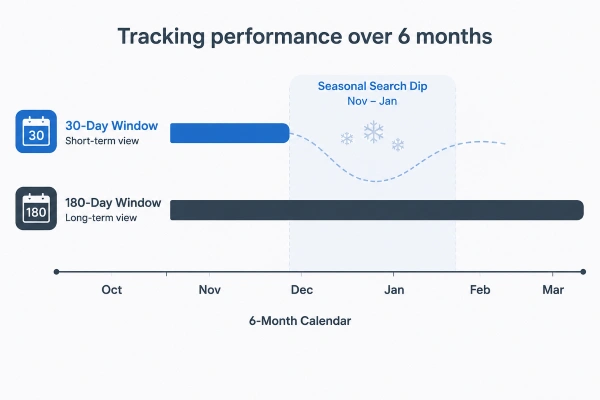
Match the window to the length of the decision. For a $40,000-plus remodel, that means 180 days or more, not the 30-day default most accounts ship with. Remodeling is not an impulse buy. Across our client work, projects run from a $62,000 garage conversion to six-figure kitchens, and homeowners usually compare three to five companies over several months before they sign.
Timing inside the year matters too. Remodeling searches fall 20% to 30% from November through January in most markets, while “kitchen remodel cost” peaks in January as people plan the year ahead. Keep budget live through the slow months so you are still in front of the homeowner who goes quiet in December and calls in February. And set a frequency cap. Three to five views a week keeps you present without becoming the brand that seems to stalk people around the internet.

What should your home remodeling retargeting ads say?
Stop asking for the quote in every ad. Match the message to where the homeowner sits in the decision. Early on, they are comparing, so show comparison content, project galleries with real numbers, and reviews. Later, they are checking whether they can trust you, so lead with your license, your warranty terms, the materials you install, and a client review that mentions staying on budget.
A homeowner weighing three kitchen remodelers does not want another “free estimate” banner. Show the six-figure kitchen you finished recently, the review from the client who said you hit the timeline, and a 60-second walkthrough of the work. That is what carries someone from browsing to booking, and it is the part cookie changes cannot touch, because it rides on your own creative and your own proof.
Is retargeting worth it, or should you keep buying leads?
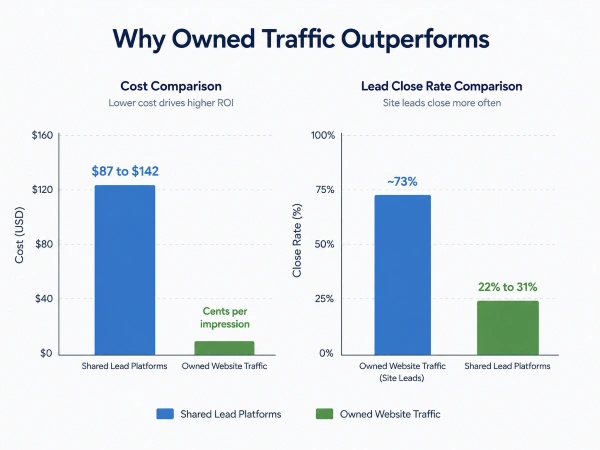
Retargeting your own visitors beats buying more shared leads, and it is not close. A shared lead from a lead-buying platform runs $87 to $142 and gets sold to four or more remodelers at once. A retargeting impression to someone who already visited your site costs cents, and you are the only company showing it. In our clients’ CRMs, leads that arrive through the remodeler’s own site book estimates at about 73%, compared with 22% to 31% for shared platform leads.
| Factor | Shared lead platforms | Retargeting your own visitors |
|---|---|---|
| Cost | $87 to $142 per lead | Cents per impression |
| Exclusivity | Sold to 4 or more remodelers | Only your company shows |
| Buyer intent | Cold, filled a form | Already chose to visit your site |
| Who owns the audience | The platform | You |
| Best for | Fast volume | Recapturing warm, high-intent homeowners |
Michael Vale, who founded Eclipse and has managed 87 remodeling campaigns since 2019, puts it plainly: buying shared leads builds the platform’s business, while retargeting builds yours, because the audience and the list stay with you. Retargeting will not replace search or reviews as your main lead engine, and it should not try to. It recaptures demand you already earned. Results vary by market, competition, and how the campaign is run, but the math on recapturing a visitor you paid for beats renting a fresh cold lead almost every time.
Common home remodeling retargeting mistakes
Most underperforming campaigns share the same handful of errors:
- One audience for everyone. Segment by page and intent so the kitchen shopper and the bathroom shopper see different ads.
- A 30-day window on a decision that takes months. Your best prospects age out before they are ready.
- No frequency cap, so warm homeowners get buried in your ads and start to resent the brand.
- No first-party data capture, which leaves you nothing to rebuild audiences with when a cookie disappears.
- Sending every click to the homepage instead of the page that matches the ad they clicked.
- No conversion tracking, so you cannot tell retargeting revenue from retargeting waste.
Where to start
Put the tag on your site, capture every visitor’s contact information where you can, and retarget your highest-intent pages with a 180-day window. Measure booked estimates, not clicks. The remodelers who win with home remodeling retargeting ads in 2026 are the ones who own their audience instead of renting it, because the first click is already paid for and the list belongs to them. If you would rather hand the setup, the tracking, and the creative to a team that runs remodeling campaigns start to finish, that is what we do.
Frequently asked questions
What is the difference between retargeting and remarketing for remodelers?
The terms are used interchangeably today. Historically, remarketing described re-engaging people through your own lists, like email, while retargeting described paid display ads triggered by a tracking pixel. In practice, whether you run it through Google or Meta, you are showing paid ads to people who already interacted with your remodeling business.
Do home remodeling retargeting ads still work in 2026?
Yes, though cookie-based reach has shrunk. Safari and Firefox block third-party cookies by default and cover close to one in five US web sessions, and only about 44% of US users allow app tracking on iPhones. The remodelers who still get strong results build first-party audiences from their CRM and turn on server-side conversion tracking.
How much should a remodeler spend on retargeting ads?
Less than you think. Because you are only paying to reach people who already visited, the audience is small and the cost per impression is low. Many remodelers run effective retargeting for a few hundred dollars a month, a fraction of the $87 to $142 they would pay per shared lead on a lead-buying platform.
How long should I retarget someone for a remodeling project?
Set the window to 180 days or longer for high-ticket work. A remodel is a months-long decision, and searches also dip 20% to 30% from November through January, so a short window drops homeowners who go quiet and come back weeks later ready to book.
Is Google or Facebook better for home remodeling retargeting ads?
Start with Google, since roughly 72% of homeowners looking for a remodeler begin and end their search there. Use Facebook and Instagram as the visual layer, retargeting past visitors with project photos and video walkthroughs that show the quality of your work.
Can I retarget past customers to sell more work?
Yes, and it is one of the highest-return uses. Upload your customer list as a first-party audience and show them ads for related services, a bathroom after a kitchen, or a maintenance offer a year later. These are people who already trust you, so the cost to win the next project is low.
How do I set up retargeting for my remodeling company?
Install the Google tag and Meta Pixel on every page, define audiences by the pages people visit, turn on server-side conversion tracking, then set a long window and a frequency cap. Send each ad to the page that matches it, not the homepage.