
How Google Core Algorithm Updates Affect SEO In 2026
A Google core algorithm update is a broad change to how Google ranks content across billions of web pages. These rollouts don’t punish individual sites. They recalibrate which signals earn top positions. The March 2026 core update shifted roughly 80% of top-three results in 12 days, and recovery often stretches across multiple rollout cycles before rankings stabilize.
This playbook breaks down what’s actually happening during a rollout, why technical fixes rarely save a traffic drop, and what SEO practitioners are doing in 2026 to rebuild rankings faster. The short version: Google isn’t coming after anyone’s site. It’s reranking the web against updated quality signals, and most sites that lose traffic had underlying content problems that only became visible once the criteria changed.
What Is a Google Core Algorithm Update?
A Google core algorithm update is a site-wide reassessment of how Google’s ranking systems evaluate quality, relevance, and authority. Unlike spam or policy-specific rollouts, core updates change the evaluation criteria themselves, not the enforcement.
Google runs these updates several times a year. They typically finish in 12 to 18 days, according to data published on the Search Status Dashboard. The March 2026 update wrapped in 12 days and 4 hours. The December 2025 rollout took a full 18 days.
Core updates apply globally, though English-language and US-focused results show the heaviest churn. Non-English markets sometimes recover faster, especially after the February 2026 Discover core update, which placed more weight on locally relevant and in-depth content.
Why Does Google Roll Out Core Algorithm Updates?
Google releases core algorithm updates to keep search results aligned with how the web is actually changing. Fresh content gets published every second, older pages go stale, and user expectations shift.
The practical reason is simpler. Google wants to narrow the gap between “ranking well” and “actually being the best answer.” Each core rollout closes that gap a little more.
Between March 2025 and March 2026, Google shifted heavily toward rewarding brands, official sources, and data-rich pages. Danny Goodwin’s April 2026 analysis in Search Engine Land confirmed what practitioners were already seeing: thin listicles, templated roundups, and AI-assisted content with no original input were demoted at scale.
Something the industry doesn’t say often enough: most sites hit by a core update had underlying problems they couldn’t see. Thin pages they believed were fine. Content written for traffic rather than customers. Topical bloat. The update just stopped grading on a curve.
How Do Core Algorithm Updates Impact Your Rankings?
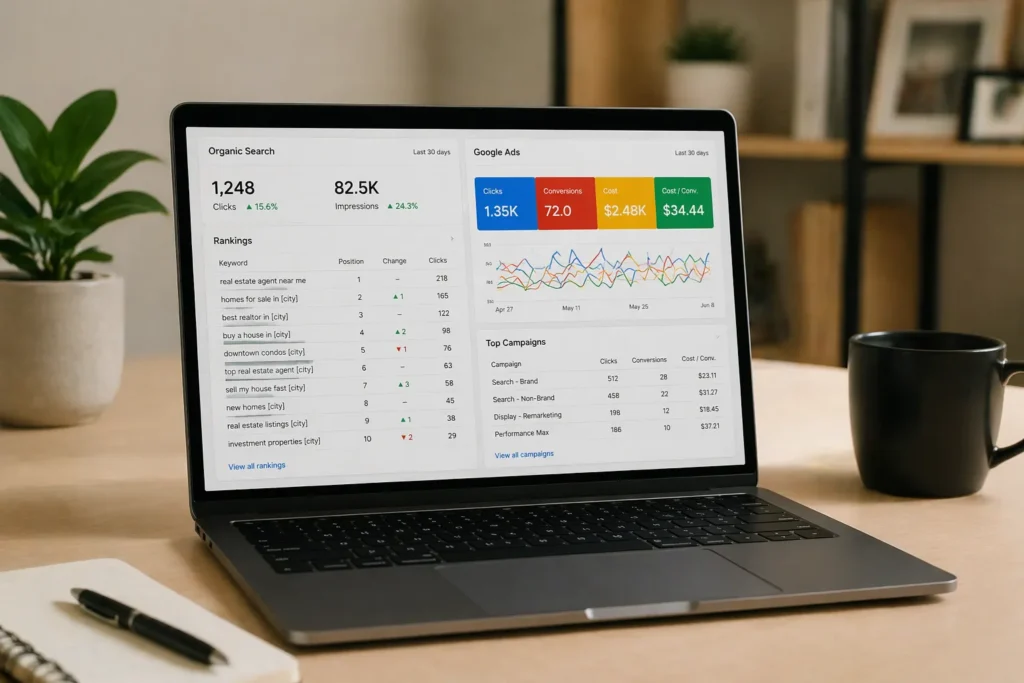
A Google core algorithm update can swing rankings dramatically within days, sometimes moving pages from position 2 to position 29. Sites don’t get “penalized.” They get re-evaluated against stricter quality thresholds.
Practitioners tracking real sites through the 2024-2026 rollouts report the same pattern over and over. Sites lose 40 to 50% of organic traffic with no manual action, no technical errors, and content that seemed fine in isolation. Recovery rarely follows a straight line. Traffic dips, recovers, dips again.
One documented case from Glenn Gabe followed a commercial site that lost 41% of its Google organic traffic across four consecutive updates between July and October 2023. Recovery started with the March 2024 core update, but only after the team cut roughly 38% of its editorial content. The pages removed weren’t broken. They were tangential to the core business, written for traffic rather than customers.
That’s the pattern. Core updates reward alignment between what a site publishes and what its audience actually needs.
AI Overviews make the picture messier. According to Ahrefs data on AI Overviews, the presence of an AIO drops position-1 click-through rate by 58%. Sites at the top are still losing clicks to answers Google generates in the SERP.

Core Update vs. Spam Update vs. Helpful Content: What’s the Difference?
Core updates reassess overall content quality. Spam updates target specific policy violations. Helpful content signals are now baked into the core algorithm, even though Google still discusses “people-first” content as a distinct concept.
The distinction matters because the fix is different for each.
| Update Type | What It Targets | Typical Recovery Time | Primary Fix |
| Core algorithm update | Content quality, E-E-A-T, topical authority | Multiple update cycles (3 to 12+ months) | Rebuild content depth and expertise |
| Spam update | Cloaking, scraping, PBNs, auto-generated spam | Weeks after policy violations resolved | Remove non-compliant content or tactics |
| Helpful content signals | Search-first, low-value, or unoriginal content | Gradual over multiple core cycles | Rewrite for user intent, add first-hand experience |
| Discover core update | Eligibility for Google Discover feed | One rollout cycle | Improve originality and local relevance |
Sites can take a hit from more than one at once. The March 2026 spam update wrapped just days before the March 2026 core update began, and many sites absorbed damage from both.

How to Prepare for a Google Core Algorithm Update in 2026
Preparing for a Google core algorithm update in 2026 starts with building the signals Google already rewards, not guessing at what the next update will change. Most “preparation” advice is either too generic or too reactive.
Three things matter most in 2026:
First-hand experience beats volume. Pages that show real practitioner knowledge, client examples, tested methods, and data collected by the author consistently hold rankings through rollouts. Generic summaries of other articles don’t.
Topical depth beats keyword coverage. Sites that own a clear topic area, with supporting pages, strong internal linking, and entity clarity, weather updates better than sites with one hero article surrounded by thin fillers.
Technical SEO is a floor, not a ceiling. Clean crawlability, decent Core Web Vitals, and mobile usability help Google evaluate content accurately. They don’t rescue weak content.
That last point is where most sites waste their preparation budget. Fixing technical SEO issues while leaving thin content untouched is common, and it rarely moves rankings after a core update. Google’s own guidance is direct: core updates target content quality, not crawl errors.
For the content itself, the strongest reference remains Google’s helpful content guidelines. Lily Ray’s 2026 commentary identified four recurring patterns in sites that gained ground after core updates: stronger E-E-A-T signals, cleaner entity clusters, better engagement metrics, and content that answers fan-out questions rather than head terms only.

How to Recover If a Core Update Hits Your Site
Recovering from a Google core algorithm update is a months-long process, not a weekend fix. Google itself states that meaningful improvements often take multiple update cycles to register.
A three-phase framework works:
- Diagnose (days 1-30): Wait for the rollout to finish. Compare the week before the update with the week after the rollout ends. Segment Google Search Console data by page, query, device, and country to find where losses concentrate.
- Rebuild (days 31-90): Consolidate overlapping pages, cut or redirect content that doesn’t serve the business, and rewrite thin articles with original data, examples, and author expertise. Add or clarify schema markup on key pages.
- Reassess (days 91-180+): Track impressions, clicks, and average position across topic clusters weekly. Refresh pages that still underperform. Accept that full recovery often waits for the next core update to register.
“Just publish more content” is the worst advice currently circulating. It worked in 2019. It doesn’t work now. Google rewards demonstrated experience and topical depth, not publishing frequency. Sites that doubled output after a core update hit usually made things worse.
One of the most expensive mistakes practitioners see in 2026 is overreliance on AI-generated content with no editing or original input. Pages like that saw near-total deindexing after the 2025 and 2026 updates. Treating AI search tools as a content shortcut rather than a research accelerator can cost a 50-page site six figures in lost revenue plus new content expenses over 6 to 12 months.
The single most useful shift a site owner can make in 2026 isn’t chasing the next Google core algorithm update. It’s building the kind of content that makes every future rollout a non-event. Fewer pages, more depth per page, content created by people who know the topic cold. For a deeper recovery framework, the Search Engine Land core updates guide goes into more operational detail.
Frequently Asked Questions
How long does a Google core algorithm update take to roll out?
Google core algorithm updates typically complete in 12 to 18 days. The March 2026 rollout finished in 12 days and 4 hours; the December 2025 update took 18 days. Rankings often continue settling for 4 to 8 weeks after the rollout ends, so practitioners wait a full week post-completion before analyzing losses.
Can AI-generated content survive a core algorithm update?
Purely AI-generated content has taken heavy losses across the 2024, 2025, and 2026 core updates. Pages with minimal human editing have seen near-total deindexing. AI content can survive if a qualified human rewrites it with original research, first-hand examples, and genuine expertise markers. Google’s ranking systems increasingly reward demonstrated experience over content volume.
Does fixing technical SEO protect a site from a core update?
Technical SEO doesn’t protect a site from a core update; it just helps Google evaluate the site accurately. Core updates target content quality, E-E-A-T signals, and topical authority. A technically clean site with thin content still loses. A site with strong content and a few crawl issues usually doesn’t.
What’s the difference between a core update and a spam update?
A Google core algorithm update reassesses overall content quality across the entire web. A spam update targets specific policy violations like cloaking, PBNs, and scraped content. Sites can be hit by both at once; the March 2026 spam update finished just before the March 2026 core update began.
How much traffic can a site lose from a core algorithm update?
Drops of 40 to 50% are common, even for sites with no manual penalties and no technical errors. One documented commercial site lost 41% of its organic traffic across four consecutive updates in 2023 before recovering during the March 2024 rollout, after cutting 38% of its editorial content.
How long does recovery from a Google core algorithm update take?
Recovery is measured in months and update cycles, not weeks. Google states that meaningful improvements often take multiple core rollouts to register. A realistic timeline is 3 to 12 months, with rebuild work completed in the first 90 days and observed recovery arriving during the next one or two rollouts.
Should a site make major SEO changes during a core update rollout?
No. Major changes during a rollout add noise to the diagnostic data. The correct approach is to wait for Google to confirm the rollout is complete on the Search Status Dashboard, compare pre- and post-update metrics, then start targeted improvements based on what the data actually shows.

Michael Vale has over 5 years of experience helping clients improve their business visibility on Google. He combines his love for teaching with his entrepreneurial spirit to develop innovative marketing strategies. Inspired by the big AI wave of 2023, Michael Vale now focuses on staying updated with the latest AI tools and techniques. He is committed to using these advancements to deliver great results for his clients, keeping them ahead in the competitive online market.