
What AEO Means And How It Drives Modern Search Results
Answer Engine Optimization (AEO) is a content strategy that structures information for AI-powered search systems to extract and display directly. Unlike traditional SEO that drives website clicks, AEO focuses on getting your content featured in AI-generated answers, voice responses, and search summaries. This approach matters because users now prefer instant answers over clicking through to websites. At Eclipse Marketing, we’ve seen how AEO works by creating clear, structured content that answer engines like Google SGE, ChatGPT, and voice assistants can easily understand and present to users. The main difference from SEO is simple: AEO optimizes for being the answer, not earning the click. This strategy becomes essential as AI search tools replace traditional blue links and users expect immediate, accurate information without leaving search result pages. Implementing AEO helps brands maintain visibility as search behavior shifts toward AI-first platforms in 2025.

How Answer Engine Optimization Differs From Regular SEO
Traditional SEO focuses on driving website traffic through search rankings. You research keywords, build backlinks, and target top positions on search results. The main goal is earning clicks to blog posts, product pages, or demos. This approach is direct and proven. AEO takes a different approach by prioritizing visibility without requiring clicks. It focuses on getting your brand featured directly within AI-generated answers. AEO creates structured content that answer engines can instantly display to users. No website visits or long-form content browsing needed. Here are the key differences between these two strategies:
- AEO Shows Answers Immediately: Traditional SEO aims for rankings and clicks. AEO uses machine learning to display answers directly on search pages.
- AEO Skips the Click: Rather than sending traffic to full pages, AEO extracts useful content into AI summaries and voice responses. It reaches users exactly where they search.
- AEO Emphasizes Precise Content: It targets short, structured answers that AI systems easily understand, like definitions and step-by-step guides. Traditional SEO optimizes complete pages for user engagement.
- AEO Works With AI Systems: It’s built for large language models and AI engines that understand content meaning. Modern SEO services rely more on crawling and indexing signals documented in Google Search Central.
- AEO Values Speed and Clarity: SEO builds authority slowly through links and comprehensive content. AEO delivers fast, clear answers, helping newer content gain visibility quickly.
AEO means becoming the answer within search results, summary cards, or voice replies. SEO still depends on earning clicks and guiding users through complete website experiences.
Why Answer Engine Optimization Is Critical For Success In 2025
Traditional SEO remains valuable, but it’s no longer the only game in town. Users demand instant answers today. They scan AI summaries instead of clicking through multiple links. Answer-focused search responses appear here to stay for the foreseeable future. Here’s why AEO becomes increasingly vital this year and moving forward.
AI Search Tools Are Now Standard Practice
AI platforms like Google’s Search Generative Experience, Bing Copilot, and ChatGPT moved beyond testing phases. They’re now essential parts of how people search for information. These systems prioritize quick, reliable answers over traditional website listings.
Search Result Space Is Getting Smaller
Rich snippets, AI summaries, and answer boxes take up prime real estate. This pushes regular website listings below the visible area, even for well-ranking pages. Content visibility now depends on appearing in these special search features.
Website Click Rates Are Declining
More users find answers directly from AI responses and instant results without clicking websites. Traditional SEO strategies generate less website traffic than before. AEO helps content compete by targeting answer-based search visibility.
Voice And Visual Search Are Growing
Voice search technology gains popularity as users expect natural, conversational responses. AEO prepares content for these emerging search formats and platforms.
Clients Want Better Explanations
Marketing agencies face challenging client questions like “Why did traffic drop despite good rankings?” and “How do we appear in AI answers?” Professional Google consulting provides modern content strategies to answer these concerns with confidence and measurable results.
Implementing AEO early makes it easier to maintain client visibility in this evolving landscape where clicks aren’t guaranteed.
How Answer Engines Actually Work
Answer engines interpret, process, and deliver information instantly to users. They extract structured content from reliable sources and create responses that feel natural, relevant, and immediate. Whether it’s a Google snippet, Microsoft Bing Copilot summary, or Alexa voice response, the purpose stays consistent. These systems eliminate extra steps and provide faster results for searchers. Answer engines depend on three essential content signals to function effectively:
- Content That’s Easy To Extract: Information must be accessible, not hidden within lengthy paragraphs or complex formatting.
- Clear Organization And Structure: Proper formatting helps machines understand and process your content accurately. Quality web design principles from Web.dev emphasize structured content presentation.
- Credibility And Trust Signals: Content must demonstrate reliability before engines will feature it in responses.
Your content needs clarity, organization, and authority to succeed with answer engines. If the system can’t understand your content, it won’t display it to users.
Different Types Of Answer Engines You Should Know
Various answer engine types exist, but they all aim to minimize steps between questions and useful responses. Here are the essential ones worth understanding.
Search Engines With Built-In AI
These systems display quick answers directly in search interfaces, typically above regular website results. They use organized data, featured snippets, and AI-generated summaries to provide information. Google SGE and Bing Copilot represent the most common examples of this approach.
AI Chat Helper Tools
These platforms answer user questions using natural language processing technology. They combine live web information, knowledge databases, and stored content to respond effectively. People use them for research, creating summaries, and making comparisons. ChatGPT, Claude, and Perplexity lead this category.
Voice-Activated Assistants
These tools provide spoken answers using pre-processed content, brief summaries, or search integrations. Content should be concise, well-organized, and easy to speak aloud for optimal performance. Alexa, Google Assistant, and Siri dominate this space.
Website-Based Answer Systems
Internal search features or AI-powered chatbots help users locate specific information within websites or platforms. No external searching required for these tools. Intercom bots and AI-enhanced site search represent typical examples.
Whether optimizing for AI summaries or voice assistants, focus on creating content that presents answers clearly and simply.
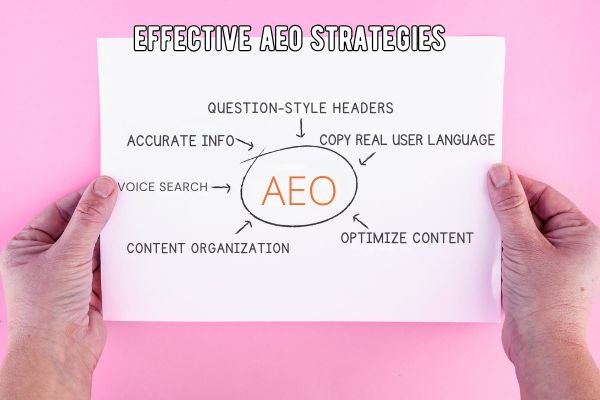
Key Strategies For Effective Answer Engine Optimization
You don’t need to rebuild everything to succeed with AI-powered search tools. However, you must reconsider how your content gets organized and presented. Here are five essential strategies to build strong AEO foundations and match user search behaviors.
Target Question-Based Keywords For Better Results
Content that matches natural language questions gets featured more often in AI-generated responses. Follow these steps for optimal results:
- Use Question-Style Headers: Structure content around actual questions with clear formatting like H2s, H3s, or FAQ sections. This helps answer engines identify and extract important information more easily.
- Copy Real User Language: Research tools like Google’s “People Also Ask” and Reddit discussions reveal authentic user phrasing. Add these natural phrases to your content, then track search result changes using Google Search Console.
Focusing more on user intentions creates relevant content that meets engine requirements for clear, immediate answers.
Create Clear And Trusted Answers That Engines Prefer
Answer engines value clarity above everything else. They search for content that provides value quickly without long introductions, filler text, or unnecessary information. Lead with your main point instead of burying important details. Keep responses brief, ideally 30 to 50 words for definitions, instructions, or statistics. Answer engines skip content that takes too long to reach the point. Authority carries equal importance in content selection. Answers citing reliable sources, using accurate data, or demonstrating expertise get chosen more frequently. SEMrush research shows that uncertain language like “might,” “could,” or “possibly” reduces credibility. Top-performing answers stay clear, specific, and confident in their messaging.
Optimize Content To Appear In Featured Answer Boxes
Featured snippets often become the first and only content users see on search result pages. Increase your snippet chances by focusing on search intent and solution-driven content. Consider a legal client targeting time-sensitive searches like “what to do after a car accident.” Create relevant content addressing this topic with direct answers upfront. For example: “After a car accident, check for injuries, call emergency services, document the scene, and contact a personal injury attorney.” Use numbered lists for step-by-step instructions, bullet points for quick overviews, and tables for side-by-side comparisons. This formatting helps answer engines extract and showcase your content more effectively. Ahrefs research demonstrates that structured information allows engines to easily identify, process, and display content to searching users.
Implement FAQ Schema And Rich Results For Better Visibility
Content organization matters just as much as the actual information you provide. FAQ schema serves a crucial purpose in this process. It’s structured data markup that signals to search engines that specific sections answer user questions. Proper implementation increases your chances of appearing in AI-generated responses. Rich results are enhanced search listings that appear directly on result pages. They display additional context like star ratings, FAQs, pricing details, or instruction steps. Moz’s technical guides explain how providing comprehensive upfront information builds credibility and improves AI answer visibility. Both techniques help search engines understand your content better and feature it more prominently in automated responses.
Make Your Content Work For Voice Search Users
Voice search questions are longer, more conversational, and often location-specific compared to typed searches. Write content the way people actually talk to succeed here. Use natural language, contractions, and straightforward answers. Ensure your website loads quickly and works well on mobile devices since slow sites rarely get voice recommendations. Google PageSpeed Insights helps optimize site performance for voice search success. Follow these specific steps for voice search success:
- Write Like People Talk: Consider how users speak questions aloud, not just how they type them. “How do I file taxes as a freelancer?” works better for voice than “freelance tax filing tips.”
- Create Headers That Match Spoken Questions: Format subheadings as questions that mirror actual voice queries. This helps search engines quickly understand and process your content.
- Add FAQ Schema Markup: Voice assistants often pull answers directly from structured content, especially FAQ sections. This technical approach significantly improves your voice search visibility.
Voice search success depends on speed, clarity, and natural language understanding. Content structured to match spoken patterns instead of typed searches gets selected more often by voice assistants.
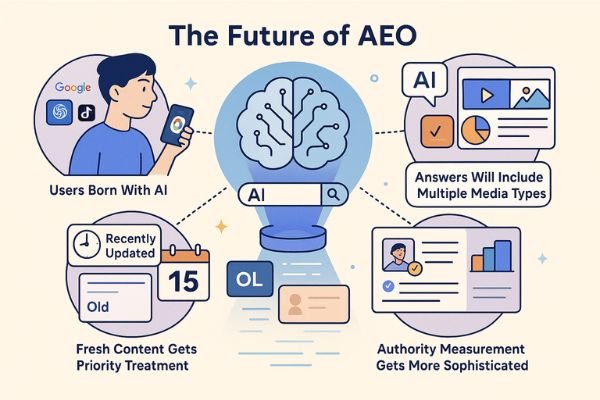
What To Expect From Answer Engine Optimization Moving Forward
AEO continues developing as we learn how it functions, just like most marketing approaches. Stay ahead of changes by watching these emerging trends. Search Engine Journal regularly covers these developments for marketing professionals.
Users Born With AI Will Search Differently
Generation Z and younger users might bypass Google completely, choosing ChatGPT, TikTok, and Reddit instead. Denver SEO agencies should optimize content for AI-first discovery, social media platforms, and community-driven channels.
Answers Will Include Multiple Media Types
AI responses may start combining visuals like videos, images, charts, and audio elements. Make sure client materials are optimized, properly labeled, and ready for engines to include in multimedia answers.
Fresh Content Gets Priority Treatment
Search engines may favor recently updated, frequently refreshed content over static evergreen posts. This trend aligns with current SEO best practices, so maintaining regular content updates becomes essential. Backlinko studies confirm that freshness signals impact search visibility significantly.
Authority Measurement Gets More Sophisticated
AI models improve at evaluating source credibility and delivering accurate information as training data expands. Content featuring proper sourcing, detailed author biographies, and strong brand indicators will likely receive increased preference over time. Neil Patel’s research demonstrates how authority signals influence AI content selection.
Answer Engine Optimization represents the next evolution of search marketing, and preparation should start immediately. Forward-thinking agencies will capture visibility where it counts most: AI-powered platforms, zero-click search results, and direct user answers.
Conclusion
Answer Engine Optimization isn’t just another marketing trend – it’s the fundamental shift defining search’s future. Users expect instant answers, not website visits. AI-powered search tools dominate how people find information in 2025. Your agency can either adapt proactively or watch competitors capture visibility in AI summaries, voice responses, and zero-click results. The transition doesn’t require massive overhauls. Start by restructuring existing content around question-based keywords and clear, authoritative answers. Implement FAQ schema, optimize for voice search, and focus on extractable content formats. These changes position your clients ahead of agencies still clinging to outdated SEO tactics. Success in modern search means owning the answer, not just ranking the page. Las Vegas marketing agencies that embrace AEO now will dominate tomorrow’s AI-driven search landscape. Begin restructuring your content strategy today and contact our team to secure your clients’ visibility across every platform where answers matter most.
Frequently Asked Questions
What exactly is Answer Engine Optimization and why does it matter?
Answer Engine Optimization creates content that AI systems extract and display directly. Unlike traditional SEO driving website clicks, AEO gets content featured in AI responses. This matters because users expect instant answers without visiting websites. AEO maintains brand visibility as search shifts toward AI platforms.
How does AEO differ from traditional SEO strategies I’m already using?
Traditional SEO targets keyword rankings for website traffic through clicks and engagement. AEO prioritizes content structure for AI extraction over click generation. SEO builds authority through backlinks while AEO delivers fast, precise answers. AEO focuses on being the answer rather than earning clicks.
Do I need to completely abandon my current SEO efforts for AEO?
You don’t need to abandon traditional SEO since both strategies complement each other. Continue building authority through backlinks while adapting existing content for AEO. Focus on clear headers, FAQ sections, and direct answers for maximum visibility.
What are the first steps to implement AEO in my content strategy?
Identify question-based keywords using Google’s “People Also Ask” feature. Restructure content with question-style headers and 30-50 word direct answers. Add FAQ schema markup and optimize for voice search with conversational writing.
Will Answer Engine Optimization eventually replace traditional SEO completely in the future?
AEO won’t replace traditional SEO but becomes increasingly important alongside it. Traditional SEO drives traffic and builds authority. However, as AI search becomes standard, AEO becomes essential for maintaining visibility.

Mike has over 5 years of experience helping clients improve their business visibility on Google. He combines his love for teaching with his entrepreneurial spirit to develop innovative marketing strategies. Inspired by the big AI wave of 2023, Mike now focuses on staying updated with the latest AI tools and techniques. He is committed to using these advancements to deliver great results for his clients, keeping them ahead in the competitive online market.