
What Are The Main Differences Between AEO And SEO?
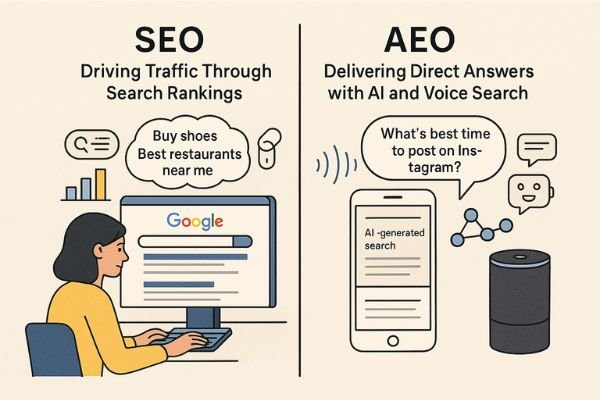
Answer Engine Optimization (AEO) and Search Engine Optimization (SEO) differ in three fundamental ways. AEO targets direct answers for voice searches and AI chatbots. SEO focuses on website traffic through traditional search engine rankings. AEO optimizes for featured snippets and zero-click searches, which represent 65% of Google queries. SEO builds long-term organic visibility through keyword-focused content and backlinks.
The primary difference lies in user intent and content format. Answer engine optimization serves users seeking immediate answers through conversational queries and voice assistants. SEO targets users researching detailed information with intent to visit websites. Answer engine optimization emphasizes concise, structured answers that AI systems easily summarize. SEO creates comprehensive content covering multiple topics and perspectives thoroughly.
Both strategies remain essential as search behavior evolves toward AI integration. Over one billion voice searches occur monthly, driving answer engine optimization demand significantly. Traditional search engines still generate massive website traffic requiring SEO optimization. Smart businesses implement both approaches to capture emerging opportunities while maintaining proven results. At Eclipse Marketing, we help businesses navigate these evolving digital marketing landscapes effectively.

Understanding Answer Engine Optimization
Answer engine optimization targets users who want quick, direct responses to their questions. This strategy gains popularity as search engines deliver instant, summarized answers. Users stay on single pages instead of clicking through multiple results. Optimize your content for Answer Engine Optimization to boost visibility on AI-powered platforms. Target Microsoft Copilot, ChatGPT, and Perplexity for maximum reach. Align your content with modern search habits for Google AI overviews. Voice assistants and structured data also benefit from AEO strategies.
Answer engine optimization prepares your website for AI-driven search tool changes ahead. This approach enhances user experience while maintaining competitive advantage. Build AEO success using proven SEO foundations like strategic keywords. Focus on creating authentic, high-quality content that answers user questions directly. Professional SEO services can help establish this foundation while preparing for AEO integration.
Mastering Search Engine Optimization
Search engine optimization remains the foundation strategy used since the 1990s. This proven method helps websites achieve higher search rankings consistently. Businesses attract more website traffic and generate quality leads through SEO. SEO targets organic visibility on search engine results pages effectively. Focus your efforts on traditional search engines like Google and Bing.
Smart SEO strategies support every stage of your marketing funnel. Build qualified traffic during awareness phases and encourage conversions during action stages. Comprehensive marketing services integrate SEO with other digital channels for maximum impact across all customer touchpoints.
Comparing AEO and SEO Strategies
AEO and SEO share common ground but differ significantly in execution. These strategies vary in primary objectives and implementation approaches. Explore the core distinctions between SEO and AEO methods below. This comparison table reveals the essential differences between AEO and SEO approaches:
Strategy Comparison: AEO vs SEO
- Primary Goals and Focus: AEO delivers direct, concise answers to user questions instantly. SEO improves search rankings and drives more website traffic consistently.
- Target Audience: AEO reaches voice-based searchers using conversational queries effectively. SEO targets traditional text-based searchers on desktop and mobile devices.
- Content Strategy: AEO emphasizes structured, concise answers that satisfy immediate needs. SEO creates detailed, keyword-focused content for comprehensive coverage.
- Platform Focus: AEO optimizes for voice assistants and AI chatbot platforms. SEO targets traditional search engines like Google and Bing primarily.
- Success Metrics: AEO measures visibility in featured snippets, AI overviews, and related questions. SEO tracks keyword rankings, organic traffic growth, and click-through rates.
1. Primary Goals: Website Traffic vs Direct Answers
SEO has focused on achieving higher search rankings for twenty years. This strategy drives organic website traffic through traditional search engines consistently. Answer Engine Optimization takes a different approach by delivering precise answers to AI-powered users. AEO stands apart from SEO because it skips website traffic entirely. Instead, optimize your content for featured snippets and Google AI overviews.
Target knowledge graphs and voice search answers for maximum visibility. These result formats provide summaries without requiring clicks to websites. Answer Engine Optimization prioritizes user experience over keyword-focused content strategies like SEO. SEO structures content around specific keywords for relevant search queries. Attract website visitors through SEO to generate leads and conversions effectively. Build trust and authority through AEO by providing quick, direct answers. Local businesses can leverage location-specific SEO strategies to dominate their geographic markets.
2. Proven Optimization Techniques for Both Strategies
SEO offers numerous tested optimization methods that capture over 40% of revenue according to industry research. Websites implement strategic keyword research and placement to match user queries. Build backlinks and establish domain authority through quality link building efforts. Optimize metadata elements to attract relevant traffic and improve click-through rates. Enhance user experience with fast loading speeds and mobile-friendly design elements.
AEO optimization borrows many proven SEO tactics but adds unique techniques. This approach ensures your content appears on answer search engines effectively. Optimize your content for AI language models and natural language processing systems. Align content with modern search behaviors and conversational query patterns daily. Structure content to provide answers upfront rather than burying key information. Focus on delivering genuine value instead of simply matching keyword requirements.
Establish authority through clear, concise, and well-structured content that answers questions. Integrate structured data like schema markup to help answer engines index content. Professional Google consulting services can help implement these advanced optimization techniques effectively.
3. Content Format Strategies: Long-Form vs Snippet-Based
SEO optimization targets long-form content like blogs, articles, and webinars effectively. These formats allow comprehensive keyword incorporation and detailed optimization control. AEO favors content snippets that AI language models summarize easily instead. Create frequently asked questions to address common customer inquiries directly. FAQs minimize support requests while enhancing overall user experience significantly.
Develop featured snippets by answering questions with concise, direct language consistently. Optimize for readability using lists and tables that appear prominently. Target people also ask sections by including question-based headings throughout content. Provide brief answers that encourage further engagement and exploration opportunities.
Implement schema markups to help search engines understand your content better. This structured data code guides search engines through your web pages. SEO accommodates detailed content that explores multiple angles and perspectives thoroughly. AEO presents users with clear, concise answers that satisfy immediate needs. Create short, compelling headings and scannable elements like organized lists and tables.
4. Search Behavior Evolution: Voice vs Text-Based Queries
Answer Engine Optimization adapts to evolving search behaviors that shift from traditional text searches. Users increasingly prefer voice searches and conversational query styles today. AEO caters to modern context-based searches with direct, concise answer formats. SEO remains ideal for keyword-focused, text-based searches targeting broad audiences effectively. This approach serves users seeking detailed information with intent to explore websites.
AEO targets users relying on mobile devices and voice assistants like Alexa. Siri and Google Home users benefit from AEO optimization strategies significantly. AI-powered chatbots also favor content optimized specifically for answer engines. Businesses in competitive markets like Las Vegas and New Brunswick must adapt to these changing search behaviors to maintain visibility.
Future Search Trends: Preparing for the Next Decade
AI continues disrupting the digital landscape by transforming search behavior patterns completely. People now search, consume, and interact with content across traditional platforms differently. Social media and AI-powered search engines drive these significant behavioral changes. Answer Engine Optimization keeps pace with shifting search behaviors fueled by voice-based content demand.
Over one billion voice searches occur monthly, creating massive optimization opportunities. AI-driven algorithms enhance contextual relevance of search results for users continuously. Machine learning bridges the gap between AEO and SEO by understanding user intent. Over 65% of Google queries result in zero-click searches currently according to recent studies.
Google prioritizes helpful search results for AI overviews that appear prominently. These AI overviews offer enhanced visibility before traditional organic search results. Performance tracking tools help monitor success across both traditional and AI-powered search platforms. Businesses investing in Google Ads can complement organic efforts with paid visibility strategies.
Conclusion
Both AEO and SEO remain essential for comprehensive digital marketing success. Start implementing SEO fundamentals while preparing for AEO’s growing importance simultaneously. Focus on creating high-quality content that serves both traditional search engines effectively. Optimize for featured snippets and voice search to capture emerging opportunities. Track performance metrics for both strategies to measure your marketing impact.
The future belongs to businesses that master both approaches strategically. Combine SEO’s proven foundation with AEO’s innovative techniques for maximum visibility. Take action today by auditing your current content optimization strategies. Adapt your approach to meet changing search behaviors and user expectations. Success requires balancing traditional SEO methods with forward-thinking AEO implementation consistently. Contact our team to develop a comprehensive strategy that integrates both AEO and SEO for your business growth.
Frequently Asked Questions
Should I choose AEO or SEO for my business?
You needn’t choose between AEO and SEO exclusively. Both approaches complement each other and serve different user needs effectively. SEO builds your website’s foundation with proven ranking techniques. AEO enhances visibility on AI-powered platforms and voice search results. Implement both strategies together for comprehensive digital marketing coverage.
Is SEO really dying as AEO becomes more popular?
SEO is not dying but evolving alongside AEO strategies. Traditional search engines still drive massive traffic to websites daily. SEO remains crucial for long-term organic growth and brand visibility. AEO represents an additional optimization layer rather than complete replacement. Smart marketers integrate both approaches to maximize digital presence effectively.
Can I use AEO and SEO techniques together successfully?
Yes, AEO and SEO techniques work together creating powerful optimization strategies. Both approaches share common foundations like keyword research and quality content creation. SEO provides detailed content while AEO offers concise answers. Combine structured data markup with traditional SEO for enhanced visibility. This integrated approach captures both traditional and voice search users.
Which strategy delivers better results for small businesses?
Both strategies offer unique advantages depending on your business goals. SEO delivers sustained traffic growth and establishes long-term online authority. AEO provides quick visibility in featured snippets and voice results. Small businesses benefit from starting with SEO fundamentals then adding AEO. Focus resources on the strategy aligning with customer behavior.
How do I get started with AEO optimization today?
Begin AEO optimization by analyzing existing content for answer-based opportunities. Create FAQ sections addressing common customer questions directly and clearly. Structure content with clear headings and concise answers upfront consistently. Add schema markup to help search engines understand content better. Monitor performance in featured snippets and Google AI overviews.

Michael Vale has over 5 years of experience helping clients improve their business visibility on Google. He combines his love for teaching with his entrepreneurial spirit to develop innovative marketing strategies. Inspired by the big AI wave of 2023, Michael Vale now focuses on staying updated with the latest AI tools and techniques. He is committed to using these advancements to deliver great results for his clients, keeping them ahead in the competitive online market.