
40 Real Link Building Tips That Actually Work In 2026
Roughly 95% of all indexed web pages have zero backlinks, according to Ahrefs data. A site with even a modest backlink profile already sits in the top 5% of the web.
Link building tips are specific, repeatable tactics for earning backlinks from other websites to improve search rankings. These 40 tips span outreach, content creation, technical optimization, and measurement, with current data on costs and the mistakes that waste the most money in 2026.
Backlinko’s analysis of 11.8 million search results found the number one result has 3.8x more backlinks than positions two through ten. Google’s 2024 API leak confirmed links from pages with zero organic traffic pass zero ranking value. A survey of 518 SEO professionals found agencies allocate 32.1% of total SEO budgets to link building, the single largest line item.
| Link Building Tactic | Average Cost Per Link | Best For | Typical Timeline |
| Guest Posts | $692 – $957 per placement | Referral traffic + brand exposure + backlinks | 2-6 weeks |
| Niche Edits | $141 – $361 per placement | Faster ranking improvement on existing content | 1-3 weeks |
| Digital PR | $0 – $200 per pitch (time investment) | DA 70+ editorial links from news sites | 2-8 weeks |
| Broken Link Building | $0 (time only) | Quality links from resource pages | 4-8 weeks |
| Original Research | $500 – $2,000 per study | Earning links from industry publications | 4-12 weeks |
| Link Reclamation | $0 (time only) | Recovering lost link equity from broken/moved URLs | 1-2 weeks |
What Are the Most Important Link Building Fundamentals?
The fundamentals: manual quality review, relationship-first outreach, and relevance over raw metrics. Google’s PageRank-NearestSeeds system (confirmed in the API leak) evaluates proximity to trusted seed sites, not link volume. A relevant DR 40 site can outperform an irrelevant DR 80.
1. Manually review every potential link partner. A DR 60 site with zero organic traffic and no editorial process is a waste of money. Check actual traffic in Ahrefs or SEMrush before outreach.
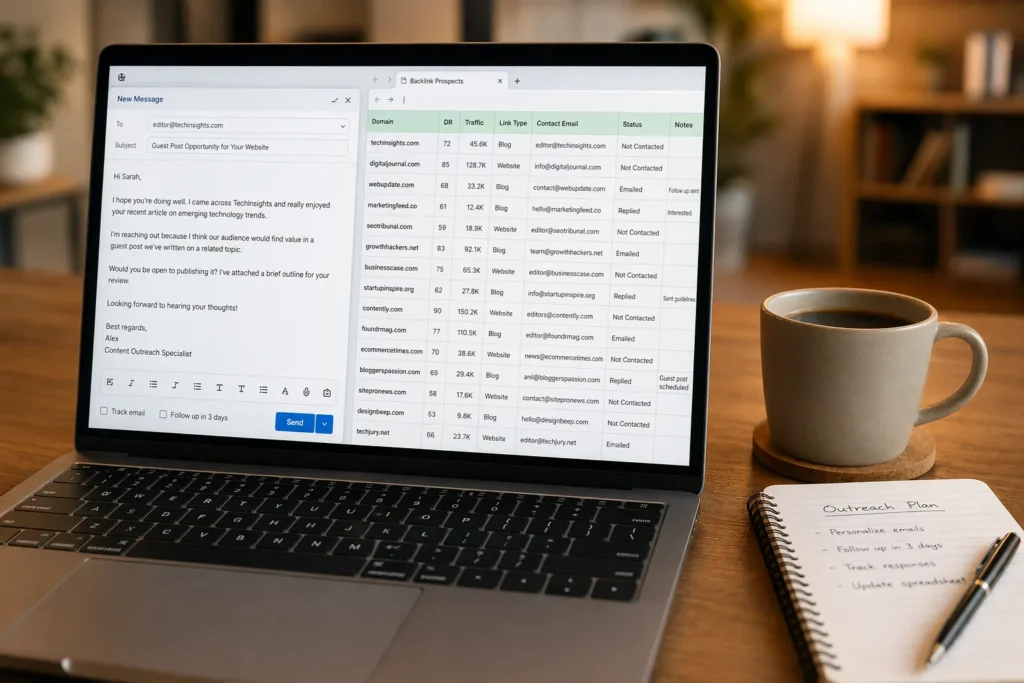
2. Build relationships before asking for links. Cold outreach averages an 8.5% response rate per Backlinko’s study of 12 million emails. That number jumps when there’s an existing relationship.
3. Lead with value in every outreach message. A broken link on their page, a data point that strengthens their article, a resource their readers would use. The pitch should benefit the site owner, not just the sender.
4. Prioritize topical relevance over authority scores. An SEO Montreal study of 18,000 backlinks found topical neighborhood relevance was the strongest predictor of ranking improvement.
5. Stop obsessing over exact-match anchor text. That same study found exact-match anchors correlate with ranking declines. Natural variation signals organic patterns.
6. Point links at money pages, not just blog posts. Service pages and landing pages with commercial intent need link equity too.
7. Guest posting works, but only on editorially vetted sites. BuzzStream’s 2025 data puts high-quality guest posts between $692 and $957 on average. Cheap placements on sites with no real audience are a rip-off.
8. Turn existing business relationships into link opportunities. Partners, vendors, suppliers, chambers of commerce. Most businesses sit on a dozen easy link opportunities they’ve never asked about.
How Does Content-Driven Outreach Build Quality Links?
Content-driven link building produces links that carry both SEO value and AI citation potential. Ahrefs found 76.1% of pages cited in Google’s AI Overviews also rank in the top 10 organic results, making quality backlinks a dual-purpose investment.
9. Sponsor local events and community organizations. These produce .org and .edu links competitors can’t replicate, plus brand mentions that correlate with AI visibility per 2025 Ahrefs research.
10. Claim unlinked brand mentions. Tools like Ahrefs’ Brand Radar flag new mentions. A quick email converts roughly 5-10% into live links.
11. Build linkable assets that solve real problems. Calculators, templates, benchmarks, original datasets. One strong asset can outperform six months of outreach.
12. Try broken link building. Find broken outbound links on resource pages, then offer a working replacement. Labor-intensive, but the links have genuine editorial value.
13. Don’t dismiss niche-relevant directories. Generic directories are worthless. But curated, industry-specific ones still carry weight for local SEO per Ahrefs’ million-SERP study.
14. Participate in industry communities consistently. Forums, Slack groups, LinkedIn discussions. Links from genuine participation look organic because they are.
15. Respond to journalist queries through HARO and Connectively. Editorial mentions from DA 70+ news sites carry strong E-E-A-T signals.
16. Partner with complementary businesses. Co-create content, co-host webinars, cross-reference resources. Natural collaboration produces natural links.
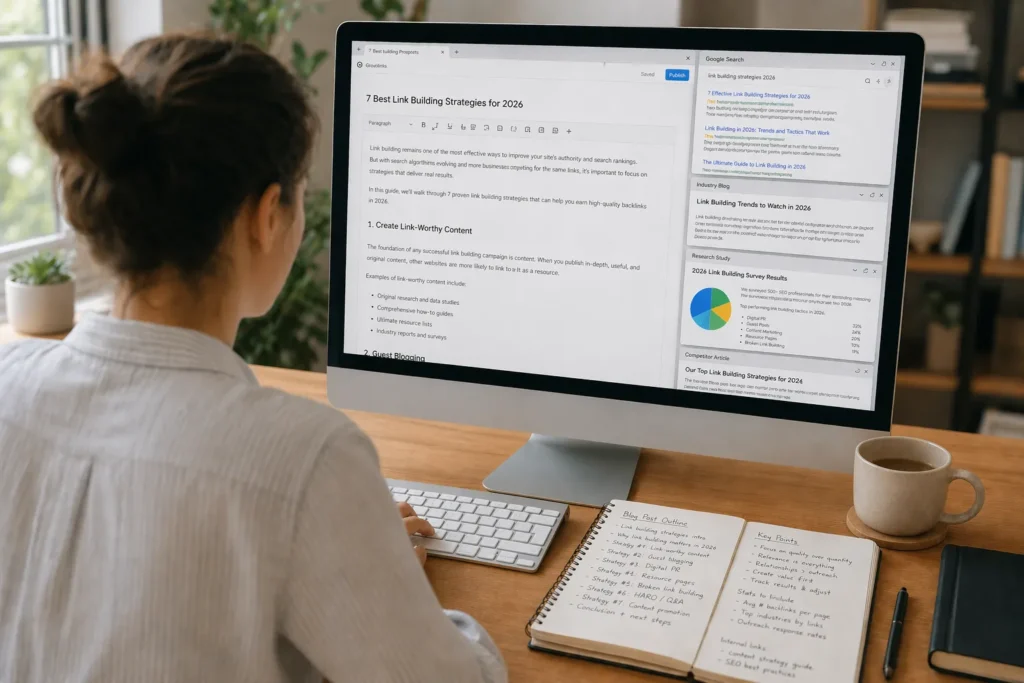
17. Publish original research. Even a small survey of 100 professionals can produce stats that get cited for years. Nothing pulls links from industry publications like proprietary data.
18. Repurpose one strong piece into five formats. Guest post summary, podcast talking point, infographic, webinar, social series. Each format creates a new link opportunity from a single investment.
What Technical Factors Affect Link Quality and Value?
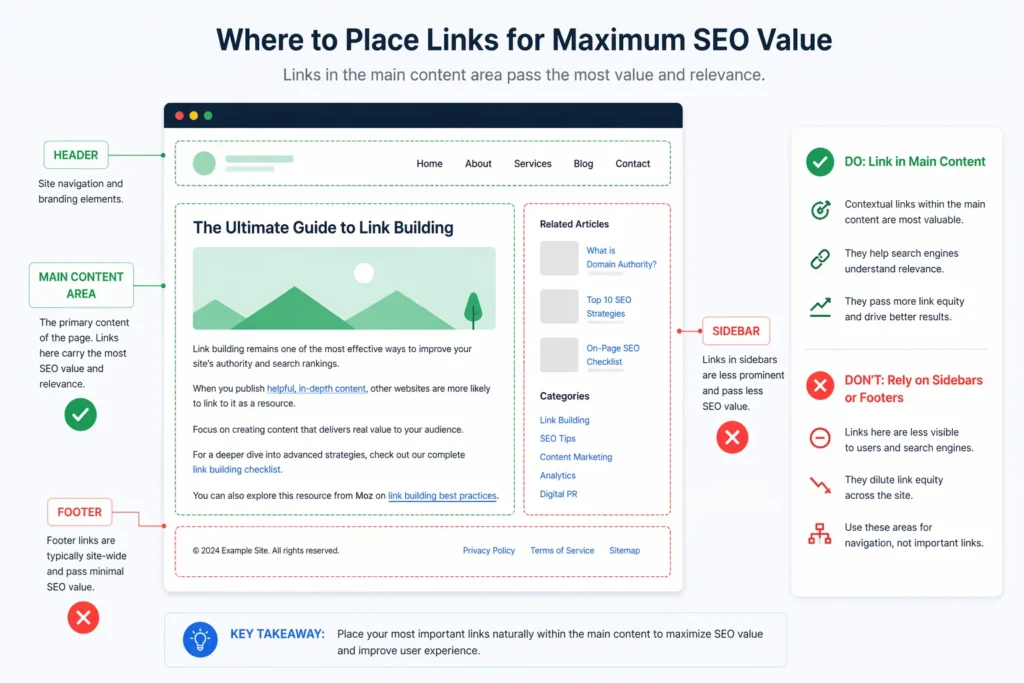
Technical quality determines how much ranking power a link transfers. Google’s 2024 API leak confirmed links in the main content section carry more weight than sidebar, footer, or nav links. The Yandex source code leak validated this independently: content-area links account for roughly 51% of PageRank’s standalone weight.
19. Follow up more than once. A polite follow-up after 5-7 days can double response rates. Outreach tools like BuzzStream automate the sequence without it feeling spammy.
20. Build domain authority across many pages, not just one. Fifty referring domains spread across 20 pages outranks 50 links pointing to a single post.
21. Amplify linkable content through social channels. Social shares don’t pass equity directly, but they put content in front of people who do link.
22. Create reference-grade guides. Ahrefs found top-ranking pages gain 5-14% more followed links per month without active outreach. Content that fully answers a question earns passive links.
23. Audit competitors’ backlink profiles regularly. If a competitor earned a link from a site, that site may link to better content on the same topic.
24. Use storytelling in outreach pitches. Emails referencing a specific article and explaining why a resource fits stand out. Generic templates produce generic results.
25. Invest in internal linking as a force multiplier. Smart internal linking turns one good backlink into site-wide authority.
26. Build ongoing relationships with journalists and bloggers. Ongoing relationships produce recurring link opportunities that compound.
27. Offer to refresh outdated content on authoritative sites. Find a page with stale stats, pitch an updated version. Better content for them, a link in return.
28. Build free tools or interactive resources. Calculators, checkers, estimators. Useful tools become permanent link magnets.
Which Creative Link Building Tactics Still Work in 2026?
Creative tactics work when they produce something others want to reference without convincing. Does it create value for the linking site’s audience? If yes, it scales. If it requires persuasion, it hits a ceiling.
29. Guest on podcasts for show-notes links. Hosts almost always link to guests. The link comes with audience exposure that cold outreach can’t match.
30. Use data visualization to increase shareability. Charts and interactive displays get embedded far more often than the same data in plain text.
31. Protect existing links, not just chase new ones. Ahrefs data shows 66.5% of links over nine years old are dead. Link reclamation recovers equity that would otherwise be permanently lost.
32. Tap personal and professional networks. Alumni associations, speaking pages, advisory board listings. High-quality links hiding in plain sight.
33. Fill knowledge gaps with original content. Questions industry forums ask repeatedly but nobody answers well. That vacuum attracts links organically.
34. Publish expert interviews and roundups. Featuring industry experts gives them a reason to share and link.
35. Personalize outreach emails for real. 74.3% of link builders pay for links per Authority Hacker data. But earned placements through real outreach still deliver the best ROI.
36. Pursue links that drive referral traffic. A link from a high-traffic page sends visitors. Google’s systems confirm zero-click pages pass zero value.
37. Include social proof in outreach. Mentioning a resource has been cited by specific publications increases perceived value.
38. Create expert roundups for cross-promotion. One curated roundup featuring 15-20 professionals can generate links from each participant’s site.
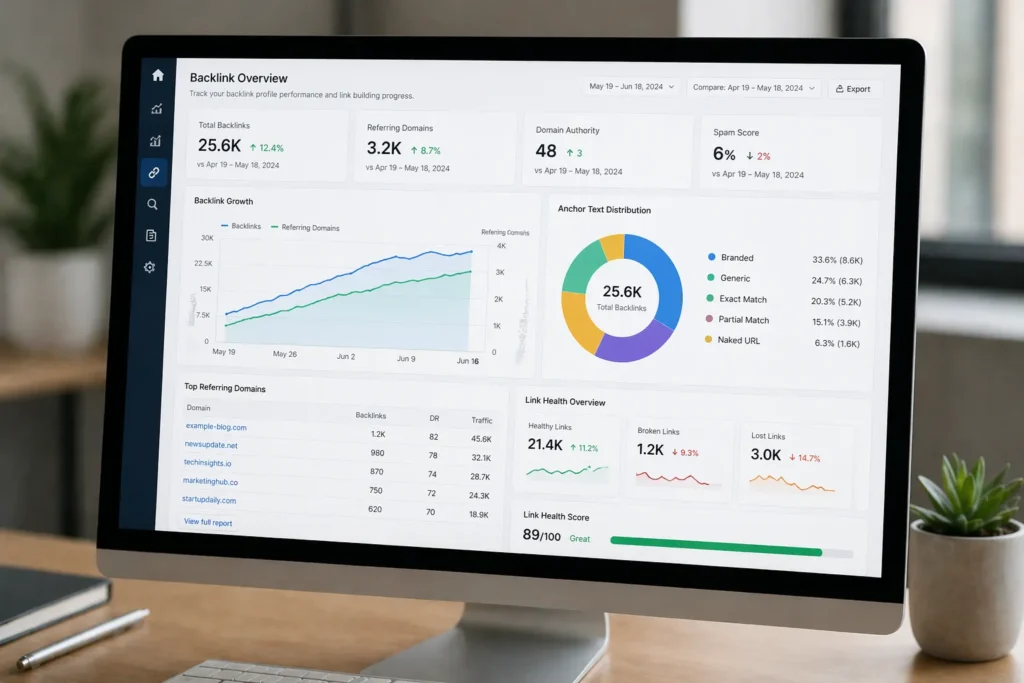
How Should Teams Measure and Maintain Link Building Results?
Counting new referring domains tells an incomplete story. What matters in 2026: link survival rate, referring domain diversity, anchor text distribution, and traffic on linking pages. Zero-click pages pass zero value per Google’s confirmed indexing tier system.
39. Use newsjacking for timely content. Reacting quickly to industry news earns links from journalists covering the same story. Content published within 24-48 hours captures most initial linking.
40. One strong link beats ten weak ones. A single editorial placement on a relevant, high-traffic site moves rankings more than a dozen directory submissions. Google’s 2026 systems measure that difference better than ever.
FAQs
Do backlinks still matter for rankings in 2026?
Yes. Ahrefs’ study of over 1 million SERPs found that referring domains remain one of the strongest ranking correlations, especially for local search queries. And 76.1% of pages cited in Google’s AI Overviews also rank in the traditional top 10. The difference is that context and relevance matter more than raw count. A handful of editorially placed links from topically relevant sites will outperform hundreds of links from unrelated domains.
What does a quality backlink cost in 2026?
The average cost of an outreach-acquired link is $361, with a range of $100 to $1,500 depending on the niche and placement type, per SearchLab.nl’s 2026 compilation. High-quality guest posts specifically run between $692 and $957 on average, according to BuzzStream’s 2025 data. Budget-tier directory submissions at $100 or less per link rarely produce measurable results.
How has Google’s helpful content system changed link building?
Google integrated the Helpful Content System more deeply into its core ranking algorithm starting with the March 2024 update. The result: links from thin, low-quality, or AI-generated content carry less weight than links from genuinely useful pages with real editorial standards. Recovery from penalties related to manipulative link patterns can take months of active cleanup work.
Are nofollow links worth pursuing?
Between 78.8% and 89.1% of SEO professionals surveyed by Authority Hacker believe nofollow links still influence rankings and AI visibility. Google treats nofollow as a “hint” rather than a directive, meaning some value may pass through. Nofollow links from high-authority news sites also support brand visibility signals without carrying manipulation risk.
What link building tips work best for local SEO?
Local businesses benefit most from links that carry geographic relevance. Ahrefs data shows backlinks correlate more strongly with local search rankings than with broader national queries. Local sponsorships, chamber of commerce listings, community event pages, and hyper-local data reports produce links that national competitors can’t replicate. Pairing these with consistent citation building creates a strong local authority signal.
How do unlinked brand mentions turn into backlinks?
Tools like Ahrefs’ Brand Radar or Google Alerts flag new mentions of a business name across the web. When a mention appears without a link, a short email to the author requesting a hyperlink converts at roughly 5-10% without much effort. This tactic works best for brands that are already generating press coverage or industry discussion.
Is buying links safe in 2026?
Authority Hacker survey data shows 74.3% of link builders pay for links. The risk depends entirely on execution. Paid placements on editorially vetted, high-traffic, topically relevant sites carry low risk. Bulk purchasing from link farms or irrelevant PBNs carries high risk of manual action or algorithmic devaluation. Google’s systems are better at detecting patterns than individual placements.

Michael Vale has over 5 years of experience helping clients improve their business visibility on Google. He combines his love for teaching with his entrepreneurial spirit to develop innovative marketing strategies. Inspired by the big AI wave of 2023, Michael Vale now focuses on staying updated with the latest AI tools and techniques. He is committed to using these advancements to deliver great results for his clients, keeping them ahead in the competitive online market.