
On-Page And Off-Page SEO: Why You Need Both To Rank In 2026
The first result on Google pulls roughly 39.8% of all organic clicks, according to a 2024 Semrush analysis. That single position controls nearly half the traffic for any given search. So the question isn’t whether SEO matters. It’s whether your strategy covers enough ground to compete for that spot.
On-page and off-page SEO are the two halves of that strategy. On-page SEO is everything you control directly on your website, from content quality and title tags to site speed and internal links. Off-page SEO is everything that happens away from your site that signals authority, like backlinks, brand mentions, and reviews. Neither works well alone. A Backlinko study of 11.8 million search results found that the number-one ranking page has an average of 3.8 times more backlinks than pages in positions two through ten. But those backlinks don’t help if the page they point to loads slowly, targets the wrong keyword, or gives a shallow answer. You need both sides working.
This article won’t cover paid search, social media algorithms, or programmatic SEO. Those are separate conversations. We’re staying focused on the core on-page and off-page tactics that move rankings for most businesses in 2026.
What Does On-Page SEO Actually Cover?
On-page SEO is the work you do directly on your website to help search engines understand your content and to give visitors a good experience. It breaks into two buckets: content optimization and technical SEO.
- Content optimization includes your keyword targeting, heading structure, meta descriptions, title tags, image alt text, and internal links. These tell Google what a page is about and help it match your content to the right searches.
- Technical SEO covers site speed, mobile responsiveness, SSL certificates, XML sitemaps, URL structure, robots.txt configuration, and structured data markup. I’ve seen sites with outstanding content sit on page three because their load time exceeded four seconds or because Google couldn’t crawl half their pages. Technical problems create a ceiling that no amount of good writing can break through.
One thing worth clarifying. Technical SEO is a subset of on-page SEO. It’s easy to treat them as separate categories (plenty of agencies do), but they’re both things you control on your own domain. The distinction matters when you’re budgeting, though. Content work and technical fixes require different skill sets and different timelines.
What Does Off-Page SEO Actually Cover?
Off-page SEO is every signal that originates outside your website. The biggest factor is backlinks, which are links from other websites pointing to yours. Google treats these as votes of confidence. A link from a respected industry publication carries more weight than a hundred links from random directories.
But off-page goes beyond links. Brand mentions (even unlinked ones), reviews on Google Business Profile, social signals, and guest contributions on other platforms all feed into how search engines evaluate your authority. According to Moz’s 2024 Local Search Ranking Factors report, link signals account for about 15% of local pack visibility, while review signals contribute another 16%. Those are off-page factors that no amount of on-page optimization can replicate.
The catch with off-page SEO is control. You can’t force another site to link to you. You can’t delete a bad review. You’re building reputation indirectly, which takes longer and carries more risk. That’s exactly why most businesses underinvest here, and it’s exactly why the ones who don’t underinvest tend to outrank everybody else.
How Does On-Page SEO Differ from Technical SEO?
People mix these up constantly, and it creates budgeting problems. Here’s the simplest way to think about it.
Technical SEO makes your site accessible. It ensures Google can find, crawl, and index your pages. If your robots.txt file accidentally blocks your service pages, or your sitemap is missing half your URLs, nothing else matters. You’re invisible.
On-page content optimization makes your site relevant. It ensures the pages Google can find actually match what people search for. Title tags, keyword placement, heading hierarchy, internal linking patterns. These are the signals that tell Google “this page answers the query about on-page and off-page SEO better than the other 500 pages competing for the same term.”
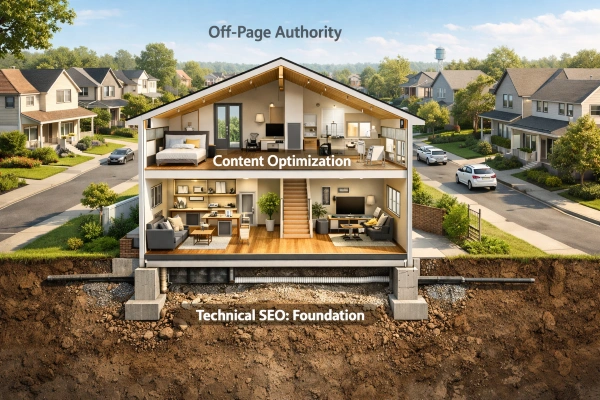
Think of technical SEO as the foundation of a house. Content optimization is the layout, finishes, and curb appeal. Off-page SEO is the neighborhood reputation. You need all three, but if the foundation is cracked, nothing built on top of it holds.
Why Do You Need Both On-Page and Off-Page SEO?
Here’s the data that settles this debate.
Backlinko’s analysis of 11.8 million results showed that roughly 95% of all web pages have zero backlinks. Those pages also get almost no traffic. Ahrefs found that 96.55% of all indexed pages receive zero organic visits from Google. There’s massive overlap between those two groups.
On the other hand, sites with strong on-page foundations but no off-page authority hit a ceiling. I’ve worked with businesses that had perfectly optimized pages, fast load times, solid content, and couldn’t crack page two. The missing piece was always authority. Nobody was linking to them. Nobody was talking about them. Google had no external validation that the content deserved to rank.
The reverse is equally true. Sites with thousands of backlinks but thin, outdated, or poorly structured content get hammered by core updates. Google’s November and December 2025 core updates continued the pattern of demoting pages that lack genuine depth, regardless of their backlink profile.
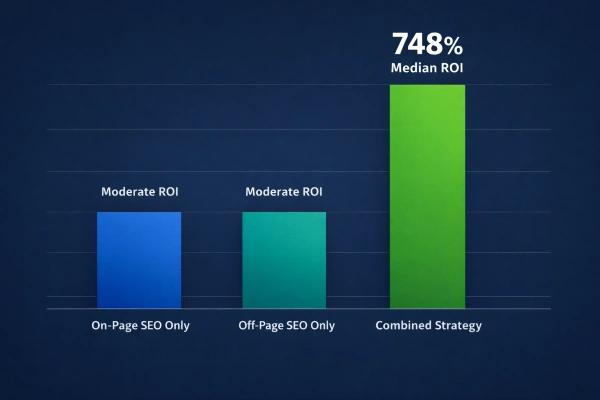
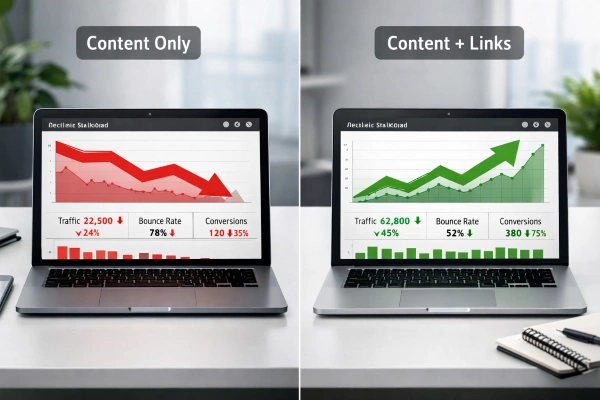
When both sides work together, the results compound. FirstPageSage’s 2025 benchmarks put the median ROI for SEO campaigns at 748%, with content paired with link building delivering 73% stronger returns than content alone. That’s not a marginal difference.
| Factor | On-Page SEO | Off-Page SEO | Combined |
| What you control | Full | Indirect | Balanced |
| Time to see results | 1–3 months | 3–6+ months | Compounding after 6–12 months |
| Typical monthly cost (agency) | $500–$3,000 | $1,000–$5,000 | $1,000–$10,000+ |
| Primary function | Relevance and crawlability | Authority and trust | Full ranking signal coverage |
| ROI contribution | Foundation | 3.8x traffic multiplier | Median 748% ROI |
Sources: Ahrefs 2024 pricing survey, FirstPageSage 2025 ROI benchmarks, Backlinko 11.8M result study
How Do On-Page and Off-Page SEO Strategies Work Together?
The connection isn’t abstract. Here are the specific ways these two sides reinforce each other.
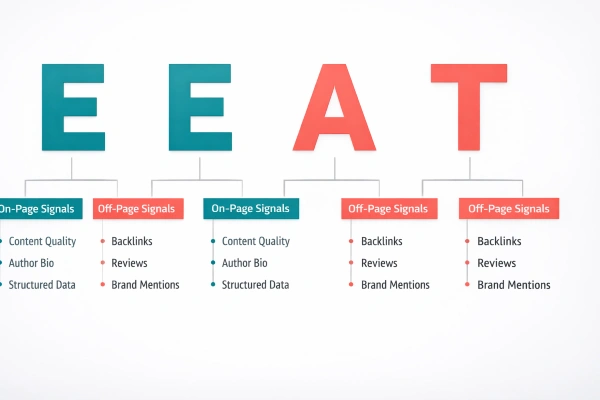
- E-E-A-T signals span both sides. Google’s E-E-A-T framework (Experience, Expertise, Authoritativeness, Trustworthiness) can’t be satisfied with on-page work alone. Your content demonstrates experience and expertise. Your backlink profile, brand mentions, and third-party reviews demonstrate authoritativeness and trustworthiness. Sites that invested only in on-page E-E-A-T signals and ignored off-page authority saw traffic drops of 30–70% during the 2024–2025 core update cycles, based on practitioner reports across SEO communities.
- Link building amplifies content. Publishing a 2,000-word guide means nothing if nobody links to it. But that same guide, promoted through outreach and picked up by two or three authoritative domains, can rank for dozens of related keywords. Backlinko data shows that long-form content exceeding 3,000 words earns 77.2% more backlinks than shorter pieces. The content (on-page) creates something worth linking to. The promotion (off-page) makes sure people find it.
- Local SEO requires both simultaneously. If you run a local business, your Google Business Profile optimization is on-page work. Your reviews, local citations, and links from area publications are off-page. Moz’s data puts Google Business Profile signals at 32% of local pack ranking factors, with reviews and links combining for another 31%. Skip either side and you’re leaving a third of your local visibility on the table.
- Technical audits protect off-page investments. Broken internal links, orphaned pages, slow load times, and crawl errors degrade the value of every backlink pointing to your site. I’ve audited sites with strong SEO foundations that lost ranking momentum because a site migration broke 200 internal links overnight. The backlinks were still there. The pages they pointed to just couldn’t pass authority anymore.
Does On-Page SEO Still Matter with AI Overviews?
Yes. Actually, it matters more.
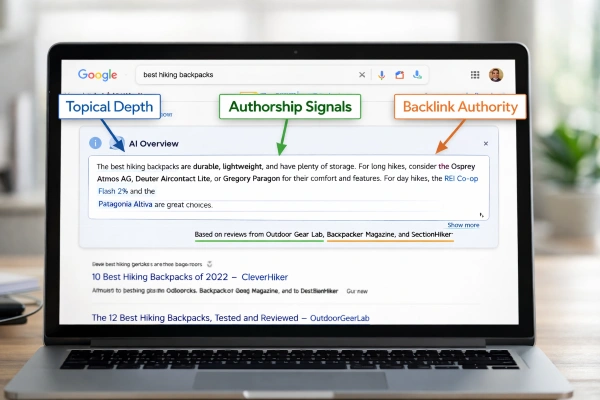
Google’s AI Overviews pull from pages that demonstrate topical depth, clear structure, and strong E-E-A-T signals. Those are all on-page factors. But the pages selected for AI Overviews also tend to have significant off-page authority. Thin pages with no backlinks don’t get cited in AI-generated answers. The bar is higher now, not lower.
Generative Engine Optimization (GEO) is the emerging term for optimizing content so AI systems cite it. The early data suggests that AI Overviews favor content with self-contained answers, named data sources, and clear authorship signals. All of that is on-page work. But getting recognized as a trustworthy source in the first place still depends on off-page authority. The pattern hasn’t changed. It’s just gotten stricter.
What Is the Most Expensive Mistake Businesses Make with SEO?
Choosing one side and ignoring the other.
Businesses that spend $2,000 a month on content creation and $0 on link building are running uphill. They’ll produce excellent pages that sit on page three indefinitely. Businesses that buy cheap backlinks from private blog networks (PBNs) without investing in content quality are playing a different losing game. Google’s manual penalties for link manipulation can cost 6–18 months of lost revenue, and recovery fees for mid-sized sites routinely exceed $10,000.
The difference between on-page and off-page SEO isn’t about which is more important. It’s about understanding that they solve different problems. On-page makes your site worth ranking. Off-page convinces Google that other people agree.
If you’re spending under $1,000 a month, start with on-page. Get your technical house in order, fix your title tags, build out your core service pages. Once that foundation is solid, shift the budget toward off-page. The biggest mistake isn’t starting small. It’s staying lopsided.
What Does a Balanced SEO Budget Look Like in 2026?
Ahrefs’ 2024 survey of SEO professionals found that 28.6% charge between $1,001 and $5,000 per month on retainer. That’s the sweet spot where agencies can realistically cover both on-page and off-page work.
Here’s how that typically breaks down:
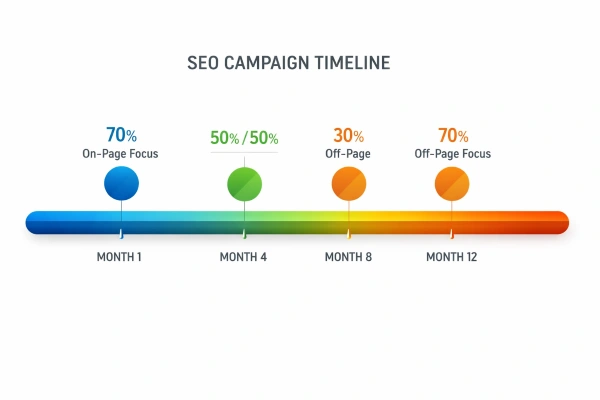
- Months 1–3: Heavy on-page and technical focus. Site audit, crawl fixes, content optimization, keyword mapping. About 70% of the budget goes here.
- Months 4–6: Shift toward off-page. Link outreach, digital PR, review generation, brand mentions. The budget splits closer to 50/50.
- Months 7–12: Maintenance on-page, aggressive off-page. The budget ratio moves to 30/70 favoring link building and authority work.
The global SEO services market hit $74.9 billion in 2025 and is projected to reach $148.86 billion by 2031, according to Mordor Intelligence. That growth is driven by businesses realizing that SEO remains one of the highest-ROI channels available. HubSpot’s 2026 marketing data ranks website and SEO as the number-one ROI-generating channel for B2B marketers, ahead of paid social and email.
The businesses winning in 2026 aren’t the ones spending the most. They’re the ones working with a team that understands how on-page and off-page SEO feed each other, and they’re allocating budget across both from month one.
FAQs
Can you rank with on-page SEO alone and no backlinks?
Almost never. Ahrefs data shows that 95% of web pages have zero backlinks, and those pages receive virtually no organic traffic. The top-ranking result on Google averages 3.8 times more backlinks than positions two through ten. On-page SEO makes your content relevant, but without off-page authority signals, Google has no external evidence that your page deserves to rank.
How long does off-page SEO take to produce results?
Most off-page efforts take 3–6 months to show meaningful impact. Backlinks need time to get crawled, indexed, and factored into rankings. When combined with strong on-page optimization, campaigns typically break even within 6–12 months, with peak results appearing in years two and three. FirstPageSage puts the median SEO ROI at 748%.
Does on-page SEO still matter with Google AI Overviews in 2026?
It matters more than before. AI Overviews pull from pages with clear topical depth, self-contained answers, and strong E-E-A-T signals. Those are on-page factors. But pages also need off-page authority to be selected as citation sources. Thin content with no backlinks doesn’t get cited in AI-generated summaries.
What is the difference between technical SEO and on-page SEO?
Technical SEO is a subset of on-page SEO. It focuses on site architecture, crawlability, page speed, mobile responsiveness, and structured data. Content-focused on-page SEO handles keyword targeting, heading structure, title tags, and internal links. Both happen on your website, but they require different skill sets and budgets.
Is link building still worth the investment in 2026?
Yes. About 92% of top-100 ranking domains have backlinks, and content paired with link building delivers 73% stronger ROI than content published without any promotion. The key shift is quality over quantity. Branded anchor text and links from topically relevant, authoritative sites now carry significantly more weight than bulk directory links.
How much should a small business spend on on-page and off-page SEO?
Ahrefs’ survey of SEO professionals found the most common retainer range is $1,001–$5,000 per month. Budgets under $1,000 typically cover basic on-page work only. A balanced strategy that includes both on-page optimization and off-page link building usually starts around $1,500–$3,000 per month for small businesses.
Why do rankings drop after Google core updates even with good on-page SEO?
Core updates re-evaluate relative quality across the entire index. Sites with strong on-page content but weak off-page authority signals are especially vulnerable. Practitioner reports from the 2024–2025 update cycles show traffic drops of 30–70% for sites that relied heavily on content alone without building external authority.

Michael Vale has over 5 years of experience helping clients improve their business visibility on Google. He combines his love for teaching with his entrepreneurial spirit to develop innovative marketing strategies. Inspired by the big AI wave of 2023, Michael Vale now focuses on staying updated with the latest AI tools and techniques. He is committed to using these advancements to deliver great results for his clients, keeping them ahead in the competitive online market.