
When Do Backlinks Start Working? SEO Timeline Guide
Backlinks typically take 8-10 weeks to show ranking results, with three distinct phases: discovery (1-2 weeks), ranking impact (8-9 weeks), and continued growth (1-3 years).
Backlinks are one of Google’s most important ranking factors, but they don’t work instantly. Understanding the exact timeline helps you set realistic expectations and avoid wasting marketing budgets on ineffective strategies.
The 3-Stage Backlink Timeline:
- Stage 1 (Discovery): 1-2 weeks for Google to find and index your backlinks
- Stage 2 (Ranking): 8-9 weeks for backlinks to start improving your search positions
- Stage 3 (Growth): 1-3 years of continued ranking improvements
4 Key Factors That Affect Backlink Speed:
- Discovery Speed: How quickly Google finds the linking page
- Link Strength: Relevance, authority, and value of the linking site
- Link Velocity: How many backlinks you earn and how fast
- Competition: How strong your competitors’ backlink profiles are
This complete guide explains each phase in detail, shows you how to track progress, and reveals proven strategies to accelerate your backlink results. You’ll learn why some backlinks work in just 1 week while others take months, plus actionable tips to speed up the entire process.

Why Backlinks Matter: Understanding How They Work and Setting Expectations
Every business owner wants to know when their marketing efforts will pay off. Backlinks present a unique challenge because they can take years to show full results. Google’s ranking improvements happen slowly over time.
We understand this might frustrate you, but it’s important to know the truth. Backlinks work as long-term investments that build value gradually.
However, you can spot early signs that your backlinks are starting to work. Learning these signals helps you track progress if you’re building links regularly. These indicators also help you improve your strategy along the way.
Save time and resources by understanding how backlinks work in three key stages:
Stage 1: Getting Your Links Discovered
Your backlinks must be found by Google before they can help your rankings. This first step happens when Google scans the page that links to your site. Google then saves this page information in its search database.
You can check if this happened by typing site: followed by the page URL in Google’s search bar.
If the webpage already existed in Google’s database before your backlink appeared, you need to wait. Google’s crawler must return to that page and scan it again to find your new backlink.
Based on our research, Google typically takes 1-2 weeks to crawl and save new pages.
Stage 2: Building Your Search Rankings
After Google finds your backlink, its search system evaluates different factors. This process determines how much “ranking power” your backlink provides. Some people call this “link juice” or “authority.”
Strong backlinks often create noticeable ranking improvements at this stage. You’ll see your website climb higher in search results. Your authority scores from tools like Moz DA and Ahrefs DR will also increase soon after.
Once Google crawls your backlinks, they typically take 8-9 weeks to start improving your rankings.
For this guide, we consider the growth during this stage as backlink “results.” However, don’t ignore what happens after this stage ends.
Stage 3: Continuing Your Growth
After Google evaluates your backlink and boosts your rankings, your search positions keep climbing steadily. This upward trend follows a predictable pattern over time.
Nobody can predict exactly how long this growth will last. You should expect to see long-term backlink benefits for 1-3 years.
Eventually, something will likely slow down this upward movement. A competitor might earn stronger backlinks and outrank you. Google algorithm updates could also cause your rankings to drop.
This is why you must build on the momentum your backlinks create. The only guaranteed way to maintain this growth is by earning more backlinks!
4 Main Factors That Affect How Fast Your Backlinks Work
Remember: 10 weeks is the average time needed to see backlink results. Your actual results and timing will depend on several important factors.
To make the best prediction for your situation, examine these four key factors that impact backlink performance:
- Getting discovered and indexed
- Link strength
- Speed and volume
- Competition level
Factor 1: Getting Discovered and Indexed
Google must find the linking page and add it to its database before your backlinks can help your rankings. This discovery process happens first.
From our earlier discussion about how backlinks work, Google takes 1-2 weeks on average to crawl and index pages. However, Google doesn’t check all pages at the same speed.
Some pages get checked daily or weekly. But Google’s John Mueller says it could take six months for Google to find the page linking to you. Fortunately, waiting six months is very uncommon.
Here are some tips to speed up the crawling and indexing process:
Tip 1: Make sure Google can access the linking page.
Sometimes web developers accidentally add noindex tags to new pages. This blocks Google from ranking the page. You might also find that the developer blocked Google from crawling the page through the website’s robots.txt file.
Both problems are easy to fix. Simply contact the webmaster and point out the issue. You could also ask the webmaster to update and submit their sitemap to Google Search Console.
Tip 2: Link to the page from your own website.
Google’s crawler finds new webpages by following links. If the page linking to you doesn’t have any links itself, Google’s crawler will take longer to find it.
To fix this problem, try linking to the page from your own website. When Google’s crawler visits your page, it will follow the new link. This speeds up the crawling and indexing process.
For an extra boost, resubmit your sitemap to Google after you’ve linked to the target page. This should make the process even faster.
Tip 3: Get links from popular websites.
As a final tip to speed up the crawling process, try to earn backlinks from websites that:
- Get a lot of daily search traffic
- Update pages frequently
- Invest resources into search optimization
Google’s crawler checks websites with these qualities more often. As an added benefit, links from websites like these tend to carry much more “ranking power.”
Factor 2: Link Strength
You’ve probably heard that “not all links are created equal.” While it sounds overused, this is completely true. No two backlinks will have the same impact on your search rankings.
If you earn a powerful backlink, you could see a ranking boost in just 1 week. As an added benefit, these fast-acting links will have a bigger impact on your search rankings too.
On the other hand, you will never see positive results from a low-quality link. Having too many of these “weak” links could result in a Google penalty. This effectively decreases your search rankings.
To determine a link’s strength, examine these components:
- Relevance: backlinks must be relevant to your website to affect your rankings. The purpose of backlinks is to show that other pages point to your page as an “authority.” For example, if your webpage is about bodybuilding, your most relevant backlinks will appear on other webpages about bodybuilding.
- Authority: the most impactful backlinks come from pages that demonstrate authority. Most SEO experts estimate this with third-party metrics like Moz DA or Ahrefs DR. These tools calculate a website’s score by examining the links pointing to it.
- Value: high-quality links offer real value to humans. Backlinks that excel in this category come from pages that attract real, engaged web traffic. This traffic is likely to click on your link.
While these three components are very important, it’s okay if some links don’t excel in all categories. The most powerful links happen to be the hardest to earn. There’s nothing wrong with pursuing average-quality links.
However, if you want to see the fastest results from your backlinking efforts, you should invest in a strategy that uses these components as quality standards. If this sounds like a big task to handle alone, you might consider hiring an SEO agency to do the heavy lifting for you. Consider this case study from Backlinko that shows 582% growth in organic traffic from combined link building and on-site optimization efforts over the previous year.
Factor 3: Speed and Volume
Speed and volume refers to how fast your website earns new backlinks. This factor influences rankings in a major way. It might be your key to achieving faster results.
To better understand this concept, let’s examine two links with their “ranking power” scores as assigned by Google’s algorithm:
Assuming Link A (scored at 8) and Link B (scored at 6) both point to your website, your website will inherit the ranking power from both links.
The most obvious model for this algorithm uses the additive property:
With this equation, your website will inherit 14 ranking “points.”
This model assumes that Google deals with links separately. While this might seem logical, real-life evidence tells a wildly different story.
Google wants to ensure that your webpage is relevant, popular, and authoritative before giving it a top spot. That’s why each new backlink tends to have a multiplier effect when combined with other new links in your profile.
Instead of simply adding your links to get 14 ranking points, our links amplified each other to result in 48 ranking points!
That’s right: backlinks don’t just influence search rankings on their own—they affect how other links will affect your search rankings, too.
As long as your links are high quality, each new backlink will yield quicker returns than the last. As an added benefit, earning links at a steady pace also helps your page rank higher!
Just a warning, though: as you attempt to earn links at a consistent pace and volume, make sure that your link building activity isn’t too consistent. If you’re earning the same number of links every week, Google’s algorithm could interpret your efforts as an unnatural link scheme.
Factor 4: Competition Level
While we wouldn’t call SEO a zero-sum game, it’s easy to see how search rankings are naturally competitive.
If you’re trying to gain higher search rankings and more organic traffic, there are two things that matter most:
- Who is ranking above you?
- How can you outperform them?
It doesn’t matter how hard you work or how many links you earn. If you can’t outperform your competitors, your backlinks won’t show results.
While links play a big role in determining who comes out on top, there are other elements to consider too. For example, perhaps your top competitor has invested in content that is stronger than yours and is earning more content backlinks. Or, maybe their website is simply better optimized for search engines.
If you’re trying to rank for an extremely competitive keyword, it could take years of hard work with content strategy and optimization before you reach the first page. On the other hand, it’s a well-known fact that SEO results arrive quicker in areas with low competition.To achieve the fastest results from your backlinks, choose keywords for which you have a fighting chance. This is an important part of keyword research. It will save you from a lot of frustration in the future.
How to Check Your Backlinks in Google Tools
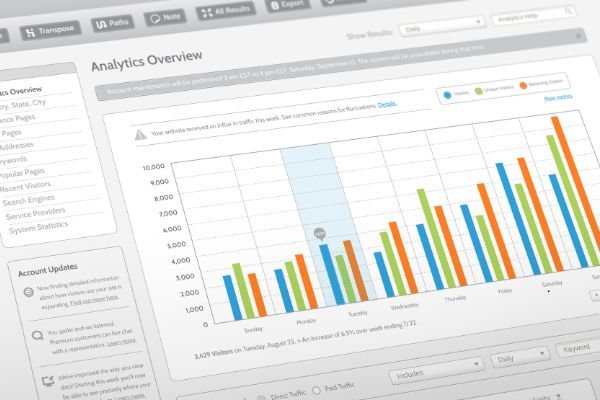
Two great options to give you a baseline of your current backlink profile include checking your backlinks in Google Search Console and Google Analytics. It is important to note that Google Analytics uses the term “referrals” for backlinks.
Checking backlinks in Google Analytics:
- Log into your Google Analytics account and select the domain you want to check
- Click “Acquisition” in the menu on the left
- Click the “All Traffic” drop down
- Click “Referrals”
- View your Referral Report
Checking backlinks in Google Search Console:
- Log into Google Search Console and select the domain you want to check
- Click “Search Traffic”
- Click “Links to Your Site”
- View the “Links to Your Site” report page
For more advanced backlink analysis, consider using tools like Screaming Frog or BuzzSumo to get deeper insights into your link building strategy.
Conclusion
Backlinks play a huge role in Google’s ranking system. It’s a mistake to leave them out of your SEO strategy.
Generally speaking, the more resources you can put toward backlinks, the quicker you’ll see results. However, acquiring powerful links requires a lot of time, effort, and resources. You shouldn’t expect to see progress right away.
At some point in the journey, many marketers will feel tempted to quit. While we wouldn’t blame you for feeling this way, you should know that giving up on backlinks is one of the most counterproductive things you can do.
As we explained in this article, backlinks are long-term investments. They will continue to build authority and rankings over time. If there’s one key takeaway from this article, it’s the importance of backlinks. Backlinks are never really done kicking in!
To project and measure success, remember to pay close attention to Google’s crawling and indexing process. Also watch the ranking power of your links, the speed and volume at which you are earning links, and your SEO competition. If you need help implementing these strategies, consider working with Eclipse Marketing or exploring our Google consulting services.
For businesses looking to accelerate their online presence, combining backlink strategies with professional web design and Google Ads can create a comprehensive digital marketing approach. Ready to get started? Contact us to discuss your specific needs and develop a customized strategy that delivers results.
Frequently Asked Questions
1. How long does it take for backlinks to start working?
Backlinks typically take 8-10 weeks to show ranking results in Google. The process happens in three stages: discovery (1-2 weeks), ranking impact (8-9 weeks), and continued growth (1-3 years). However, powerful backlinks from high-authority sites can show results in just 1 week. Don’t expect immediate results—backlinks are long-term investments that build authority gradually over time.
2. Why do some backlinks work faster than others?
Backlink speed depends on four key factors: discovery speed, link strength, link velocity, and competition. Links from popular websites get crawled faster by Google’s bots. High-authority, relevant backlinks carry more ranking power and show quicker results. Low-competition keywords see backlink benefits sooner than highly competitive terms.
3. How can I speed up the backlink indexing process?
You can accelerate backlink indexing through several proven methods. First, ensure Google can access the linking page by checking for noindex tags. Link to the target page from your own website to help Google discover it faster. Submit updated sitemaps to Google Search Console after earning new backlinks.
4. How do I know if my backlinks are working?
Monitor your backlinks using Google Search Console and Google Analytics to track performance. Check for ranking improvements in your target keywords 8-10 weeks after earning backlinks. Watch for increases in third-party authority scores like Moz DA or Ahrefs DR. Track referral traffic from your backlinks in Google Analytics under “Referrals.”
5. Can too many backlinks hurt my rankings?
Yes, poor-quality backlinks can harm your rankings through Google penalties. Avoid link schemes, paid links, and spammy directories that offer quick results. Focus on earning relevant, high-quality backlinks from authoritative sites in your industry. Quality always beats quantity in modern SEO practices.

Mike has over 5 years of experience helping clients improve their business visibility on Google. He combines his love for teaching with his entrepreneurial spirit to develop innovative marketing strategies. Inspired by the big AI wave of 2023, Mike now focuses on staying updated with the latest AI tools and techniques. He is committed to using these advancements to deliver great results for his clients, keeping them ahead in the competitive online market.