
Benefits Of A Combined SEO And Google Ads Strategy
SEO and Google Ads work better together than separately, delivering 2-3x more visibility in search results compared to using either strategy alone. This combined approach allows businesses to appear in both organic listings and paid advertisements simultaneously, increasing click-through rates by up to 50% while reducing overall customer acquisition costs.
The dual strategy provides five key advantages: immediate traffic from paid ads while building long-term organic rankings, comprehensive keyword data from both channels for better targeting, enhanced brand credibility through multiple search positions, flexible budget allocation during market changes, and complete analytics insights for informed decision-making. Businesses using both methods report 30-40% lower cost-per-acquisition compared to those relying on a single channel.
For optimal results, allocate 70% of resources to SEO for sustainable growth and 30% to Google Ads for immediate visibility, adjusting based on seasonal demands and business cycles. Small businesses should start with foundational SEO services work, then add targeted paid campaigns as revenue grows. Enterprise companies benefit from running both simultaneously, shifting emphasis based on performance data and market conditions.
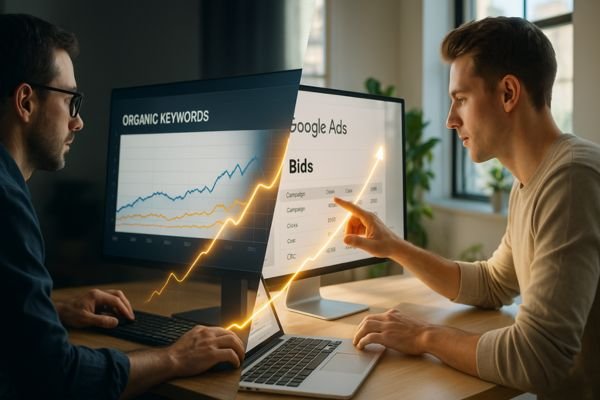
Why SEO and Google Ads Work Better as a Team
Running a successful online marketing campaign requires smart strategy and efficient resource allocation. Many businesses wonder whether they should focus on SEO or invest in Google Ads management. The truth is that using both methods together creates far better results than choosing one. Each approach has unique strengths that complement the other when combined strategically. SEO builds long-term organic visibility while Google Ads delivers immediate traffic and valuable data. This partnership maximizes your search engine presence and improves overall marketing performance significantly.
The synergy between these two strategies unlocks benefits you cannot achieve using either alone. You gain complete control over search results by appearing in multiple positions simultaneously. Your budget becomes more flexible as you balance paid and organic traffic sources. The data from both channels provides deeper insights that improve decision-making across your marketing. You build stronger brand credibility and reach more potential customers in your target market. Understanding how these methods work together helps you create a more effective marketing plan, as confirmed by marketing industry research. Our expert team has years of experience implementing these integrated strategies successfully.
Better Visibility and Wider Audience Reach
Take control of search engine results pages by appearing in both organic and paid spots. This dual presence increases your chances of getting noticed by people searching online. Google Ads brings you immediate traffic while SEO builds lasting organic visibility over time.
- Occupy multiple positions on search results pages simultaneously
- Get instant traffic from paid ads while building long-term organic presence
- Maintain visibility during market fluctuations and seasonal changes
- Cover both immediate needs and future growth objectives
The instant results from paid ads complement the gradual growth of organic rankings. Together, they create a balanced approach that covers both short-term and long-term goals. You maintain consistent visibility regardless of market changes or seasonal shifts. This combination ensures your business stays visible to potential customers at all times. The strategy adapts to different business cycles and keeps you competitive year-round. Your presence remains strong even when one channel experiences temporary performance dips. Both methods work together to maximize your overall search engine presence effectively, something our Las Vegas SEO agency specializes in implementing.
Smarter Keyword Targeting and Valuable Data
Use Google Ads to test different keywords and identify which ones perform best. Then apply these winning keywords to strengthen your SEO optimization service strategy for better results. Paid campaign data reveals what users actually want when they search for specific terms, as noted in Google’s advertising blog.
- Test multiple keywords quickly through paid campaigns
- Discover high-performing terms before investing in organic optimization
- Understand actual user search intent from paid advertising data
- Guide content creation with proven keyword performance metrics
This understanding of search intent helps you create content that matches user expectations perfectly. The insights from paid advertising guide your organic optimization efforts more effectively. You make smarter decisions about which keywords deserve your attention and resources. Campaign analytics show exactly which terms drive conversions and engagement from real users. This data eliminates guesswork and focuses your SEO efforts on profitable opportunities. You avoid wasting time on keywords that look good but perform poorly. The testing process speeds up your overall keyword research and selection significantly.
Stronger Brand Trust and Recognition
Appearing in both organic results and paid ads makes your brand look more credible. People trust businesses they see ranking naturally in search results alongside paid placements. Google Ads expands how many people become familiar with your brand name and offerings. Eclipse Marketing has seen this trust-building effect across numerous client campaigns.
- Build credibility by appearing in multiple search result positions
- Increase brand recognition through repeated exposure
- Strengthen customer confidence in your business authority
- Create stronger recall when prospects are ready to purchase
The repeated exposure across multiple search result positions builds stronger brand recall over time. Customers feel more confident choosing businesses that dominate search results in multiple ways. Your brand becomes the obvious choice when prospects are ready to buy. This visibility advantage makes you stand out from competitors who use only one method. The combined presence signals market leadership and establishes you as an industry authority. People remember brands they encounter repeatedly across different search placements consistently, a principle well-documented by advertising industry experts.
Budget-Friendly Marketing Advantages
Adjust your Google Ads spending strategically as advertising costs change across different industries. SEO generates leads during slower periods, reducing how much you depend on paid advertising. If revenue drops temporarily, you can pause paid ads while organic traffic continues flowing. The Small Business Administration recommends this flexible approach for growing companies.
- Adapt ad spending based on current budget constraints
- Generate leads through SEO during off-peak advertising periods
- Pause paid campaigns without losing all traffic
- Resume advertising when financial conditions improve
This flexibility lets you restart advertising when your financial situation improves without losing momentum. Limited budgets might prevent paid ads from showing for every important keyword you target. SEO ensures you still appear on the first page even when paid ads stop running. The organic visibility provides a safety net during tight budget periods or economic downturns. You maintain market presence without continuous advertising expenditure on every keyword variation. This approach reduces overall marketing costs while sustaining lead generation throughout different business cycles.
Better Decisions Through Combined Analytics
SEO shows you organic traffic patterns, visitor behavior, and trends that develop over months. Google Ads provides detailed metrics about ad clicks, conversions, and immediate campaign performance results. Examining both data sources together gives you a complete picture for making informed choices. Google Analytics makes tracking both channels seamless.
- Access organic traffic patterns and long-term trend data
- Monitor paid campaign performance and conversion metrics in real-time
- Identify opportunities missed by single-channel analysis
- Optimize based on comprehensive insights from both sources
Track how well both strategies perform and continuously improve them for maximum returns. The combined insights reveal opportunities you would miss by analyzing each channel separately. You optimize your entire marketing approach based on comprehensive data instead of partial information. This holistic view shows how channels influence each other and affect overall performance. The complete picture helps you allocate resources more effectively across both marketing methods. Better data leads to smarter investments and higher returns on your marketing spending, especially when working with professional SEO firms.
Local Search and Geographic Targeting Benefits
Optimize your website content for searches happening in your specific geographic area or region. Use Google Ads location targeting to show your ads only to people in areas where you operate or serve customers. This combined local approach ensures nearby prospects find you through both organic and paid methods. Our Denver SEO agency has mastered this dual-channel local strategy.
- Target specific geographic areas with paid advertising precision
- Optimize content for local search terms and regional queries
- Reach nearby customers through multiple search channels
- Reduce wasted spending on audiences outside service areas
Your business becomes more visible to the local audience most likely to convert. The geographic precision reduces wasted ad spend on audiences outside your service area. Local customers see your business in both organic listings and paid advertisements consistently. This concentrated visibility in target markets creates stronger community presence and brand awareness. You dominate local search results and capture more qualified leads from nearby prospects. The focused approach maximizes your impact in the markets that matter most.
How SEO and Google Ads Work Together
Well-written meta descriptions and title tags from SEO can improve your Google Ads quality scores. Better quality scores often lead to lower costs per click on your paid advertisements. Content you create for organic rankings can be adapted to improve your ad copy. Google’s developer documentation confirms this quality score connection.
- Improve quality scores through optimized meta descriptions and titles
- Lower cost per click with better quality ratings
- Repurpose organic content to enhance paid ad messaging
- Boost conversion rates across both traffic sources
This consistency across channels reinforces your messaging and potentially boosts ad performance metrics significantly. Landing pages optimized through search optimization services convert better for both organic visitors and paid traffic. The improvements you make for one channel automatically benefit the other channel too. SEO enhancements create better user experiences that increase paid campaign conversion rates naturally. The synergy between both methods amplifies results beyond what each achieves independently. You get compound benefits from optimization work that improves multiple channels simultaneously.

When to Use SEO vs Google Ads More Heavily
Understanding when to prioritize one strategy over the other helps you allocate resources more effectively. Both SEO and Google Ads deliver valuable results, but certain situations favor one approach significantly. Your business goals, timeline, budget, and industry factors all influence which method deserves more attention. Knowing when to shift focus between organic and paid efforts maximizes your marketing impact. Some scenarios demand immediate visibility that only paid advertising can provide right away. Other situations benefit more from the long-term authority building that SEO creates over time.
The key to success lies in recognizing which strategy fits your current business needs best. Smart marketers adjust their emphasis based on changing market conditions and company objectives regularly. You don’t need to choose one method exclusively and abandon the other completely. Instead, learn when to increase investment in each channel for optimal performance and returns. This flexible approach ensures you’re always using the most effective strategy for your situation. The following sections help you identify the right times to lean heavily into each method, as recommended by marketing technology leaders. For more insights on digital marketing strategies, explore our blog for insights and detailed guides.
Scenarios Where SEO Should Lead Your Strategy
Focus more resources on SEO when you’re building long-term brand authority in your industry. New websites need strong organic foundations before investing heavily in paid advertising campaigns. SEO works best when you have time to wait for results to develop naturally. Invest in organic optimization when your products or services have lower profit margins per sale. Industries with high cost-per-click rates benefit more from prioritizing SEO services in Las Vegas or your local market.
- Build authority when launching new websites or rebranding existing ones
- Focus on organic growth for products with smaller profit margins
- Prioritize SEO in industries where ad costs exceed reasonable budget limits
- Invest in content when targeting informational searches rather than transactional queries
Educational content and informational keywords perform better through organic search results than paid placements. Long buying cycles give you time to nurture leads through organic content marketing efforts. SEO becomes essential when you want to capture traffic without ongoing advertising expenses. Evergreen content continues generating traffic for years without additional investment in promotional spending. Technical products requiring detailed explanations convert better through comprehensive organic content than brief advertisements. Search Engine Journal regularly publishes case studies supporting this approach.
Situations That Call for Increased Ad Spending
Ramp up Google Ads during peak seasons when customer demand reaches its highest levels. Product launches need immediate visibility that only paid advertising can deliver quickly and reliably. Time-sensitive promotions require instant traffic that SEO cannot generate within short promotional windows. Competitive markets demand aggressive ad spending to maintain visibility against well-established industry competitors. Our New Brunswick SEO agency often recommends this approach for seasonal businesses.
- Boost ad budgets during seasonal peaks and high-demand periods
- Launch new products with immediate paid visibility campaigns
- Run time-limited promotions that need instant traffic generation
- Compete in crowded markets where organic rankings take too long
New market entry requires fast visibility before your organic presence can gain meaningful traction. Limited-time offers convert better when promoted through targeted paid ads to ready-to-buy audiences. Testing new products or services works best with Google Ads before committing to content creation. Geographic expansion into new territories needs paid advertising to build awareness quickly in unfamiliar markets. High-value transactions justify increased ad spending because single conversions cover substantial advertising costs easily. The Direct Marketing Association emphasizes this tactical approach for rapid growth.
Finding the Right Balance for Your Business
Start by analyzing your current traffic sources and identifying which channels drive the most conversions. Calculate your customer acquisition costs from both SEO and Google Ads to understand true profitability. Review your budget constraints and determine how much you can allocate to each channel. Consider your business timeline and whether you need immediate results or can wait patiently. Google Search Console provides essential data for this analysis.
- Analyze current performance data from both channels regularly
- Calculate true acquisition costs including time and resource investments
- Assess budget availability and allocate based on business priorities
- Match strategy intensity to your timeline and urgency requirements
Monitor competitor activity to see how heavily they invest in organic versus paid strategies. Adjust your approach based on seasonal trends and predictable fluctuations in customer demand patterns. Test different allocation ratios between SEO and ads to discover your optimal marketing mix. Small businesses with limited budgets often start with marketing and SEO services then add advertising as revenue grows. Larger companies typically run both simultaneously but shift emphasis based on current business objectives and goals.
Conclusion
Combining SEO and Google Ads creates a powerful marketing strategy that delivers results neither method achieves alone. This dual approach gives you complete control over search engine visibility while maximizing your budget efficiency. You gain immediate traffic from paid ads while building lasting organic authority that compounds over time. The data insights from both channels help you make smarter decisions about keyword targeting and content creation. Your brand becomes more credible and memorable when customers see you dominating search results consistently. The flexibility to adjust spending between channels protects your business during economic uncertainties and market fluctuations.
Start implementing this combined strategy today to see measurable improvements in your online performance and conversions. Begin with a solid SEO foundation through a reputable SEO company, then layer in targeted Google Ads campaigns that complement your organic efforts. Monitor both channels closely and adjust your approach based on real performance data and business priorities. Remember that the most successful businesses don’t choose between SEO and Google Ads but use both strategically. Take action now to maximize your search visibility and grow your business more effectively than ever before. Contact our team to discuss your integrated search marketing strategy.
FAQs
How long does it take to see results from combining SEO and Google Ads?
Google Ads delivers immediate traffic within hours of launching your first campaign successfully. SEO results typically appear within three to six months as your organic rankings gradually improve. The combined approach ensures you maintain consistent visibility while waiting for organic growth to develop fully.
Can small businesses afford to run both SEO and Google Ads simultaneously?
Small businesses can absolutely manage both strategies by starting small and scaling gradually over time. Focus on foundational SEO work while testing paid campaigns with conservative budgets that fit your resources. This balanced approach builds momentum across both channels without overwhelming your team or draining available marketing resources.
Which strategy should I prioritize if I have a limited marketing budget?
Start with SEO if you have time to wait for results and want sustainable traffic. Choose Google Ads if you need immediate visibility for time-sensitive launches or seasonal promotions. Most businesses benefit from splitting budgets 70% SEO and 30% ads initially, then adjusting based on performance.
Do I need separate teams to manage SEO and Google Ads effectively?
Small businesses can manage both channels with one skilled marketing professional or dedicated team member. Larger companies benefit from specialized teams that collaborate closely and share data insights regularly. The key is ensuring both strategies align with your overall business goals and messaging consistently.
How do I measure success when running both SEO and Google Ads together?
Track organic rankings, website traffic, and conversions separately for each channel to understand individual performance. Compare customer acquisition costs between SEO and paid ads to determine which delivers better ROI. Use analytics tools to monitor how both channels work together and contribute to your overall revenue.

Mike has over 5 years of experience helping clients improve their business visibility on Google. He combines his love for teaching with his entrepreneurial spirit to develop innovative marketing strategies. Inspired by the big AI wave of 2023, Mike now focuses on staying updated with the latest AI tools and techniques. He is committed to using these advancements to deliver great results for his clients, keeping them ahead in the competitive online market.