
What’s A Sitemap & Why Do You Need One?
A sitemap is a file that lists all pages on your website. It helps search engines discover and index your content more efficiently. Website owners need sitemaps to ensure search engines can find every important page. There are three main types of sitemaps: visual, XML, and HTML formats. XML sitemaps help search engine bots crawl your site and build their index. HTML sitemaps provide visitors with a clear navigation guide to explore your content. Visual sitemaps help designers plan website structure before launch and during development. Without a sitemap, search engines may miss critical pages on your website.
This can reduce your visibility in search results and limit organic traffic growth. Implementing a sitemap improves your site’s SEO performance and user experience simultaneously. Both small and large websites benefit from having properly configured sitemap files. A sitemap communicates your website’s organization clearly to search engines and human visitors. Using sitemaps helps avoid common technical SEO problems like broken links and crawl errors. This guide explains what sitemaps are, why they matter, and how to use them effectively.

Understanding Sitemaps: A Beginner’s Essential Guide
Technical terms like sitemap, HTML, and XML can seem confusing at first. Many people think these concepts are only for developers and tech professionals. However, if you run a website for your business or project, learning about sitemaps matters. A sitemap helps search engines find and understand your website content more effectively. When you implement a sitemap correctly, it improves your site’s visibility in search results.
This increased visibility can attract more potential customers to your business. Understanding how a sitemap works gives you better control over your online presence. Start using a sitemap today to strengthen your website’s performance and reach.
What Is a Sitemap
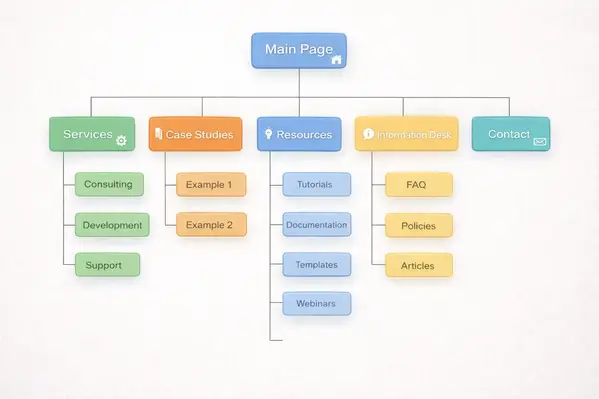
A sitemap works like a roadmap that guides visitors through your website. Think of it as a structured map showing how your web pages connect. This map displays the organization of your content from main pages to subpages. Website owners use a sitemap to show the relationship between different sections. Search engines rely on this structure to crawl and index your content efficiently.
The term sitemap can mean different things depending on who uses it. Designers, marketers, and website owners may refer to different sitemap types for various purposes. Understanding these variations helps you choose the right format for your needs. There are three main types of sitemaps that serve specific functions for websites. Each type offers unique benefits for improving how users and search engines navigate your site.
How Visual Sitemaps Help Plan Websites
Every website begins as a collection of ideas before going live online. These initial concepts need clear organization to make sense during the design process. Designers create visual sitemaps to map out how different content pieces connect together. This planning tool shows the complete structure of a website before development starts. Content strategists use visual sitemaps to arrange information in logical, user-friendly ways. The visual format helps teams understand relationships between different pages and sections clearly.
Creating a visual sitemap early prevents confusion and keeps everyone aligned during development. This proactive planning approach ensures your website structure serves visitors effectively from launch day. Visual sitemaps transform abstract ideas into concrete plans that guide the entire design process. They serve as communication tools that connect initial concepts to the finished website. Using this method saves time and creates better organized websites that visitors can navigate easily.
XML and HTML Sitemap Types
Two important sitemap formats help organize your website content effectively. XML and HTML sitemaps each serve distinct purposes for your site. Think of them as different versions of a table of contents. These formats guide both visitors and search engines through your website structure. Both types improve how people and search engines find your content. They look different and perform unique functions that benefit your website. Understanding each format helps you implement the right solution for your needs.
XML Sitemap for Search Engines
An XML sitemap is a file that helps search engines discover your pages. Search engine crawlers use this format to build their index of your content. Without an XML sitemap, search engines might miss important pages on your site. Think of search engine bots moving through your website looking for content. These automated systems need clear directions to find everything you publish. An XML sitemap provides that guidance so nothing gets overlooked during crawling. Even small websites benefit from having this technical file properly configured. This format ensures search engines can efficiently catalog all your valuable content.
HTML Sitemap for Visitors
An HTML sitemap appears as an actual page visitors can view and click. This page lists all important sections and shows how they connect. When you create an HTML sitemap, prioritize making it user friendly and clear. This format was originally designed to help people navigate and explore websites. Visitors use this page to quickly understand your site’s overall structure. An HTML sitemap improves the browsing experience for anyone exploring your content. It serves as a helpful reference point for finding specific information quickly.
| XML Sitemap | HTML Sitemap |
| Built specifically for search engine bots | Designed primarily for human visitors |
| Written using XML technical code | Created with HTML and shows as a webpage |
| Functions as a backend file on your website | Appears as a visible page users can access |
| Not intended for people to read directly | Made for easy reading and user navigation |
| Helps search engines locate and index content fast | Offers organized list of pages with internal links |
| Focuses on technical SEO performance | Supports both user experience and SEO goals |

Boost Your Website Visibility and Attract More Visitors
Website visibility directly impacts your ability to attract organic traffic online. People cannot visit your site if they don’t know it exists first. Search engines play a vital role in helping potential visitors discover your content. This is why SEO becomes essential for driving traffic and improving your returns. Your website faces several common obstacles that can hurt search engine rankings. Broken links prevent search engines from properly accessing your pages and content.
Incorrect URLs confuse both visitors and search engine crawlers trying to navigate. Duplicate content creates confusion about which page should rank in search results. Redirect chains and loops slow down crawlers and create poor user experiences. A properly configured sitemap helps your website avoid these technical problems effectively. When search engine bots crawl your site, they follow links to find pages. These automated crawlers sometimes miss pages without clear guidance and structure provided.
Using a sitemap ensures search engines understand your website organization and find everything. The sitemap format communicates your site structure clearly to these automated systems. HTML sitemaps also serve an important purpose for actual human visitors browsing. A well-designed website considers new visitors who arrive at your homepage unexpectedly. Providing clear navigation options helps these users explore your content with confidence. Both sitemap types work together to create better experiences for everyone visiting.
Conclusion
Implementing a sitemap is a simple yet powerful step toward better website performance. Both XML and HTML sitemaps work together to serve search engines and visitors effectively. XML sitemaps guide search engine bots to discover and index all your content properly. HTML sitemaps help real visitors navigate your site and find information they need quickly. Without these tools, your website may struggle to reach its full potential in search results. A properly configured sitemap prevents common technical issues that hurt your SEO rankings and user experience. Whether you manage a small business site or a large online platform, sitemaps matter significantly.
Start by creating an XML sitemap and submitting it to search engines like Google today. Add an HTML sitemap page to help visitors explore your content with ease and confidence. At Eclipse Marketing, we understand how crucial these technical elements are for online success. Take control of your website’s visibility and performance by implementing sitemaps correctly now. Your improved search rankings and increased organic traffic will prove the value of this investment.
FAQs
What is the main purpose of a sitemap?
A sitemap helps search engines discover and index all pages on your website efficiently. It provides a clear roadmap of your site structure for both bots and visitors. This improves your search visibility and makes navigation easier for everyone exploring your content.
Do I need both XML and HTML sitemaps?
Yes, using both types provides the best results for your website overall. XML sitemaps target search engine crawlers to ensure complete indexing of your pages. HTML sitemaps help human visitors navigate your site and find the information they seek.
How often should I update my sitemap?
Update your sitemap whenever you add new pages or make significant content changes. Search engines need current information to accurately index your website and display relevant results. Regular updates ensure your sitemap reflects your site’s actual structure and available content.
Can a sitemap improve my search engine rankings directly?
A sitemap supports better rankings by helping search engines find and index your content. While it’s not a direct ranking factor, it prevents crawling issues that hurt visibility. Proper sitemap implementation creates a foundation for stronger SEO performance and organic traffic growth.
Where should I submit my XML sitemap?
Submit your XML sitemap through Google Search Console and Bing Webmaster Tools for best results. These platforms allow search engines to access your sitemap and crawl your site efficiently. You can also reference your sitemap in your robots.txt file for additional crawler guidance.

Michael Vale has over 5 years of experience helping clients improve their business visibility on Google. He combines his love for teaching with his entrepreneurial spirit to develop innovative marketing strategies. Inspired by the big AI wave of 2023, Michael Vale now focuses on staying updated with the latest AI tools and techniques. He is committed to using these advancements to deliver great results for his clients, keeping them ahead in the competitive online market.