
What Is Considered A Good CTR In SEO Rankings Today?
Click-through rate (CTR) significantly impacts SEO rankings by signaling content relevance to search engines. A good CTR is above 3%, with Google’s top position averaging 39.6% of all clicks. CTR affects rankings because search engines interpret higher click rates as user satisfaction indicators.
CTR optimization involves several key factors: compelling title tags (50-60 characters), descriptive meta descriptions (150-160 characters), clean URL structures, and search intent alignment. Moving up one search position increases CTR by an average of 2.8%, while keyword-rich URLs can boost clicks by 45%.
To calculate CTR: divide total clicks by total impressions, then multiply by 100. Google Search Console provides free CTR tracking for all search terms. Higher CTR leads to more website traffic, better ROI, improved search rankings, stronger brand trust, and competitive advantages.
Best practices for improving CTR include writing clickable headlines, maintaining proper title length, matching search intent, and continuous A/B testing. At Eclipse Marketing, we help businesses focus optimization efforts on high-traffic pages first, as small CTR improvements create significant traffic increases over time.
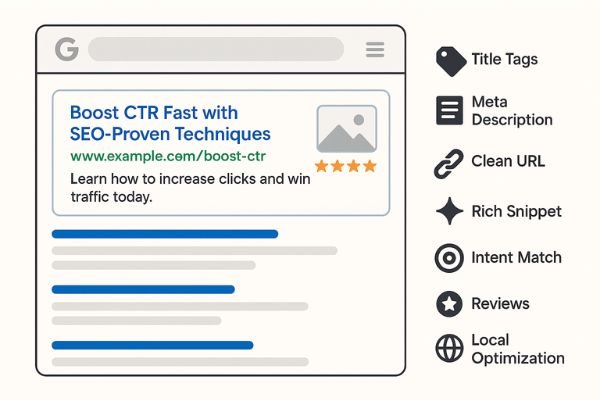
What Makes a Strong Click-Through Rate?
A CTR above 3% counts as good for SEO success. This means 3 out of every 100 searchers click your link to visit your site. However, your CTR depends heavily on your search result position rankings. A 3% CTR might seem poor for first place but works well for tenth position. Understanding CTR factors helps you start optimization and make real improvements through comprehensive SEO services. Here are the key factors that impact your CTR most:
- Title Tags: Create catchy titles that grab your audience’s attention right away. Keep titles between 50-60 characters and include your main keyword naturally. According to Google’s SEO documentation, proper title optimization remains crucial for search visibility.
- Meta Descriptions: These extend your title tag and should stay around 150-160 characters long. Always include a clear call to action to encourage more clicks.
- URL Structure: Clean and readable URLs can boost your CTR significantly. Many users check URLs to determine if content matches their needs.
- Rich Snippets and Structured Data: These features give you more space in search results. Rich snippets help your listings stand out from competing websites through enhanced visual elements.
- Search Intent Alignment: Your CTR improves when your content perfectly matches what searchers want. Focus on delivering exactly what users expect to find.
- Reviews and Ratings: Display positive reviews and ratings when possible to increase clicks. This strategy works especially well with strong customer testimonials.
- Local Optimization: Use local keywords and accurate business information for better results. Local search optimization significantly improves CTR for location-based businesses, particularly beneficial for companies serving areas like Denver, New Brunswick, or Las Vegas.
Why Strong Click-Through Rates Matter for Your Success
Are you wondering why higher click-through rates create such excitement in SEO campaigns? You’ll discover that CTR drives website success and can create massive traffic increases. By this section’s end, you’ll see why every CTR percentage point deserves your attention in your overall digital marketing strategy.
More Website Visitors
Higher CTR brings more clicks from search results, which means additional website traffic. You can then choose how to monetize this traffic through product sales or email signups. Improving your CTR by just 1% can create a massive traffic boost, especially when combined with effective web design that converts visitors into customers. Results depend on the search volume of your targeted keywords. Always work to improve your CTR to maximize your website development investment.
Better Return on Investment
Boosting your click-through rate helps you earn more from your SEO spending. This increases your chances of getting positive returns on investment. Higher returns justify spending more money on SEO in the future. Low CTR can hurt your overall website performance significantly. You might spend lots of resources creating quality content but see little benefit. Without good CTR, you only get a small stream of visitors from SEO efforts, making Google Ads consulting a valuable complement to organic strategies.
Better Search Position Rankings
Strong CTR tells Google’s algorithm that searchers find your listing relevant and useful. This signal can boost your rankings in search results over time. When other factors stay equal, higher CTR than competitors may improve your position. Google notices when more people choose your link over others nearby. This user behavior data helps search engines rank content that people actually want, as detailed in Moz’s comprehensive ranking factors guide.
Stronger Brand Recognition and Customer Trust
High CTR creates positive effects that boost brand visibility and customer trust. Users often trust websites ranking in the top 3 search results more than lower positions. This trust advantage makes converting SEO traffic into sales much easier for your business. Building trust proves difficult in competitive markets, so high search placement becomes a powerful strategy. When customers see you at the top, they assume you offer quality solutions.
Clear Edge Over Your Competition
You’ll gain a strong advantage over competitors ranking below your search results. Higher clicks, engagement, and attention boost your website’s credibility with search engines. This momentum can put you so far ahead that competitors struggle significantly. Closing the gap becomes extremely difficult once you establish dominant search rankings. Your success builds on itself, creating barriers that protect your market position, similar to strategies outlined in Backlinko’s competitive analysis guide.
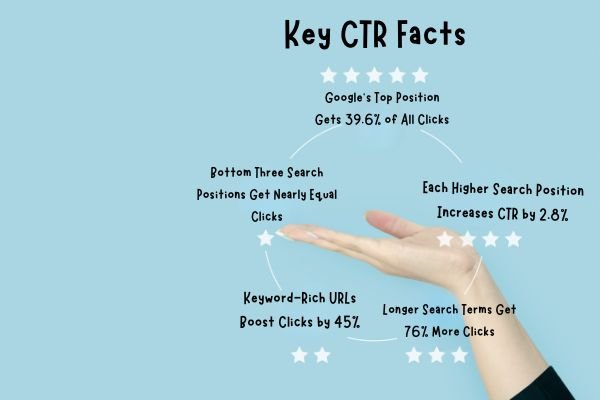
5 Key CTR Facts That Guide Smart Business Decisions
Now let’s examine important click-through rate facts that shape your strategic choices. These revealing statistics help you focus your SEO efforts on tactics that drive clicks. Use this data to guide your website traffic growth and marketing decisions, whether you’re running Google Ads campaigns or focusing purely on organic growth.
1. Google’s Top Position Gets 39.6% of All Clicks
Did you know the first Google result receives over one-third of all clicks? Getting the top spot becomes highly profitable and should be every business’s main goal. This result doubles the second position which gets 18.7% of clicks, while third place receives 10.2%. The huge difference between the top three positions shows why beating competitors matters so much. You must check competition levels at the top when researching keywords for your strategy using tools like Ahrefs’ keyword difficulty checker.
2. Each Higher Search Position Increases CTR by 2.8%
On average, moving up one search position boosts your click-through rate by 2.8%. This number varies greatly depending on whether you move positions at the bottom or top. Moving from position 10 to 9 differs significantly from moving from position 2 to 1. Improving your search position generally increases CTR, making it a key SEO success metric. Track your position changes to measure your optimization efforts and overall campaign performance through detailed analytics and reporting.
3. Longer Search Terms Get 76% More Clicks
Did you know that keywords between 10-15 words long receive 1.76 times more clicks? This happens because longer keywords match search intent better and show more relevance. Shorter keywords often create confusion or lack the clarity users need for decisions. Consider targeting longer keyword phrases for your most important search terms and test results. Don’t follow this advice blindly like other SEO tactics require careful testing. Always monitor your data to discover what works best for your specific situation. Each industry has unique keywords and different customer search patterns that matter, as explained in SEMrush’s long-tail keyword research guide.
4. Keyword-Rich URLs Boost Clicks by 45%
Including keywords in your URLs provides several benefits, including direct SEO improvements and higher CTR. URLs with relevant keywords or synonyms can increase click-through rates by up to 45%. Users often check URLs to verify that pages match their search intent exactly. Look at top-ranking websites for your main target keywords in your industry niche. You’ll notice most successful competitors use appropriate keywords in their URL structure consistently. Follow this practice to avoid losing your competitive edge in search results, following Google’s URL structure guidelines.
5. Bottom Three Search Positions Get Nearly Equal Clicks
This data shows that positions 8, 9, and 10 receive almost identical click-through rates. Moving from position 10 to 8 provides no real benefit for your traffic goals. Instead of focusing on small improvements at the bottom, aim straight for top positions. The top search results capture the majority of clicks and traffic. Focus your efforts on strategies that can move you into the top 5 positions through comprehensive optimization techniques.
How to Figure Out Your Click-Through Rate
The formula for calculating click-through rates stays simple, and here’s the basic overview: CTR = Clicks ÷ Impressions. Most analytics tools provide click and impression data for each search term automatically. These tools also calculate your CTR for you without manual work required. However, knowing this calculation helps you understand how the metric works fundamentally and enables better decision-making for your marketing investments.
Which Tools Help You Track Click-Through Rates?
You can track CTR for any search terms using Google Search Console completely free. This ranks as one of the best tools available since data comes directly from Google. The world’s top search engine provides the most accurate information for your website performance. You can also use Google Search Console data within other SEO reporting tools effectively. These platforms show clicks and impressions clearly, letting you calculate CTR using the formula above. For advanced analysis, consider tools like Neil Patel’s Ubersuggest for comprehensive keyword and traffic insights.
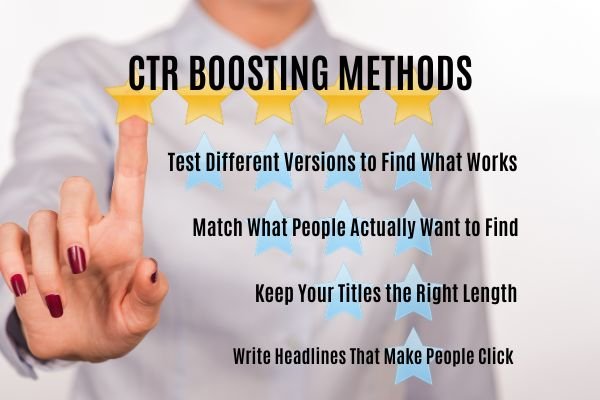
Top Methods for Boosting Your Click-Through Rate
Several proven strategies can improve your CTR and help your business gain more sales. These techniques also build stronger brand recognition with your target audience over time. Let’s examine the most effective tactics that successful marketers use to drive results, combining both organic optimization and paid advertising approaches.
Write Headlines That Make People Click
You need to create clear and short titles that encourage users to click immediately. Writing clickable headlines requires strong copywriting skills and creative thinking abilities. You can develop these skills through practice and testing, or hire experienced professionals who understand conversion optimization. Match your title tag to your H1 heading on each webpage for consistency. This prevents Google from changing your title tag, which happens in 33% of cases according to industry research. Consistent titles help maintain your intended messaging and improve user experience significantly, as discussed in Search Engine Journal’s title tag optimization guide.
Keep Your Titles the Right Length
Create title tags under 580 pixels long, which equals roughly 50 to 60 characters total. Google cuts off titles longer than this pixel limit in search results. Longer titles get truncated and lose their impact with searchers browsing results. Use SERP preview tools to check how your title appears before publishing content. These tools show you exactly what users see in search results. Proper length ensures your complete message reaches potential visitors effectively, maximizing the impact of your content marketing efforts.
Match What People Actually Want to Find
Search intent explains why someone performs a specific search on Google or other engines. It connects to the information they need or the action they plan to take. Aligning your content with search intent becomes vital for optimizing your CTR effectively. This alignment lets you create meta titles and descriptions that match searcher expectations perfectly. When your listings match what people want, they click more often on your results, leading to better engagement metrics and improved rankings over time.
Test Different Versions to Find What Works
You can improve your content continuously by changing one element at a time. Track how these changes affect your click-through rates and other important metrics through systematic testing approaches. For example, test different wording in your meta titles or descriptions to measure results accurately. Keep changes that increase your CTR and remove ones that hurt your performance. This testing approach helps you discover additional improvements and reach higher CTR levels consistently. Never stop testing because small improvements add up to significant traffic gains over time, similar to methodologies explained in Content Marketing Institute’s A/B testing resources.
Conclusion
Your click-through rate directly impacts website success, search rankings, and business growth potential. Start by analyzing your current CTR performance using Google Search Console data immediately. Focus on writing compelling headlines that match search intent and stay within character limits. Test different approaches systematically to discover what resonates with your target audience best. Remember that even small CTR improvements create massive traffic increases over time consistently. The top search positions capture most clicks, so aim high with your optimization efforts. Don’t ignore bottom-ranking pages that waste resources without delivering meaningful results for your business. Implement these proven strategies today and watch your organic traffic grow steadily. Your competitors already optimize their CTR, so staying competitive requires immediate action and continuous improvement. Success comes from consistent testing, monitoring performance data, and adapting strategies based on real results. For professional assistance with CTR optimization and comprehensive digital marketing strategies, contact our team to discuss how we can help accelerate your online growth.
Frequently Asked Questions
Does higher CTR lead to business success?
Yes, higher CTR improves business success by driving more potential customers to your website. You can monetize this traffic through increased sales or membership subscriptions effectively.
How much effort should you spend on improving search CTR?
Put significant effort into improving CTR since it’s low-hanging fruit for driving customers. Simple changes to meta titles or descriptions can create massive traffic increases.
What are the negative effects of low CTR?
Low CTR creates fewer customers, lower search rankings, and damaged brand reputation. Poor CTR signals irrelevance to Google, potentially downgrading your search results.
Why is my CTR still low after optimization efforts?
Low CTR after optimization often means poor search intent matching or wrong keywords. Ensure you optimize metadata, URLs, research competitors, and maintain mobile-friendliness.
Do you need to improve CTR for every web page?
Focus on high-traffic pages with buyer intent rather than optimizing every page. This approach maximizes your resources and delivers better results faster.

Mike has over 5 years of experience helping clients improve their business visibility on Google. He combines his love for teaching with his entrepreneurial spirit to develop innovative marketing strategies. Inspired by the big AI wave of 2023, Mike now focuses on staying updated with the latest AI tools and techniques. He is committed to using these advancements to deliver great results for his clients, keeping them ahead in the competitive online market.